Originalarbeiten (der letzten Jahre):
2012 (bzw. in Druck):
Wöhr M & Schwarting RKW. Testing social acoustic memory in rats: Effects of stimulus configuration and long-term memory on the induction of social approach behavior by appetitive 50-kHz ultrasonic vocalizations. Neurobiology of Learning and Memory, in press.
Yee N, Schwarting RKW, Fuchs E & Wöhr M. Enhanced production of affective ultrasonic vocalizations during fear learning in adult male rats exposed to maternal immune activation. Journal of Psychiatric Research, in press.
Yang M, Bozdagi O, Scattoni ML, Wöhr M, Roullet FI, Katz AM, Abrams DN, Kalikhman D, Simon H, Woldeyohannes L, Zhang JY, Harris MJ, Saxena R, Silverman JL, Buxbaum JD & Crawley JN. (2012) Reduced excitatory neurotransmission and mild autism-relevant phenotypes in adolescent Shank3 null mutant mice. The Journal of Neuroscience, 32: 6525-6541.
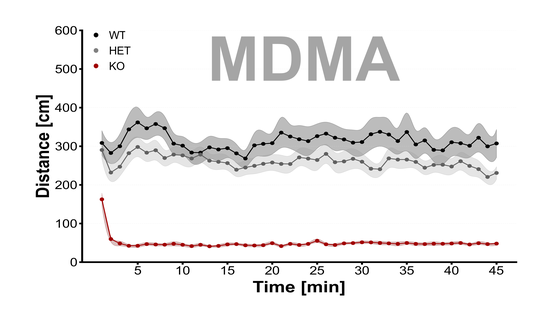
Sadananda M, Natusch C, Karrenbauer B & Schwarting RKW. (2012) 50-kHz calls in rats: effects of MDMA and the 5-HT1A receptor agonist 8-OH-DPAT. Pharmacology Biochemistry & Behavior, 101: 258-264.
Brenes JC, Broiz C, Bassi GS, Schwarting RKW & Brandao ML. (2012) Involvement of neurokinin-mediated mechanisms in the midbrain tectum in fear and anxiety. Brazilian Journal of Medical and Biological Research, 45: 349-356.
Yee N, Schwarting RKW, Fuchs E & Wöhr M. Juvenile stress potentiates aversive 22-kHz ultrasonic vocalizations and freezing during auditory fear conditioning in adult male rats. Stress, in press.
Eckart MT, Hülse-Matia MC & Schwarting RKW. (2012) Dorsal hippocampal lesions boost performance in the rat sequential reaction time task. Hippocampus, 22: 1202-1214.
2011:
Karrenbauer BD, Müller CP, Ho YJ, Spanagel R, Huston JP, Schwarting RKW & Pawlak CR. (2011) Time-dependent in-vivo effects of interleukin-2 on neurotransmitters in various cortices: Relationships with depressive-related and anxiety-like behaviour. Journal of Neuroimmunology, 237: 23-32.
Wöhr M, Roullet FI, Hung AY, Sheng M. & Crawley JN. (2011) Communication impairments in mice lacking Shank1: Reduced levels of ultrasonic vocalizations and scent marking behavior. PLoS ONE, 6: e20631.
Beis D, Schwarting RKW & Dietrich A. (2011) Evidence for a supportive role of classical transient receptor potential 6 (TRPC6) in the exploration behavior of mice. Physiology & Behavior, 102: 245-250.
Wöhr M, Roullet FI & Crawley JN. (2011) Reduced scent marking and ultrasonic vocalizations in the BTBR T+tf/J mouse model of autism. Genes, Brain and Behavior, 10: 35-43.
Wöhr M, Moles A, Schwarting RKW & D’Amato FR. (2011) Lack of social exploratory activation in male μ-opioid receptor KO mice in response to playback of female ultrasonic vocalizations. Social Neuroscience, 6: 76-87.
Roullet FI, Wöhr M & Crawley JN. (2011) Female urine-induced male mice ultrasonic vocalizations, but not scent-marking, is modulated by social experience. Behavioural Brain Research, 216: 19-28.
2010:
Dombrowski PA, Carvalho MC, Miyoshi E, Correia D, Bortolanza M, Santos LM, Wietzikoski EC, Eckart MT, Schwarting RKW, Brandão ML & Da Cunha C. (2010) Microdialysis study of striatal dopamine in MPTP-hemilesioned rats challenged with apomorphine and amphetamine. Behavioural Brain Research, 215: 63-70.
Natusch C & Schwarting RKW. (2010) Using bedding in a test environment critically affects 50-kHz ultrasonic vocalizations in laboratory rats. Pharmacology Biochemistry and Behavior, 96: 251-259.
Eckart MT, Huelse-Matia MC, Loer D & Schwarting, RKW. (2010) Acquisition and performance in a rat sequential reaction time task is not affected by subtotal ventral striatal 6-OHDA lesions. Neuroscience Letters, 476: 27-31.
Kurz A, Wöhr M, Walter M, Bonin M, Auburger G, Gispert S & Schwarting RKW. (2010) Alpha-synuclein deficiency affects brain Foxp1 expression and ultrasonic vocalization. Neuroscience, 166: 785-795.
Eckart, MT, Huelse-Matia, MC, McDonald RS & Schwarting, RKW. (2010) 6-Hydroxydopamine lesions in the rat neostriatum impair sequential learning in a serial reaction time task. Neurotoxicity Research, 17: 287-298.
2009:
Wöhr M & Schwarting RKW. (2009) Ultrasonic communication in rats: Effects of morphine and naloxone on vocal and behavioral responses to playback of 50-kHz vocalizations. Pharmacology, Biochemistry and Behavior, 94: 285-295.
Wöhr M, Kehl M, Borta A, Schänzer A, Schwarting RKW & Höglinger GU. (2009) New insights into the relationship of neurogenesis and affect: Tickling induces hippocampal cell proliferation in rats emitting appetitive 50-kHz ultrasonic vocalizations. Neuroscience, 163: 1024-1030.
Karrenbauer BD, Ho Y-J, Ludwig V, Löhn J, Spanagel R, Schwarting RKW & Pawlak CR. (2009) Time-dependent effects of striatal interleukin-2 on open field behaviour in rats. Journal of Neuroimmunology, 208: 10-18.
Bauhofer A, Ho Y-J, Schmitt A, Köster M, Schwarting RKW & Pawlak CR. (2009) Individual behavioral differences in recovery from abdominal sepsis in rats. Inflammation Research, 58: 1-9.
2008:
Domenger D & Schwarting RKW. (2008) Effects of neostriatal 6-OHDA lesion on performance in a rat sequential reaction time task. Neuroscience Letters, 444: 212-216.
Wöhr M, Dahlhoff M, Wolf E, Holsboer F, Schwarting RKW & Wotjak CT. (2008) Effects of genetic background, gender, and early environmental factors on isolation-induced ultrasonic calling in mouse pups: An embryo-transfer study. Behavior Genetics, 38: 579-595.
Wöhr M & Schwarting RKW. (2008) Ultrasonic calling during fear
conditioning in the rat: No evidence for an audience effect.
Animal Behavior, 76: 749-760.
Wöhr M & Schwarting RKW. (2008) Maternal care, isolation-induced
infant ultrasonic calling, and their relations to adult anxiety-related
behavior in the rat. Behavioral Neuroscience, 122:
310-330.
Wöhr M, Houx B, Schwarting RKW & Spruijt B. (2008) Effects of experience and context on 50-kHz vocalizations in rats. Physiology & Behavior, 93: 766-776.
Ludwig V, Mihov Y & Schwarting RKW. (2008) Behavioral and neurochemical consequences of multiple MDMA administrations in the rat: role of individual differences in anxiety-related behavior. Behavioural Brain Research, 189: 52-64.
Sadananda M, Wöhr M & Schwarting RKW. (2008) Playback of 22-kHz and 50-kHz ultrasonic vocalizations induces differential c-fos expression in rat brain. Neuroscience Letters, 435: 17–23.
2007:
Wöhr M & Schwarting RKW. (2007) Ultrasonic communication in
rats: Can playback of 50-kHz calls induce approach behavior?
PLoS One (online journal: http://www.plosone.org), 2:
1-12.
Domenger D & Schwarting RKW. (2007) Sequential behavior in the rat:
Role of skill and attention. Experimental Brain
Research, 182: 223-231.
Schwarting RKW, Jegan N & Wöhr M. (2007) Situational factors,
conditions and individual variables which can determine ultrasonic
vocalizations in male adult Wistar rats. Behavioural Brain
Research, 182: 208-222.
Ludwig V & Schwarting RKW. (2007) Neurochemical and behavioral
consequences of striatal injection of 5,7-dihydroxytryptamine.
Journal of Neuroscience Methods, 162: 108-118.
2006:
Domenger D & Schwarting RKW. (2006) The serial reaction time
task in the rat: Effects of D1 and D2 dopamine receptor antagonists.
Behavioural Brain Research, 175: 212-222.
Görisch J & Schwarting RKW. (2006) Wistar rats with high versus low
rearing activity differ in radial maze performance.
Neurobiology of Learning and Memory, 86:
175-187.
Pawlak CR & Schwarting RKW. (2006) Striatal microinjection of
interleukin-2 and rat behaviour in the elevated plus-maze.
Behavioural Brain Research, 168: 339-344.
Borta A, Wöhr M & Schwarting RKW. (2006) Rat ultrasonic
vocalization in aversively motivated situations and the role of
individual differences in anxiety-related behavior. Behavioural
Brain Research, 166: 271-280.
2005:
Wöhr M, Borta A & Schwarting RKW. (2005) Overt behavior and
ultrasonic vocalization in a fear conditioning paradigm: a
dose-response study in the rat. Neurobiology of Learning and
Memory, 84: 228-240.
Pawlak CR, Schwarting RKW & Bauhofer A. (2005) Cytokine mRNA levels
in brain and peripheral tissues of the rat: relationships with
anxiety-like behavior. Molecular Brain Research, 137:
159-165.
Domenger D & Schwarting RKW. (2005) Sequential behavior in the rat:
A new model using food-reinforced instrumental behavior.
Behavioural Brain Research, 160: 197-207.
Borta, A & Schwarting RKW. (2005) Post-trial treatment with the
nicotinic agonist metanicotine: Differential effects in Wistar rats
with high versus low rearing activity. Pharmacology
Biochemistry & Behavior, 80: 541-548.
Borta A & Schwarting RKW. (2005) Inhibitory avoidance, plus-maze
behavior, and pain reactivity in Wistar rats with high versus low
rearing activity. Physiology & Behavior, 84:
387-396.
Pawlak CR & Schwarting RKW. (2005) Repeated nicotine treatment in
rats with high versus low rearing activity: analyses of behavioural
sensitisation and place preference.
Psychopharmacology, 178: 440-450.
Schwarting RKW & Borta A. (2005) Analysis of behavioral asymmetries
in the elevated plus-maze and in the T-maze. Journal of
Neuroscience Methods, 141: 251-260.
2004 und früher:
Bauhofer A, Schwarting RKW, Köster M, Schmitt A, Lorenz W & Pawlak CR. (2004) Sickness behavior of rats with abdominal sepsis can be improved by antibiotic and G-CSF prophylaxis in clinic modeling randomized trials. Inflammation Research, 53: 697-705.
Ho J-H, Pawlak CR, Guo L & Schwarting RKW. (2004) Acute and
long-term consequences of single MDMA administration in relation to
individual anxiety levels in the rat. Behavioural Brain
Research,.149: 135-144.
Sedelis M, Hofele K, Schwarting RKW, Huston JP & Belknap JK. (2004)
Chromosomal loci influencing the susceptibility to the parkinsonian
neurotoxin MPTP. The Journal of Neuroscience, 23:
8247-8253.
Pawlak CR, Ho Y-J, Schwarting RKW & Bauhofer A. (2003) Relationship
between striatal levels of interleukin-2 mRNA and plus-maze behaviour
in the rat. Neuroscience Letters, 341: 205-208.
Ho Y-J, Eichendorff J & Schwarting RKW. (2002) Individual profiles
of male Wistar rats in animal models of anxiety and depression.
Behavioural Brain Research, 136: 1-12.
Pawlak CR & Schwarting RKW. (2002) Object preference and nicotine
consumption in rats with high vs. low rearing activity in a novel open
field. Pharmacology, Biochemistry and Behavior, 73:
679-687.
Schildein S, Huston JP & Schwarting RKW. (2002) Open-field
habituation learning is improved by nicotine and attenuated by
mecamylamine administered post-trial into the nucleus accumbens.
Neurobiology of Learning and Memory, 77:
277-290.
Bast T, Diekamp B, Thiel C, Schwarting RKW & Güntürkün O. (2002)
Functional aspects of dopamine metabolism in the putative prefrontal
cortex analogue and striatum of pigeons (Columba livia).
Journal of Comparative Neurology, 446: 58-67.
Fornaguera J & Schwarting RKW. (2002) Time course of deficits in
open field behavior after unilateral neostriatal 6-hydroxydopamine
lesions.Neurotoxicity Research, 4: 41-49.
Hofele K, Sedelis M, Auburger G, Morgan S, Huston JP & Schwarting
RKW. (2001) Evidence for a dissociation between MPTP-toxicity and
tyrosinase activity based on congenic mouse strain susceptibility.
Experimental Neurology 168: 116-122.
Thiel CM & Schwarting RKW. (2001) Dopaminergic lateralization in
the forebrain: relations to behavioural asymmetries and anxiety in male
Wistar rats. Neuropsychobiology 43: 192-199.
Galosi R, Lenard L, Knoche A, Huston JP & Schwarting RKW. (2001)
Dopaminergic effects of histamine administration in the nucleus
accumbens and the impact of H1 receptor bloackade.
Neuropharmacology 40: 624-633.
Schildein S, Huston JP & Schwarting RKW. (2000) Injections of
tacrine and scopolamine into the nucleus accumbens: Opposing effects of
immediate vs. delayed post-trial treatment on memory of an open field.
Neurobiology of Learning and Memory 73: 21-30.
Haubrich C, Frielingsdorf V, Herzig S, Schröder H, Schwarting RKW,
Sturm V & Voges J. (2000) N-type calcium channel blockers - tools
for modulation of cerebral functional units? Brain
Research 855: 225-234.
Sedelis M, Hofele K, Auburger G, Morgan S, Huston JP & Schwarting
RKW. (2000) MPTP susceptibility in the mouse: behavioral, neurochemical
and histological analysis of gender and strain differences.
Behavior Genetics 30: 171-182.
Sedelis M, Hofele K, Auburger G, Morgan S, Huston JP & Schwarting
RKW. (2000) Evidence for resistance to MPTP in C57BL/6 x BALB/c F1
hybrids as compared with their progenitor strains.
NeuroReport 11: 1093-1096.
De Souza-Silva MA, Hasenöhrl RU, Tomaz C, Schwarting RKW & Huston
JP. (2000) Differential modulation of frontal cortex acetylcholine by
injection of substance P into the nucleus basalis magnocellularis in
the freely-moving vs. anesthetized preparation.
Synapse 38: 243-253.
Thiel CM, Müller C, Huston JP & Schwarting RKW. (2000) Auditory
noise can prevent hippocampal increased extracellular acetylcholine
levels in the hippocampus in response to aversive stimulation.
Brain Research 882: 112-119.
Fornaguera J & Schwarting RKW. (1999) Early behavioral changes
after nigro-striatal system damage can serve as predictors of striatal
dopamine depletion. Progress in Neuro-Psychopharmacology &
Biological Psychiatry, 23: 1353-1368.
Thiel CM, Müller C, Huston JP & Schwarting RKW. (1999) High vs. low
reactivity to a novel environment: Behavioural, pharmacological and
neurochemical assessments. Neuroscience, 93:
243-251.
Schwarting RKW, Sedelis M, Hofele K, Auburger GW & Huston JP.
(1999) Strain-dependent recovery of open-field behavior and striatal
dopamine deficiency in the mouse MPTP model of Parkinson´s disease.
Neurotoxicity Research 1: 41-56.
Dringenberg HC, de Souza-Silva MA, Roßmüller J, Huston JP &
Schwarting RKW. (1998) Histamine H1 receptor antagonists produce
increases in extracellular acetylcholine in rat frontal cortex and
hippocampus. Journal of Neurochemistry, 70: 1750-
1758.
Schwarting RKW, Thiel M, Müller CP and Huston JP. (1998) Relationship
between anxiety and serotonin in the ventral striatum.
NeuroReport, 9: 1025-1029.
Carrera, P.M., Brunhara, F.C., Schwarting, R.K.W. & Tomaz, C.
(1998) Drug conditioning induced by intrastriatal apomorphine
administration. Brain Research, 790: 60-66.
Schildein S, Agmo A, Huston JP & Schwarting RKW. (1998)
Intraaccumbens injections of substance P, morphine and amphetamine:
Effects on conditioned place preference and behavioral activity.
Brain Research, 790:185-194.
Thiel CM, Huston JP & Schwarting RKW. (1998) Hippocampal
acetylcholine and habituation learning. Neuroscience,
85: 1253-1262.
Dringenberg HC, de Souza-Silva MA, Schwarting RKW & Huston JP.
(1998) Increased levels of extracellular dopamine in neostriatum and
nucleus accumbens after histamine H1 receptor blockade.
Naunyn-Schmiedeberg´s Archives of Pharmacology, 358:
423-429.
Thiel CM, Huston JP & Schwarting RKW. (1998) Cholinergic activation
in frontal cortex and nucleus accumbens related to basic behavioral
manipulations: handling, and the role of post-handling novelty vs.
safety. Brain Research, 812: 121-132.
de Souza Silva MA, Mattern C, Häcker R, Nogueira PJC, Huston JP &
Schwarting RKW. (1997a) Intranasal administration of the dopaminergic
agonists L-DOPA, amphetamine and cocaine increases dopamine activity in
the neostriatum: a microdialysis study in the rat. Journal of
Neurochemistry 68: 233-239.
de Souza Silva MA, Mattern C, Häcker R, Tomaz C, Huston JP &
Schwarting RKW. (1997b) Increased neostriatal dopamine activity after
combined or single administration of l-DOPA and benserazide: a
microdialysis study in the rat. Synapse, 27:
294-302.
Huston JP, Haas HL, Pfister M, Boix F, Decking U, Schrader J &
Schwarting RKW. (1996) In-vivo analysis of extracellular adenosine in
neostriatum and hippocampus during periods of rest and activity.
Neuroscience 73: 99-107.