Direkt zum Inhalt
 
 
Bannergrafik (Konfliktforschung)
 
  Startseite  
 

Marburg


Town of Saint Elizabeth – University town – Romantic town on the river Lahn – Cultural centre in upper Hesse – Shopping town – Tourist attraction

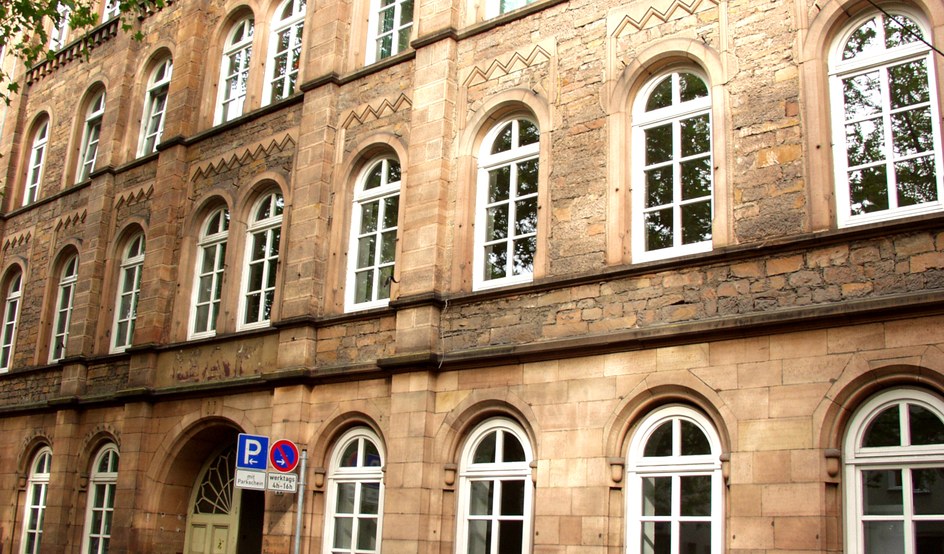
Marburg - Old University


Where to begin? With the extraordinary? With dates? It is probably the best to introduce an old town by its history; with a quote from one of the many professors throughout the last 478 years who were first educated in Marburg and later became University professors themselves: Professor Johann Heinrich Jung-Stilling remarked the following about the old town on the river Lahn: “The old town, which has become famous through the residence, death and funeral of the saint landgrave Elizabeth of Hesse, lays bent, undulated and crooked on a hill beneath the old castle.” The professor praises the region surrounding the town as “pleasant and very comfortable”. The view onto the old houses of Marburg has not been changed for many centuries. The old town gives Marburg its characteristic touch and still impresses visitors nowadays. Although Marburg celebrated its 750th anniversary in 1972, the castle and the market place area are even older.

Marburg Castle


According to recent research results, the beginnings of the castle can be dated back to the 9th or 10th century. However, it was only when Elizabeth of Thuringia chose Marburg as a residence as a widow in 1228 that the town became well-known. Elizabeth built a hospital in order to care for ill and infirm people. Although she died in 1231, aged only 24, she ranks as one of the most important persons that have ever lived in Marburg. Many legends are told about her enormous piety. She was canonised already in 1535, the same year in which the German holy order Deutscher Orden started to build a church on her grave. Today, the Elizabeth Church belongs to the most beautiful Gothic buildings in Germany. Pilgrims from all over the Europe have come to the grave of the Saint and made Marburg flourish. Between 1248 and 1604, Marburg was the residence of the landgraves of Hesse. In 1248, Sophie of Brabant, daughter of Saint Elizabeth came to Marburg together with her three-year-old son to be paid homage by the population.

Elisabeth Kirche


During the period of the reformation, in 1527, landgrave Philipp the Great founded the first Protestant University of the world. After the annexation of Hesse by Prussia in 1866 the University boomed enormously thereby also leading to a rapid growth of the town. Within only few years, the number of inhabitants tripled and the number of University students increased ten-fold. During World War II, Marburg was almost entirely spared from bomb attacks. The city could therefore provide shelter to a great number of refugees after 1945. Several small- and medium-sized industrial companies stem from this time. The fact that the University is the most important economical factor – with its 7500 employees and 19000 students – has not changed over the centuries. Most of Marburg’s students come from all over Germany. More than 30 international partnerships and exchange contracts link the University of Marburg to other universities worldwide. 2000 academics teach and conduct research at the University of Marburg. Among them are 400 professors and University lecturers. 21 departments almost completely cover the scientific range. Although the University is only medium-sized compared to other German universities, it can be proud of this wide range of departments. Five winners of the renown Leibniz Prize, a new University Hospital as well as other important research projects and well-known institutions and organisations of all disciplines account for the excellent scientific reputation of the University of Marburg.

Hörsaal Gebäude


Also, visit the homepage of the tourist center Marburg:

http://www.marburg.de/detail/24695

Zuletzt aktualisiert: 29.01.2010 · Bunselme


Zentrum für Konfliktforschung

Zentrum für Konfliktforschung, Ketzerbach 11, D-35032 Marburg
Tel. 06421/28-24444, Fax 06421/28-24528, E-Mail: konflikt@staff.uni-marburg.de

URL dieser Seite: http://www.uni-marburg.de/konfliktforschung/zentrumstage2010/aboutmarburg

Impressum