Main Content
Concept
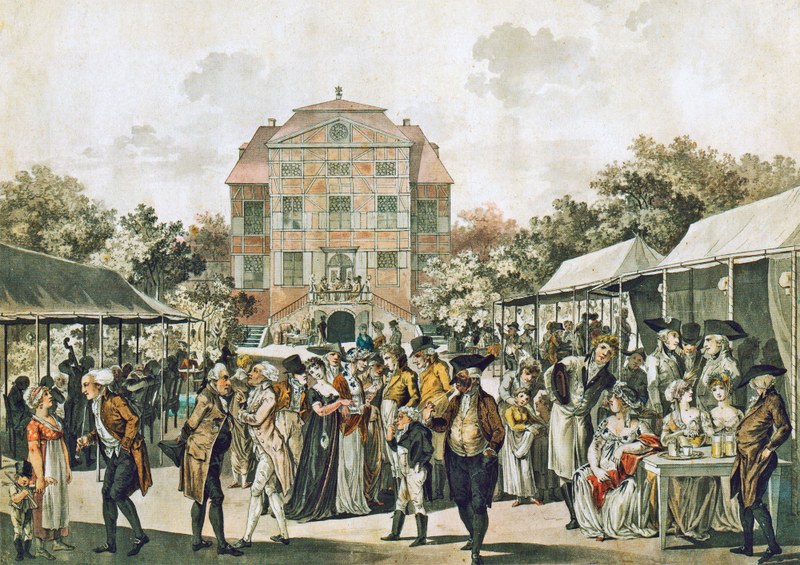
What do we see when we listen to music? Where does our gaze go when the sound source is not visible? What happens to our listening when we close our eyes? And how can the listening experience be influenced or guided by sight? - The role of vision in listening to music has preoccupied people who make, compose, listen to, reflect on and communicate music for centuries. It has helped to determine what “music” meant and what status it was granted. In the historical process of the development of musical listening as a learnable and standardised cultural technique, the separation of the sense of hearing from other sensory perceptions such as sight proved to be an effective mechanism. The resulting listening situations, technical facilities, media and discourses represent valuable sources for listening research, which can be utilised to address fundamental questions. The objective of this collaborative project is to improve our comprehension of the interactions between listening and seeing, whether intentional or unintentional, in specific historical contexts. The aim is to establish a novel, multi-sensory comprehension of the historical evolution of musical listening.
This project is a collaborative and interdisciplinary effort between three institutions. The investigation combines musicological, media and art historical perspectives, as well as cultural and academic-historical perspectives. Various sources that have received little attention to date will be brought into dialogue, including material artefacts (compositions, images, decorations, architecture, digital formats), practices (performances, rituals, listening and viewing instructions, listening reports), and theoretical reflections (perception theory, audience sociology, music philosophy). The project's focal point lies in two doctoral projects and an interdisciplinary Working Group, which strengthens the approach of the overall project by involving further experts in a culturally comparative and cross-epochal manner. The contributions within the Working Group are aimed to being published as an English-language anthology at the end of the project in 2028.