Main Content
Tree-M Closing Symposium
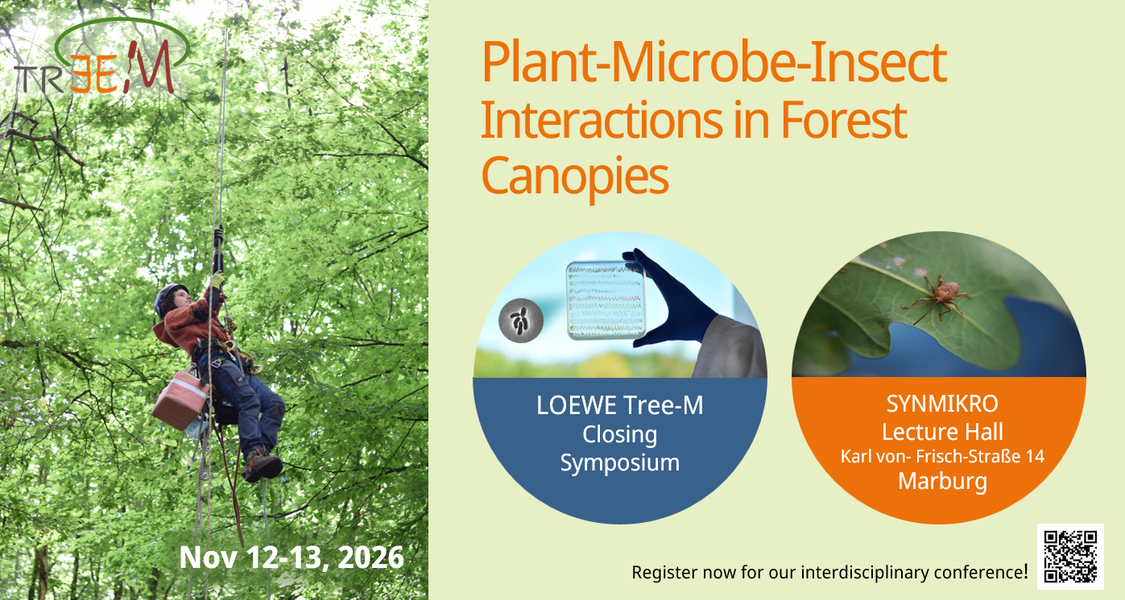
How do trees, microbes, and insects shape our forest ecosystems?
Understanding these complex interactions requires a truly interdisciplinary perspective. Our two-day conference brings together experts from microbiology, ecology, forest sciences, and geospatial sciences to discuss plant-microbe-insect interactions across scales - from microbial functions, community dynamics to herbivory and forest ecosystem-wide processes.
Interested? Get your ticket here.
Poster-Preview:
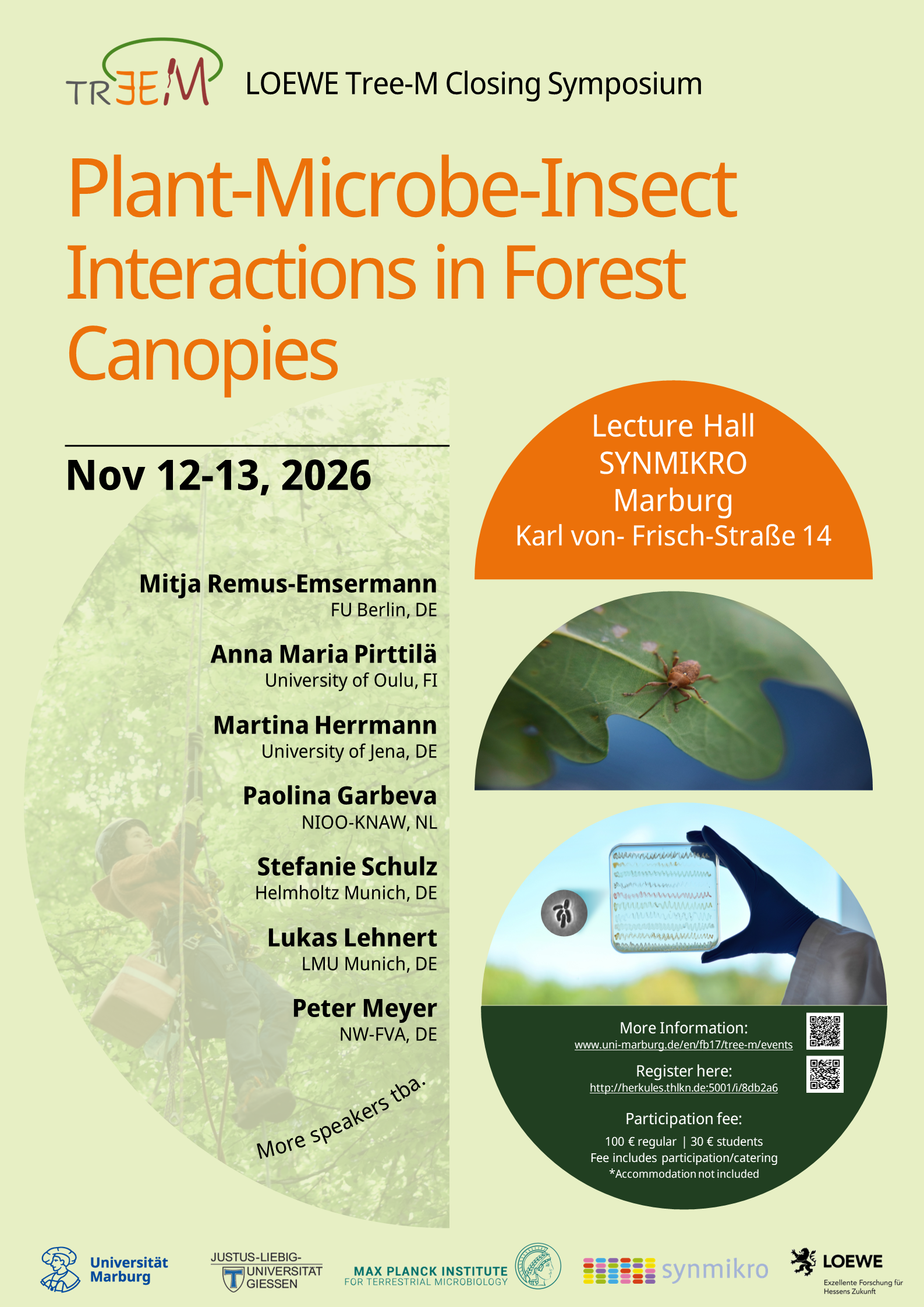
Preliminary Program:
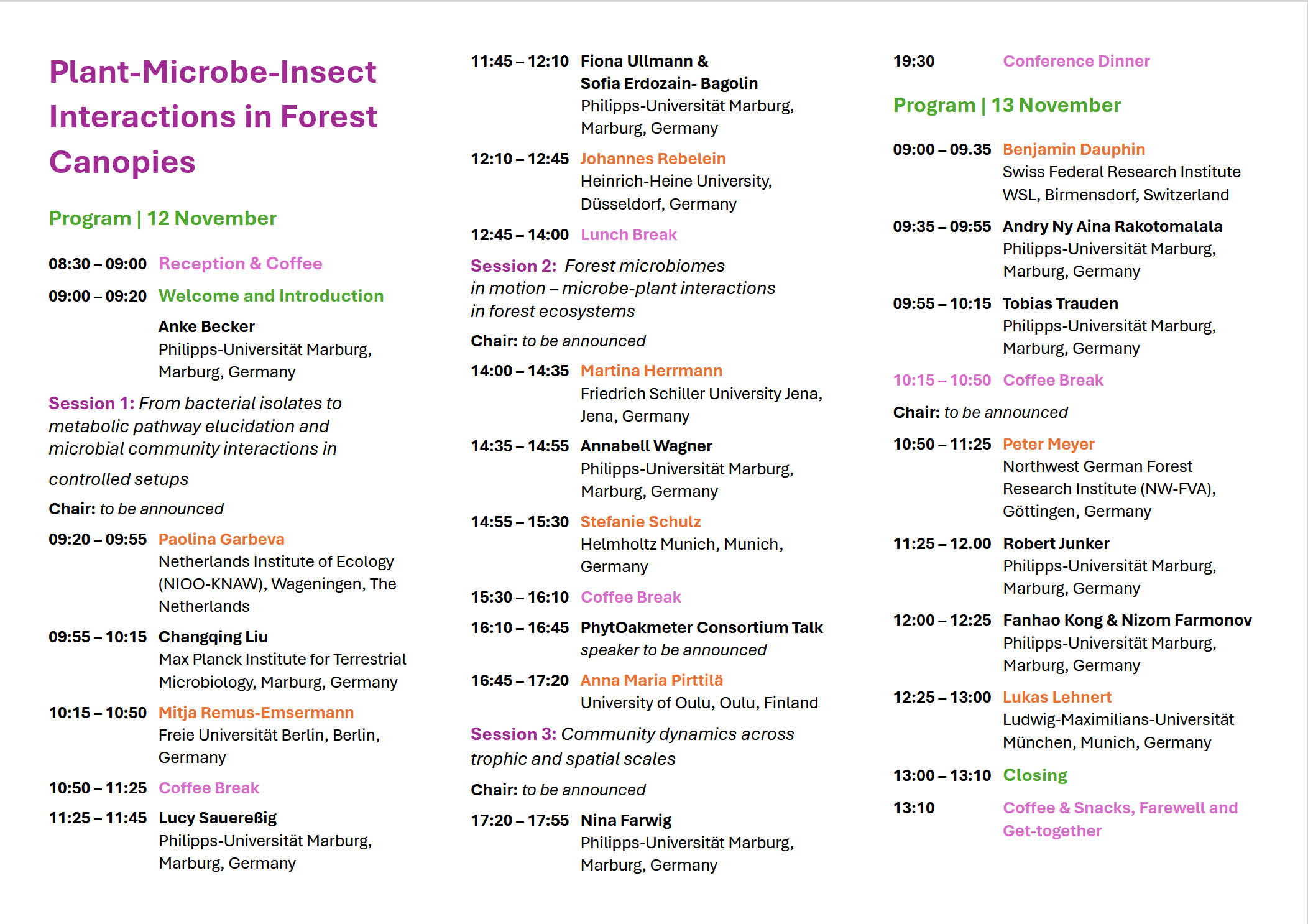
Invited Speakers
Meet our invited speakers below, representing diverse perspectives on Plant-Microbe-Insect Interactions in Forest Canopies. Additional talks by researchers from the Tree-M consortium will complement the scientific program.
Microbial Metabolism and Community Interactions
- Prof. Mitja Remus-Emsermann
Institute for Plant Physiology and Microbiology, Freie Universität Berlin (DE)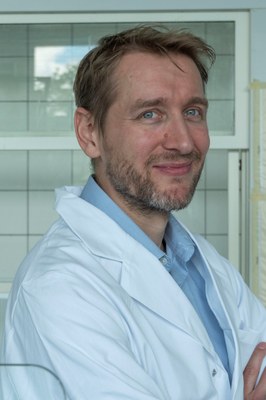
photo: Bernd Wannenmacher Profile
His research focuses on phyllosphere microbiology and plant-associated microbial communities, with emphasis on the spatial organization and interactions of bacteria on plant leaf surfaces. Using fluorescence microscopy and quantitative image analysis, he studies how microbial communities assemble at the microscale and how spatial organization shapes microbial interactions and community structure. He also investigates plant–insect–microbe systems using controlled experimental setups, studying interactions between herbivorous insects, leaf-associated bacteria, and their host plants. - Prof. Paolina Garbeva
Netherlands Institute of Ecology (NIOO KNAW) Wageningen (NE)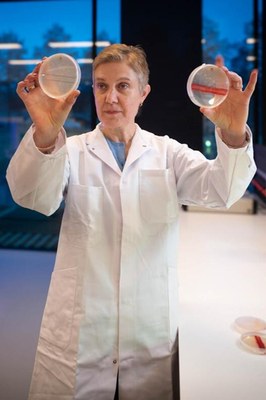
Profile
Her research focuses on microbial chemical ecology, with emphasis on microbe–microbe and plant–microbe interactions.
Using different methodological approaches, including analytical chemistry and metabolite profiling, she investigates how volatile and soluble secondary metabolites shape microbial community structure, interactions, and functioning.
Forest Microbiomes and Plant–Microbe Interactions
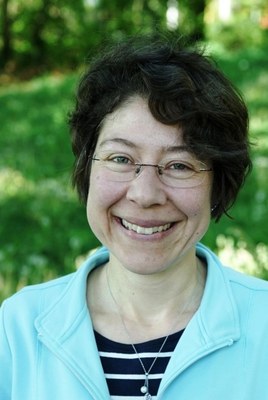
- Dr. Martina Herrmann
Institute of Microbiology, Friedrich Schiller University Jena (DE)
|
Profile Her research focuses on microbial community dynamics and microbially mediated processes in terrestrial ecosystems, with particular emphasis on linkages and microbial transport between the phyllosphere, soil, and subsurface environments. In her research on forest phyllosphere microbiomes, she investigates how phenological changes, tree species identity, and precipitation-driven transfer processes shape microbial community composition and ecosystem functioning, using molecular and biogeochemical approaches. |
- Prof. Anna Maria Pirttilä
Ecology and Genetics Research Unit, University of Oulu (FI)
Profile
Her research focuses on endophytic microbial communities associated with plants and their role in plant health and stress tolerance. Plants are considered as holobionts, inhabited by bacteria and fungi in all tissues. Working in boreal ecosystems, she studies mutualistic plant–microbe interactions in forest and wild plants, with particular emphasis on symbiosis, colonization processes, and the exchange of compounds between host and microbes. - Dr. Stefanie Schulz
Comparative Microbiome Analysis Research Unit, Helmholtz Munich (DE)
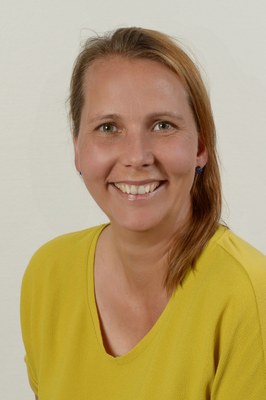
Profile
Her research focuses on soil microbial communities and plant–microbe interactions in urban, agricultural and forest ecosystems, with particular emphasis on ecosystem functioning and nutrient cycling. She combines molecular, microbiological, and ecological approaches to investigate how microbial communities contribute to biodiversity and ecosystem processes under changing environmental conditions.
Forest Ecosystem and Spatial Ecology
- Dr. Benjamin Dauphin
Institute for Biodiversity and Conservation Biology, Swiss Federal Research Institute WSL, Birmensdorf (CH)
|
|
Profile |
- Prof. Lukas Lehnert
Department of Geography, Ludwig Maximilian University of Munich (DE)
|
|
Profile His research focuses on remote sensing and spatial analysis of forest ecosystems, with particular emphasis on vegetation structure, forest dynamics, and ecosystem processes. He uses LiDAR- and thermal-based approaches to study forest structure and function, enabling monitoring of forests across spatial scales from individual trees to landscape scales. |
- Dr. Peter Meyer
NW-FVA – Northwest German Forest Research Institute Göttingen (DE)
Profile
His research focuses on forest ecosystem dynamics, biodiversity, and long-term forest monitoring, with particular emphasis on forest development and structural dynamics in temperate forests. Recent work addresses forest conservation, close-to-nature forest management, and the ecological responses of forest ecosystems to environmental change.
Flyer Preview
A detailed conference flyer including the full programme and all invited speakers will be available soon.
Participation and Registration
The registration fee is 100 €, and a reduced fee of 30 € for Bachelor’s and Master’s students.
The fee includes participation in the conference and catering throughout the event. All participants are warmly invited to the conference dinner on 12 November at the Deutschhauskeller (Deutschhausstraße 10, 35037 Marburg), located near the Elisabethkirche. Please note that accommodation is not included in the registration fee.
Registration is available via the following link.
Invoices will be issued in September.