Laboratory for Molecular Microbiology
Prof. Dr. Erhard Bremer
Laboratorium für Mikrobiologie, Fachbereich Biologie
Philipps-Universität Marburg, Karl-von-Frisch Str. 8
D-35043 Marburg/Germany
Phone: +49-6421-28 21529, Fax: +49-6421-28 28979
bremer@biologie.uni-marburg.de
Patricia Wagner
Laboratorium für Mikrobiologie, Fachbereich Biologie
Philipps-Universität Marburg, Karl-von-Frisch Str. 8
D-35043 Marburg/Germany
Phone: +49-6421-28 21530, Fax: +49-6421-28 28979
patricia.wagner@biologie.uni-marburg.de
Picture provided by:
Dr. Astrid Höppner & Dr. Sander Smits,
Heinrich-Heine-Universität, Düsseldorf
Erhard Bremer
(20. 02. 1954)
Diplom (Biology), University of Tübingen (1980)
Dr. rer. nat. (Biology), University of Tübingen (1982)
Postdoctoral fellow, National Cancer Institute (NCI), Frederick,
Maryland, U.S.A. (1982-1984)
Staff scientist (C1), Department of Microbiology, University of
Konstanz (1984-1990)
Habilitation (Microbiology and Genetics), University of Konstanz
(1989)
Assistant Professor (C2; Microbiology), University of Konstanz
(1990-1992)
Offer for an associated professorship (C3) for Applied Microbiology
at the University of Saarbrücken (1992; declined)
Head (C3) of the group "Osmoregulation" at the Max Planck Institute
for terrestrial Microbiology, Marburg (1992-1995)
Adjunct Professor (Microbiology) at the Dept. of Biology,
University of Marburg (1993-1995)
Full professor of Microbiology and Head of the Laboratory for
Molecular Microbiology at the Dept. of Biology, University of Marburg
(1995-current)
Speaker of the Collaborative Research Center for "Soil
Microbiology" (SFB 395) (2000-2007)
Offer for a full professorship (C4) for Microbiology at the
Ludwig-Maximilians-University, Munich (2002; declined)
Vice-Dean of the Department of Biology, University of Marburg
(10/2009 - 03/2011)
Elected as member of the "European Academy of Microbiology" (EAM)
(2011)
Vice-Speaker of the Collaborative Research Center for "Microbial
Diversity in Environmental Signal Response" (SFB 987) (2012 -
current)
24. April 2013, Philipps-Universität Marburg, Alte
Aula.
Die Teilnahme ist kostenlos - Anmeldung ist erforderlich
Bitte klicken Sie hier für den Flyer und das Poster.
C o n g r a t u l a t i o n s to K a t h
l e e n !
November 30, 2012
Prof. Dr. E. Bremer (Doktorvater) und Prof. Dr. D. Jahn (neuer Präsident der VAAM) freuen sich mit PD Dr. J. Boch
(Bild: Dr. A. Störiko)
Herr Priv.-Doz. Dr. Jens Boch (Universität Halle), ehemaliger
Doktorand in der Arbeitsgruppe Bremer hat den mit 10.000 Euro dotierten
Forschungspreis der
"Vereinigung für Allgemeine und Angewandte Mikrobiologie (VAAM ) für das Jahr 2013
erhalten.
Zur Pressemitteilung klicken Sie bitte hier.
A key event in the evolution of
primordial cells on earth was the development of the cytoplasmic
membrane since it created a protected reaction chamber for the
performance of life’s vital attributes (faithful copying of the genetic
material and cell division, development of an ordered metabolism,
generation of energy producing systems to fuel import and export
transport processes). However, the invention of the semi-permeable
cytoplasmic membrane and the subsequent development of a protective
cell wall (e.g., the peptidoglycan sacculus) also created a severe
problem for the microbial cells because this protected environment with
its high concentrations of nucleic acids, proteins, organic metabolites
and inorganic ions possesses a very substantial osmotic potential.
This, in turn, creates an osmotic driving force that triggers water
influx into the cell and thereby generates an intracellular hydrostatic
pressure, the turgor, whose magnitude can in certain groups of
microorganisms (e.g. Bacilli and Staphylococci) vastly exceed that
present in a car tire. Turgor is considered essential for cell
expansion and viability, but its magnitude is affected by fluctuations
in the osmotic conditions of the varied habitats of microorganism.
Fig. 1. From a proto-cell to
modern-day microbial cells: water-management and control of turgor is
critical for cellular survival.
Microorganisms never developed the ability to actively pump water in or
out of the cell to compensate for water fluxes across their cytoplasmic
membrane that are elicited by variations in the external osmolarity.
Instead, microorganisms learned in the course of evolution to determine
the extent of cellular hydration and magnitude of turgor indirectly by
dynamically modulating the osmotic potential of their cytoplasm in a
direct response to cues emanating from osmotic changes in the
environment. When they face hyperosmotic environments, they expel ions
and organic compounds through the transient opening of mechanosensitive
channels to prevent cell rupture. When they face hyperosmotic growth
conditions they escape cellular dehydration and collapse of turgor by
amassing ions (e.g., potassium) and a selected class of organic
osmolytes, the so-called compatible solutes. Compatible solutes can be
amassed by the microbial cells either through synthesis or through
uptake in a direct response to increases in the osmolarity of their
habitat.
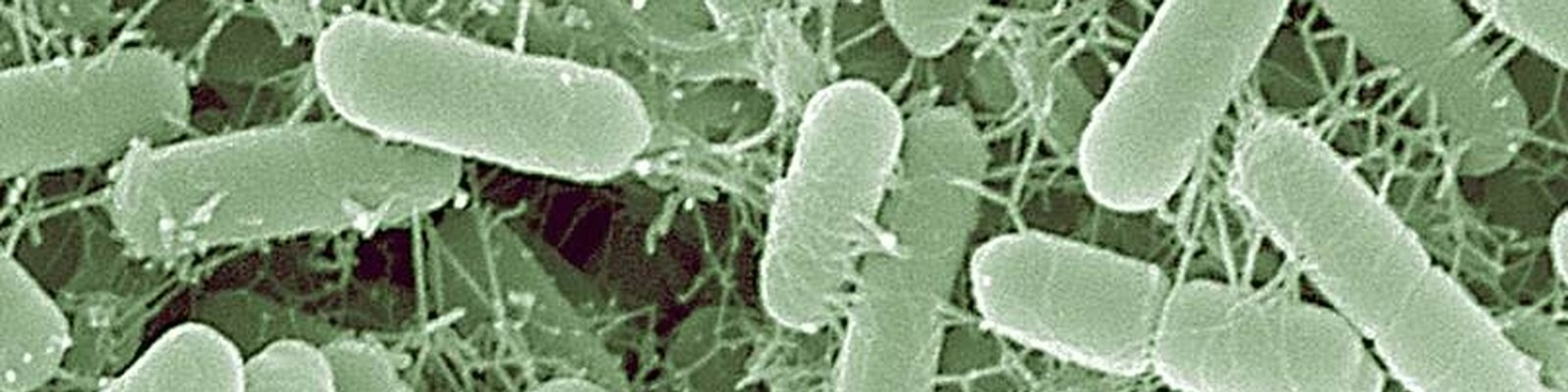
Fig 2. Raster electron micrograph of the soil bacterium Bacillus
subtilis (picture kindly provided by Laura Czech and Dr.
Karl-Heinz Rexer, Philipps Universität Marburg)
We are studying the genetic regulatory
circuits that permit microbial cells to detect osmotic changes in their
environment and study the cellular response systems that allow cells
challenged by high salinity to cope with osmotic stress. We use the
Gram-positive soil bacterium B acillus subtilis and
various taxonomically closely related Bacillus species as our primary
model system. Important compatible solutes for Bacilli are the amino
acid L-proline, the trimethylammonium compound glycine betaine and the
tetrahydropyrimidine ectoine and its derivative hydroxyectoine. These
compounds can either be synthesized in response to osmotic stress or
can be taken up from the environment through osmotically controlled
high-affinity uptake systems. Exposure of B. subtilis to high
salinity (equivalent to dried-out soil) triggers rapid water efflux
that is counteracted by the cell through increased uptake of potassium
ions and the subsequent synthesis and import of compatible solutes
(e.g., L-proline and glycine betaine). Compatible solute accumulation
allows potassium efflux through dedicated extrusion systems and thereby
permits the cell to reduce the ion strength of the cytoplasm without
compromising its osmotic potential and ability to maintain
physiological adequate levels of turgor. An important aspect of our
work on the use of compatible solutes by B. subtilis as
osmo-stress and temperature stress protectants is the analysis of
osmotically controlled transport systems for the import of this class
of compounds.We study the genetic regulation of the structural genes
for these import systems in response to increased salinity
(“osmoregulation”) and characterize structurally and biochemically
components - primarily the extracellular ligand binding proteins - of
ABC-transporters for various types of compatible solutes.
Fig. 3.
Central osmo-stress response systems for the water-management
by the soil Bacillus subtilis facing a high salinity
environment .
The soil bacterium Bacillus
subtilis synthesizes the compatible solute glycine betaine through
the oxidation of the precursor molecule choline. It imports for this
purpose choline with high affinity through the osmotically inducible
ABC transporter OpuB. Left : A view from the crystallization
screen with the purified OpuBC protein (picture kindly provided by Dr.
Sander H.J. Smith; University of Düsseldorf, Germany). Right :
Overall crystal structure of the OpuBC protein in complex with its
ligand choline (PDB code: 3R6U). The OpuBC crystal structure and the
molecular determinants of the choline-binding site were report by
Pittelkow et al . (J. Mol. Biol. 411:53-67, 2011).
Fig. 4. Structura l analysis
of the choline-binding protein OpuBC required for the functioning of
the choline-specific OpuB ABC-transporter from Bacillus
subtilis .
Our laboratory actively participates within the framework of the LOEWE
initiative of the state of Hessen in the Centre for Synthetic
Microbiology (SYMIKRO)
(link). Building on our extensive expertise in field of microbial
stress resistance against extremes in osmolarity and growth temperature
through uptake and synthesis of compatible solutes, we design portable
genetic systems for transport and uptake systems for these compounds
whose expression can be triggered at will. We assemble also
genetic building blocks (“bio-bricks”) for the synthesis of L-proline
and ectoine/hydroxyectoine from various microorganisms and synthetic
gene constructs to streamline and maximize the high-level cellular
production of these compounds for biotechnological purposes. Compatible
solutes, also referred to in the literature as “chemical chaperones”,
not only confer superior cellular resistance to osmotic stress but are
also very efficient protectants against extremes in growth temperature;
both low and high! Their ecophysiological relevance in natural settings
can therefore not be underestimated for providing stress resistance to
microbial cells!
Weitere Nachrichten haben wir hier
im Archiv eingestellt.
Ziegler C, Bremer E, Krämer R.
The BCCT family of carriers:
from physiology to crystal structure
Mol Microbiol.
78 : 13-34 (2010)
Hoffmann, T., von Blohn, C., Stanek, A.,
Moses, S., Barzantny, H. and Bremer, E.
Synthesis, release, and recapture of the
compatible solute proline by osmotically
stressed Bacillus subtilis cells.
Appl. Environ.
Microbiol. 78: 5753-5762 (2012)
Cover image: aem.asm.org
Fischer, K. E. & Bremer, E.
Activity of the Osmotically Regulated yqiHIK Promotor
from Bacillus subtilis is Controlled at a Distance
J. Bacteriol. 194:
5197-5208 (2012)
Cover image: jb.asm.org
Hoffmann, T. and Bremer, E.
(2011). Cold stress protection of Bacillus
subtilis via compatible solute acquisition. J. Bacteriol.
193:1552-1562.
Bremer, E. (2011) . A look into the aromatic cage.
Crystal Ball-2011. Env. Microbiol. Rep.3:1-5.
Müller, S., Hoffmann, T., Santos, H., Saum, S.
H., Bremer, E. and Müller V. (2011). Bacterial
abl -like genes: Production of the archaeal osmolyte
Nε - acetyl-β-lysine by homologous overexpression of the
yodP-kamA genes in Bacillus subtilis. Appl.
Microbiol. Biotechnol. 91:689-697.
Pittelkow, M. and Bremer (2011) . Cellular
adjustments of Bacillus subtilis and other Bacilli to
fluctuating salinities. In: Halophiles and Hypersaline Environments:
Current Research and Future Trends. (Eds. A. Ventosa, A. Ohren and Y.
Ma). (Springer, Berlin; 1st Edition.) S. 275-302.
Tschapek,
B., Pittelkow, M., Sohn-Bösser, L., Holtmann, G., Smits, S. H. J.,
Gohlke, H., Bremer, E. and Schmitt, L. (2011) Arg149 is
involved in switching the low affinity, open state of the binding
protein Af ProX into its high affinity, closed state. J. Mol.
Biol. 411: 36-52.
Pittelkow,
M., Tschapek, B., Smits, S. H. J., Schmitt, L. and Bremer, E.
(2011) . The crystal structure of the substrate-binding
protein OpuBC from Bacillus subtilis in complex with choline.
J. Mol. Biol. 411:53-67.
Eppinger,
M., ... ... ..., Bremer, E., Jahn, D., Ravel, J. and Vary, P. S.
(2011) Genome sequences of the biotechnologically
important Bacillus megaterium strains QM B1551 and DSM319. J.
Bacteriol. 193: 4199-4213.
Stöveken,
N., Pittelkow, M., Sinner, T., Jensen, R. A., Heider, J. and Bremer, E.
(2011) A specialized aspartokinase enhances the
biosynthesis of the osmoprotectans ectoine and hydroxyectoine in
Pseudomonas stutzeri A1501. J. Bact. 193:445-4468.
Kuhlmann, A.
U., Hoffmann, T., Bursy, J., Jebbar, M. and Bremer, E.
(2011) Ectoine and hydroxyectoine as protectants against
osmotic and cold stress: Uptake through the SigB-controlled
betaine-choline-carnitine transporter-type carrier EctT from
Virgibacillus pantothenticus. J. Bacteriol. 193:
4699-4708.
Moses, S.,
Sinner, T., Zaprasis, A., Stöveken, N., Hoffmann, T., Belitsky, B. R.,
Sonenshein, A. L. and Bremer, E. (2012) Proline
utilization by Bacillus subtilis : uptake and catabolism. J.
Bacteriol. 194: 745-758.
Nau-Wagner,
G., Opper, D., Rolbetzki, A., Boch, J., Kempf, B., Hoffmann, T. and
Bremer, E. (2012) Genetic control of osmoadaptive glycine
betaine synthesis in Bacillus subtilis through the
choline-sensing and glycine betaine-responsive GbsR repressor. J.
Bacteriol. 194: 2703-2714.
Hoffmann,
T., von Blohn, C., Stanek, A., Moses, S., Barzantny, H. and Bremer,
E. (2012) Synthesis, release, and recapture of the
compatible solute proline by osmotically stressed Bacillus
subtilis cells. Appl. Environ. Microbiol. 78: 5753-5762.
Fischer, K.
E. and Bremer, E. (2012) Activity of the osmotically
regulated yqiHIK promotor from Bacillus subtilis is
controlled at a distance. J. Bacteriol. 194: 5197-5280.
Zaprasis,
A., Brill, J., Thüring, M., Wünsche, G., Heun, M., Barzantny, H.,
Hoffmann, T. and Bremer, E. (2013) Osmoprotection of
Bacillus subtilis through import and proteolysis of
proline-containing peptides. Appl. Environ. Microbiol. 79:
576-587.
Hoffmann,
T., Wensing, A., Brosius, M., Steil. L., Völker, U. and Bremer,
E. (2013) Osmotic control of opuA expression in
Bacillus subtilis and its modulation in response to
intracellular glycine betaine and proline pools. J. Bacteriol. 195:
510-522.
Die AG Bremer erschließt eine neue Leserschaft für wichtige Publikationen.
Name der Katze: Pitcher (19 Jahre).
(Bild: Prof. L. Csonka)
Neues dynamisches Mitglied der AG Bremer.
Name der Katze: Milly (noch jung) - kann noch nicht lesen!
(Bild: Tilden Chen)
Smartphone und App News
<b><a
href="http://www.counter-go.de/"
target="_blank"><img
border="0"
src="http://www.counter-go.de/counter.php?account=1270043551"
/></a></b>
Zuletzt aktualisiert:
15.03.2013
·
Patricia Wagner