Main Content
Discover the Top 10 Ideas from the First FLASH Round
The first FLASH round is complete – and it was packed with great ideas! Out of 93 submissions, these 10 made it to the top. Here, we present all of the Top 10 ideas – including, of course, the idea that ultimately took home the €500 prize. Congratulations to the winner, and a big thank you to everyone who took the chance and participated!
1st Place – Awarded €500
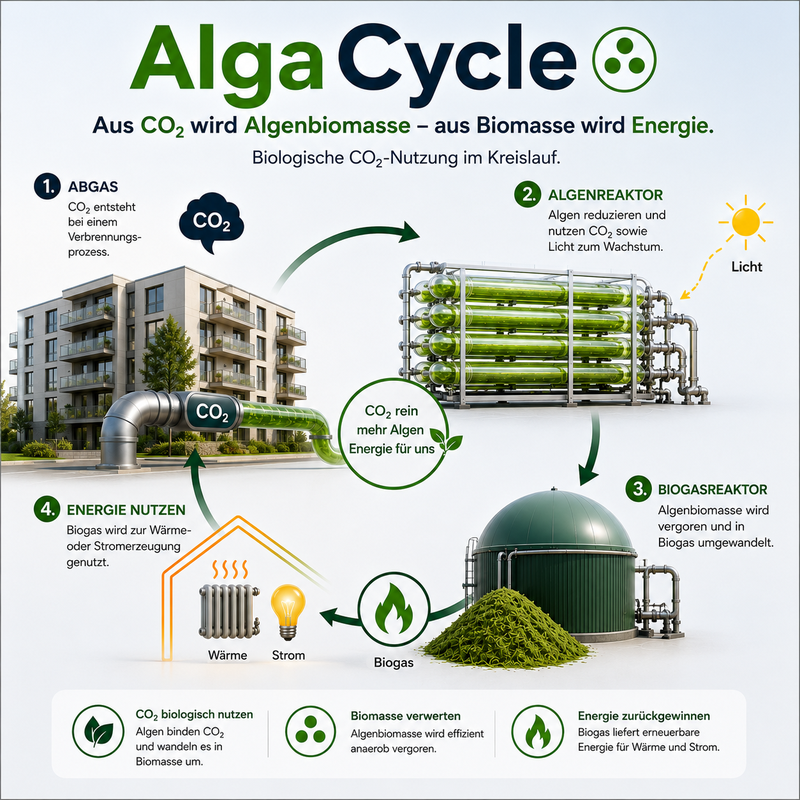
AlgaCycle
What if CO₂ from combustion processes could become the starting point for a biological cycle? AlgaCycle uses algae to convert CO₂ and light into biomass as they grow. The resulting algal biomass can then be fermented to produce biogas. The idea thus combines biological CO₂ utilization with the energetic use of biomass.
Submitted by Annika Isabelle Peter, studying at the Department of Chemistry.
Also Among the Best:
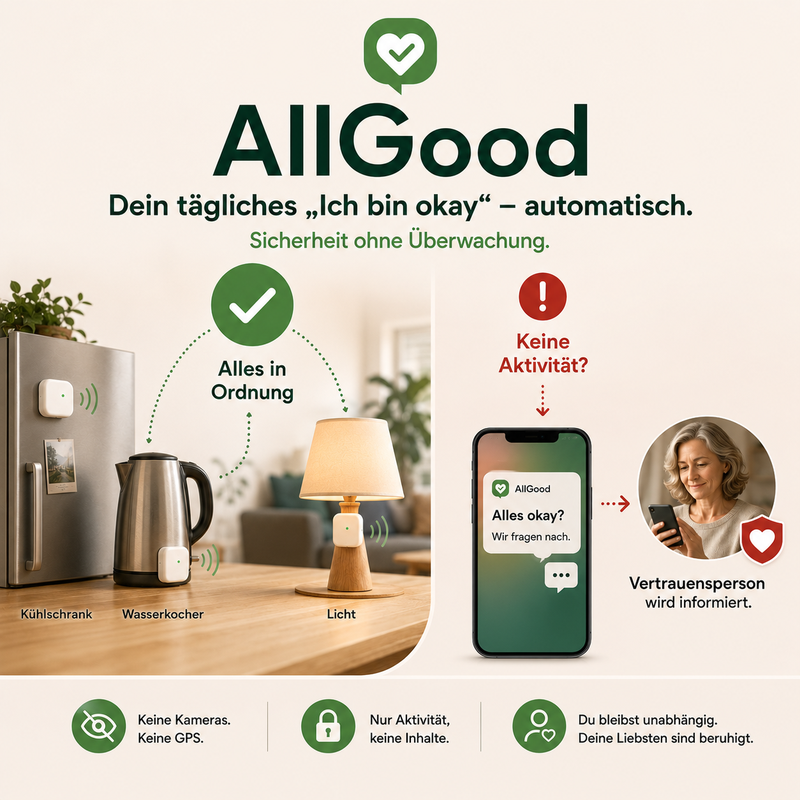
AllGood
Living alone while knowing that someone will respond in an emergency: AllGood turns everyday activities into a passive “I’m okay” signal – without cameras, GPS, or daily check-ins.
What happens if someone living alone has an accident and is unable to call for help? AllGood uses small sensors integrated into everyday objects to detect whether normal activity is taking place. If activity stops for an unusually long period, the system first checks in with the person and only then notifies a trusted contact. Safety without constantly monitoring people.
Submitted by Dilan Oktuay, studying at the Department of German Studies and Art History.
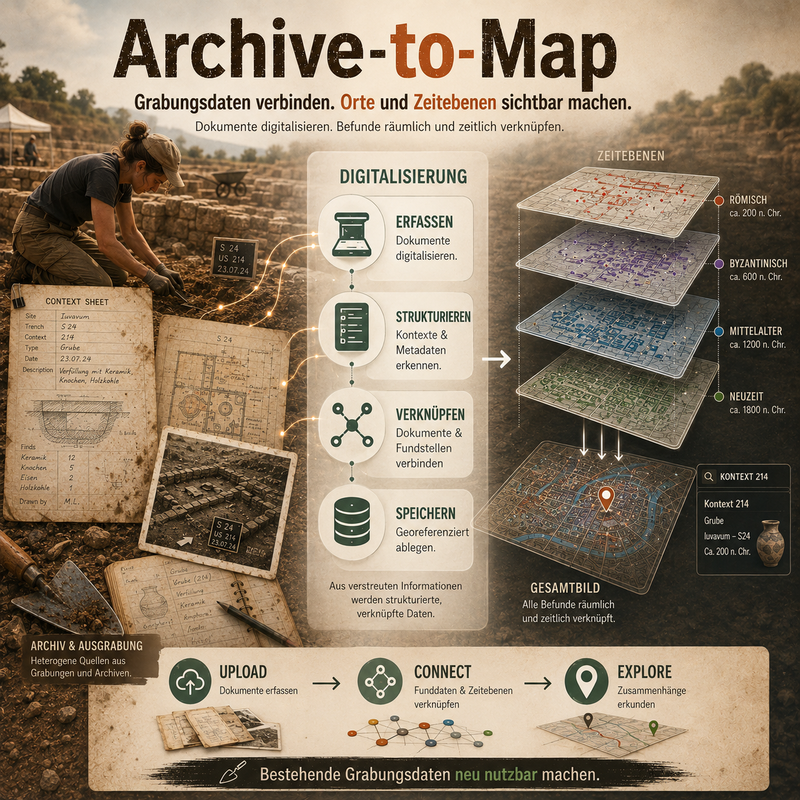
Achrive - to - Map
Archaeological information is often scattered across plans, photographs, context sheets, and tables from different excavations and decades. “Archive-to-Map” digitizes and structures these sources and assigns them geographical locations. This makes it possible to compare previously separate collections across excavations and chronological layers, creating a more comprehensive picture of sites and their development.
Submitted by Hussein Zeaiter, pursuing a doctorate at the Department of History and Cultural Studies.
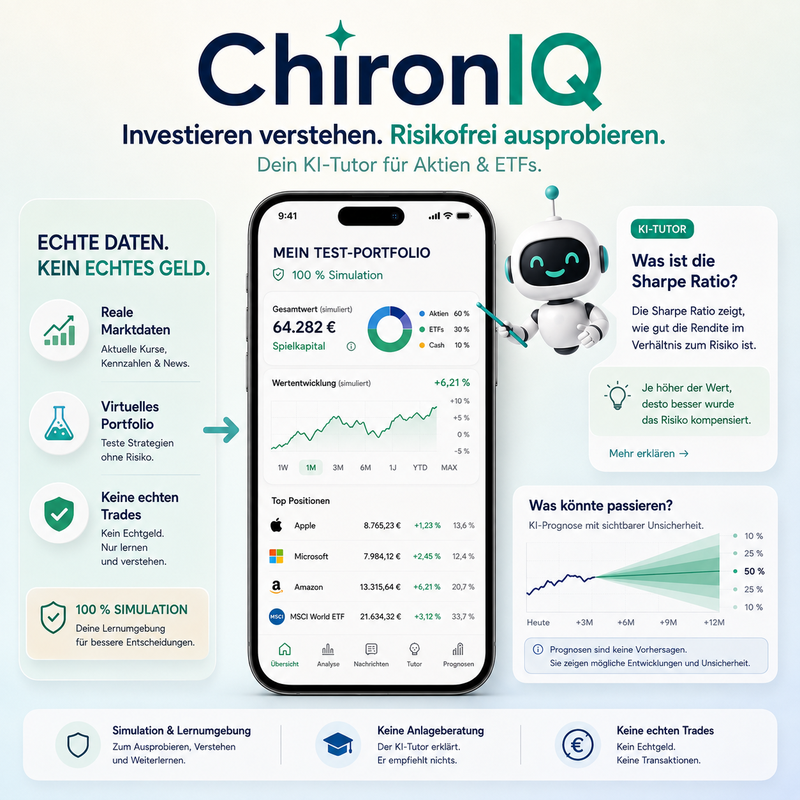
ChironIQ
Access to the stock market has become easier, but the knowledge needed to navigate it has not automatically followed. chironiQ therefore allows users to simulate and analyze portfolios using real market data, without financial risk. An AI tutor explains key figures, risks, and results instead of providing specific investment recommendations. Learn and experiment without investing real money.
Submitted by Daniel Dausend, studying at the Department of Mathematics and Computer Science.
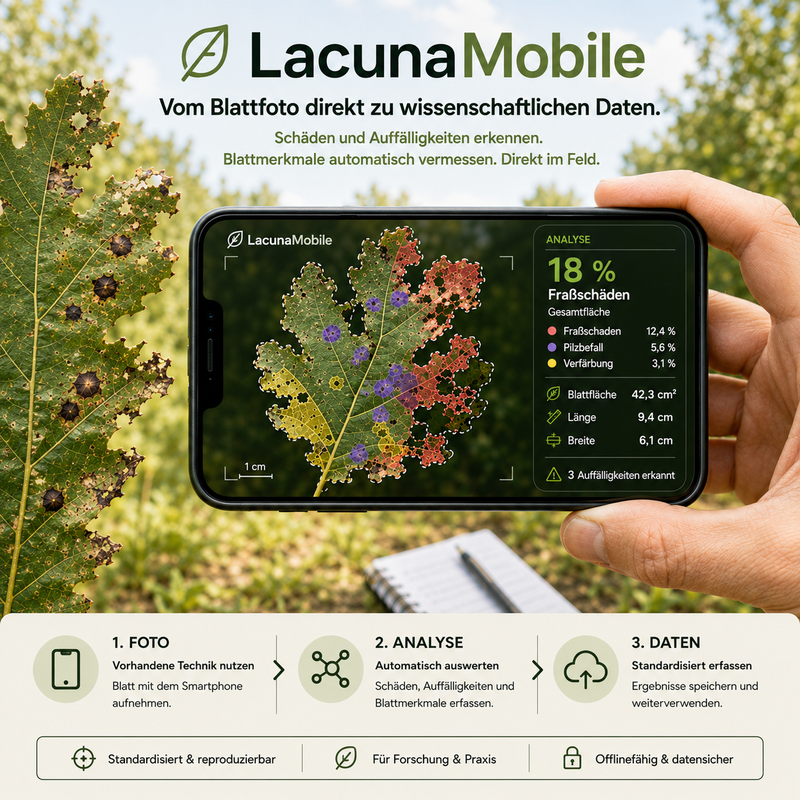
LacunaMobile
Recording leaf damage and morphological characteristics often involves extensive manual work in research. LacunaMobile aims to bring this analysis directly into the field: users can capture images of leaves with existing mobile hardware, identify different abnormalities, and obtain standardized measurements. This enables more reproducible data collection directly where the research takes place.
Submitted by Tobias Trauden, Research Associate at the Department of Biology.
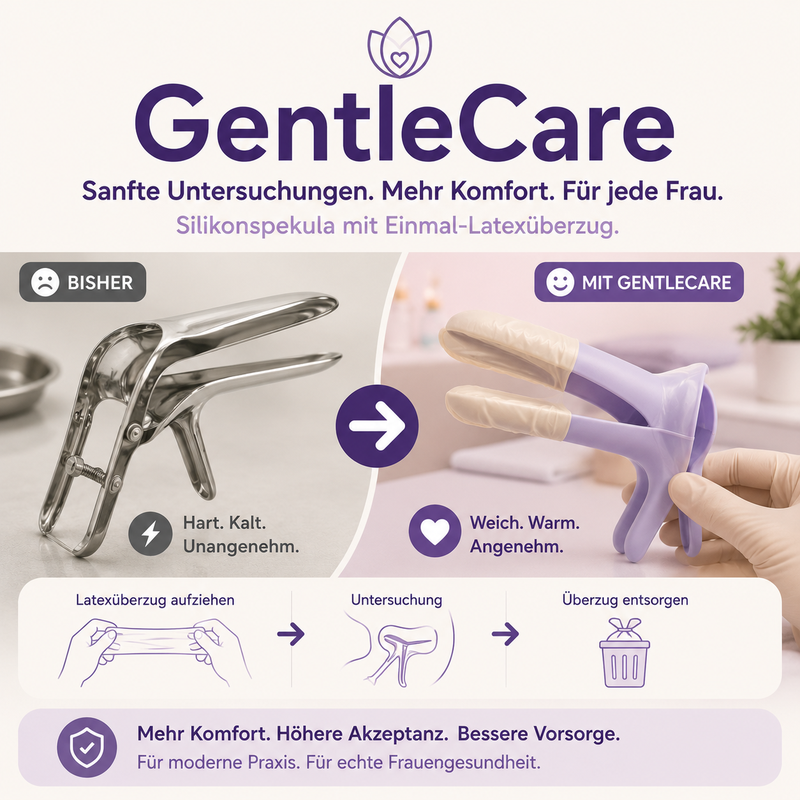
GentleCare
For many patients, the traditional metal speculum is uncomfortable or painful. Silicone could make examinations more comfortable, but it also presents challenges when it comes to hygienic reprocessing. The idea therefore applies a familiar principle from vaginal ultrasound: a suitable single-use protective cover for the speculum. A small approach towards a more patient-friendly examination.
Submitted by Paula Neumann, Research Associate at the Department of Foreign Language Philologies.
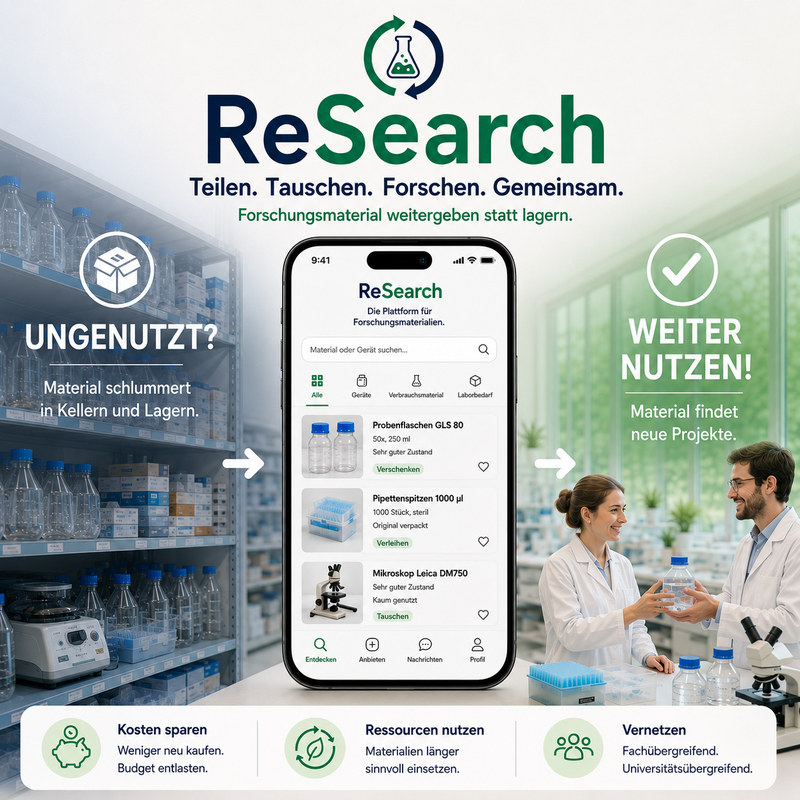
ReSearch
After research projects end, sample containers, equipment, and materials often remain unused. At the same time, other research groups spend money purchasing exactly these resources from scratch. ReSearch connects supply and demand within and between universities. Share, exchange, lend, or pass on resources – for more affordable and more resource-efficient research.
Submitted by Lena Lerbs, pursuing a doctorate at the Department of Biology.
RipDip
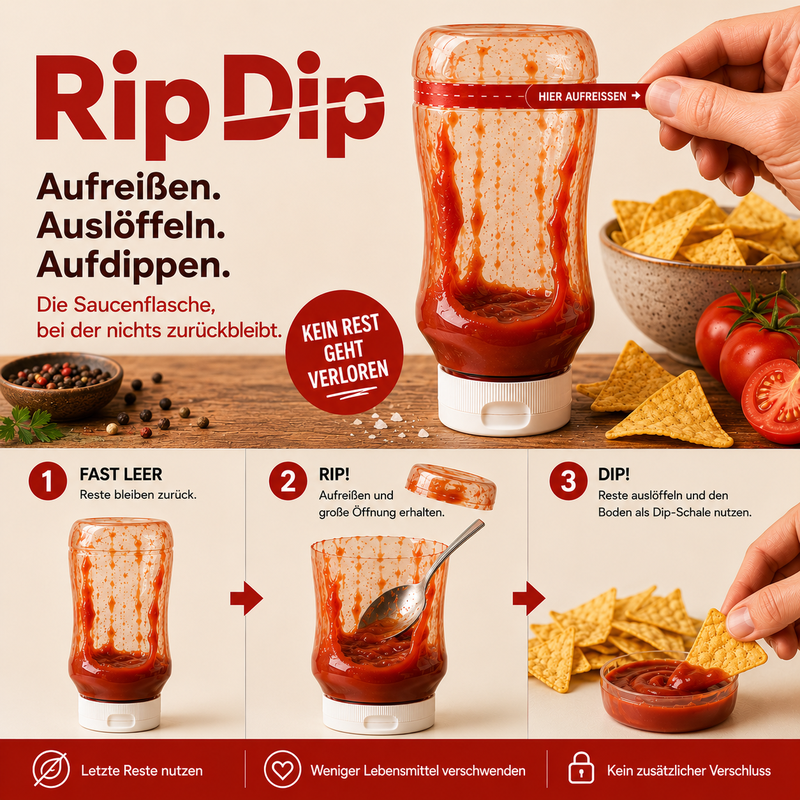
Everyone knows those sauce leftovers that simply refuse to come out of the bottle. RipDip adds a tear-off strip at the bottom of the classic squeeze bottle. Once the bottle is nearly empty, the bottom can be opened, allowing the remaining sauce to be removed. The detached part can then be used directly as a small dipping dish.
Submitted by Ya Gao, studying at the School of Business and Economics.
Socialising Tablets
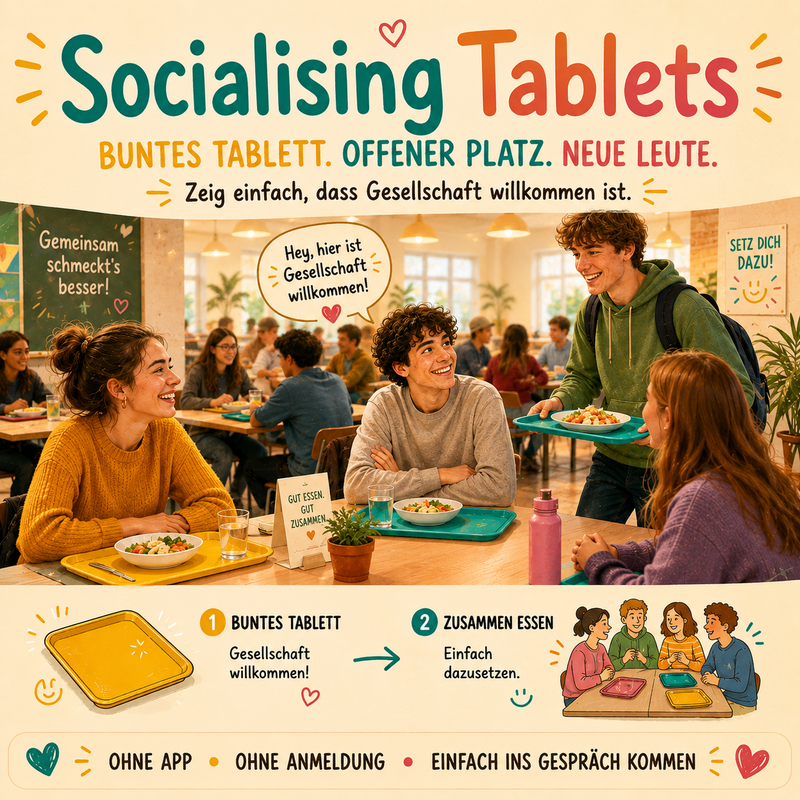
Many students eat alone, but would still hesitate to simply sit down with strangers. Socialising Tablets addresses exactly this social barrier. Anyone who takes a colored tray in the university cafeteria signals that they are open to company. No app, no matching, no registration – sometimes a visible sign is all it takes.
Submitted by Paul Leininger, studying at the Department of Law.
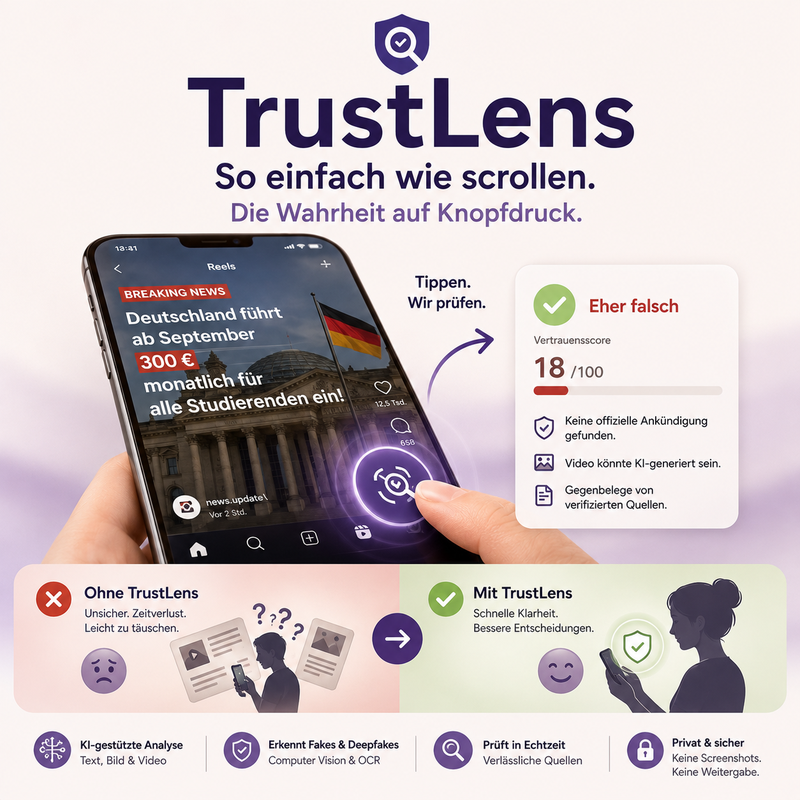
TrustLens
Deepfakes, manipulated videos, and false claims are becoming increasingly difficult to identify. TrustLens therefore brings verification directly into the social media feed. With a single tap, content can be analyzed and checked against external sources. The vision: verifying information should be as easy as scrolling.
Submitted by Manwi Acharya, studying at the Department of Mathematics and Computer Science.