Main Content
Excellence Strategy

Marburg and Giessen Universities Look Ahead Following the “University of Excellence” Decision
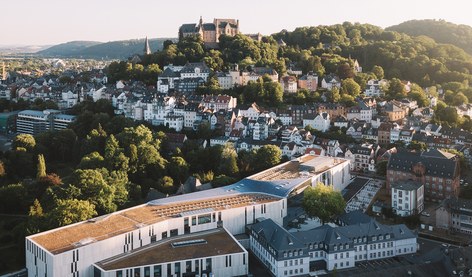
Following the decision in the competition for the title of “University of Excellence,” the University of Marburg and Justus Liebig University of Giessen are jointly looking ahead: Even without the title, the two long-established universities will continue to work proactively to further expand cutting-edge research and innovation in the region. A total of four clusters of excellence in Marburg and Giessen provided the necessary momentum for the joint proposal “H_CORE – Hessian Collaboration for Research Excellence” under the “University of Excellence” funding line of the nationwide Excellence Strategy.
Both university administrations agree that the collaboration between the universities in Marburg and Giessen - which has been in place for at least three decades and involves close cooperation with the Technical University of Central Hesse (THM) - has reached a new level as a result of this competition. The three institutions of higher education will continue to drive the strategic development of Central Hesse as a hub for science and business. Focusing on cutting-edge research projects related to the four Clusters of Excellence and extending far beyond them, the administrative bodies, central facilities, committees, and various student groups at both universities and the THM have established robust networks and significantly deepened their collaboration.
Funding line: University of Excellence
Following the great success in Central Hesse, with a total of four Clusters of Excellence, the University of Marburg, together with Justus Liebig University Giessen, entered the competition for the title of “University of Excellence” - the second round of the Excellence Strategy. The basis for the joint application was the long-standing, successful collaboration within the Central Hesse Research Campus (FCMH), a consortium comprising the two universities and the Technical University of Central Hesse (THM).
Press release Joint application for University of Excellence (June 2025)
Funding line: Excellence clusters
Marburg University has made its mark on the map of excellence in Germany with a double success. The clusters “Microbes-for-Climate” (M4C) of the university and the Max Planck Institute for Terrestrial Microbiology and “The Adaptive Mind” (TAM) in collaboration with the universities of Giessen, Marburg, and Darmstadt will be funded in Germany's most important research competition starting January 1, 2026. The focus is on basic research into the role of microbes in climate change and the function of human behavior and perception.
"The flagship projects are the result of scientists' strategic focus on important research topics. The clusters of excellence give research teams the opportunity to seek fundamental answers to major questions facing humanity and reward the efforts made in many areas of the university over recent years." – Prof. Dr. Thomas Nauss, President of Marburg University
Cluster "Microbes-for-Climate" (M4C)
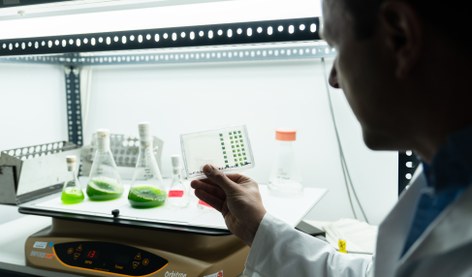
In the Cluster of Excellence “Microbes for Climate” (M4C), researchers aim to establish the knowledge base for a balanced carbon cycle in the future in order to counteract further global warming. The climate crisis is essentially caused by a man-made imbalance in the global carbon cycle. Microorganisms are at the center of this process because they produce and convert billions of tons of the greenhouse gases carbon dioxide (CO2) and methane (CH4) every year. At the same time, they also offer opportunities to convert these greenhouse gases into climate-neutral molecules. Their role in natural ecosystems, agriculture, and biotechnologies makes them part of the climate crisis and, at the same time, a possible key to its solution.
Cluster "The Adaptive Mind" (TAM)
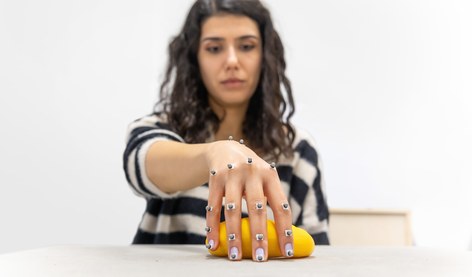
The ability to adapt behavior to a given situation is a fundamentally important human trait. A disturbance of this ability can lead to mental illness. The collaboration between Justus Liebig University Giessen (JLU), Marburg University, and TU Darmstadt in the Cluster of Excellence “The Adaptive Mind” brings together researchers from psychology, cognitive science, medicine, and neuroscience with experts in artificial intelligence, machine learning, and robotics to decipher universal principles of human adaptability. In the long term, the researchers aim to contribute to improvements in mental health, but also to the development of more robust robotics and AI systems.