Plant Physiology and Photobiology
- Teaching
- Plant Physiology and Photobiology
(Paul Galland)
Short description / Homepage
- Molecular Plant Physiology and Photobiology
(Alfred Batschauer)
Short description / Homepage
Plant Physiology and Photobiology
Prof. Dr. Paul Galland
Scientific focus
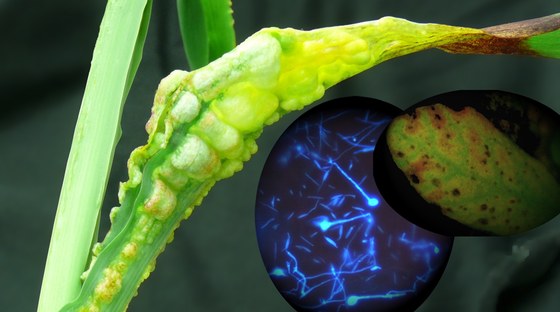
The perception of light and the earth's gravitational field represent crucial factors for growth and morphogenesis. We investigate the gravi- and photoperception of fungi and plants and are particularly interested in the respective primary responses and the role of the cytoskeleton. To tackle these problems we employ a spectrum of methods that are characteristic for approa-ches in physiology, spectroscopy and cell biology. Our major goal is the identification and characterization of the gravisusceptors and photoreceptors and their interaction with the cytoskeleton. In this context we also investigate basic questions pertaining to the role of the cytoskeleton in the transport and positioning of plant and fungal organelles. Particularly in large and polar growing cells, organelles are frequently characterized by non-random intracellular distributions and directional transport. This feat is achieved by the cytoskeleton, a dynamic system of filamentous protein polymers equipped with motor proteins that mediate the transport of cargo, e.g. organelles.We employ the following organisms for comparative investigations: Phycomyces blakesleeanus (a unicellular Zygomycete fungus), Arabidopsis thaliana (a crucifer), Avena sativa (oat), and the green algae, Chara , Spirogyra and Mougeotia)(Charophyceae).
Contact
Prof. Dr. Paul Galland
Phone: ++49 6421 28 22061
Fax: ++49 6421 28 22057
galland@staff.uni-marburg.de
Dr. Franz Grolig
Phone: ++49 6421 28 23556
grolig@staff.uni-marburg.de
Dr. Hartwig Schuchart
Phone: ++49 6421 28 2067
schuchar@staff.uni-marburg.de
Molecular Plant Physiology and Photobiology
Prof. Dr. Alfred Batschauer
Scientific focus
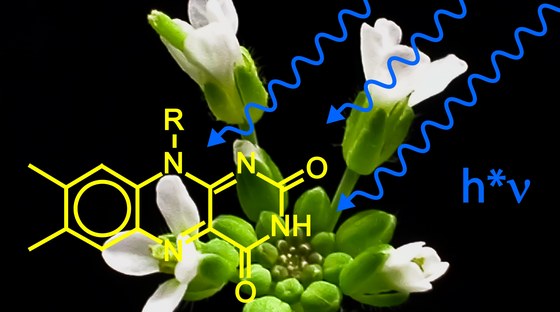
We investigate with various methods members of the photolyase/cryptochrome family from Arabidopsis thaliana.Photolyases are DNA-repair enzymes, which repair mutagenic and cytotoxic DNA-lesions caused by UV-B. For repair they use light energy in the UV-A/blue region. Our research focuses on the enlightenment of the catalytic mechanism of DNA-photolyase in metazoans.
Cryptochromes are blue-light receptors closely related to photolyases, and were identified in bacteria, plants, animals and human. We investigate two plant cryptochromes, CRY2 and CRY3. CRY2 is a nuclear photoreceptor that plays an essential role in the regulation of flowering time. CRY3 is localised in organelles (chloroplasts, mitochondria) and binds DNA. Our research on cryptochromes focuses on biochemical, spectroscopic and structural aspects to understand their function at the molecular and atomic level.
Contact
Prof. Dr. Alfred Batschauer
Phone: ++49 6421 28 27064
Fax: ++49 6421 28 21545
batschau@staff.uni-marburg.de
PD Dr. Dieter Dörnemann
Phone: ++49 6421 28 22070
doernema@staff.uni-marburg.de
Homepage