10.07.2026 When the Garúa Disappears: A New Research Unit Will Study the Future of the Galápagos Cloud Forests
DFG funds interdisciplinary consortium with around 5 million euros
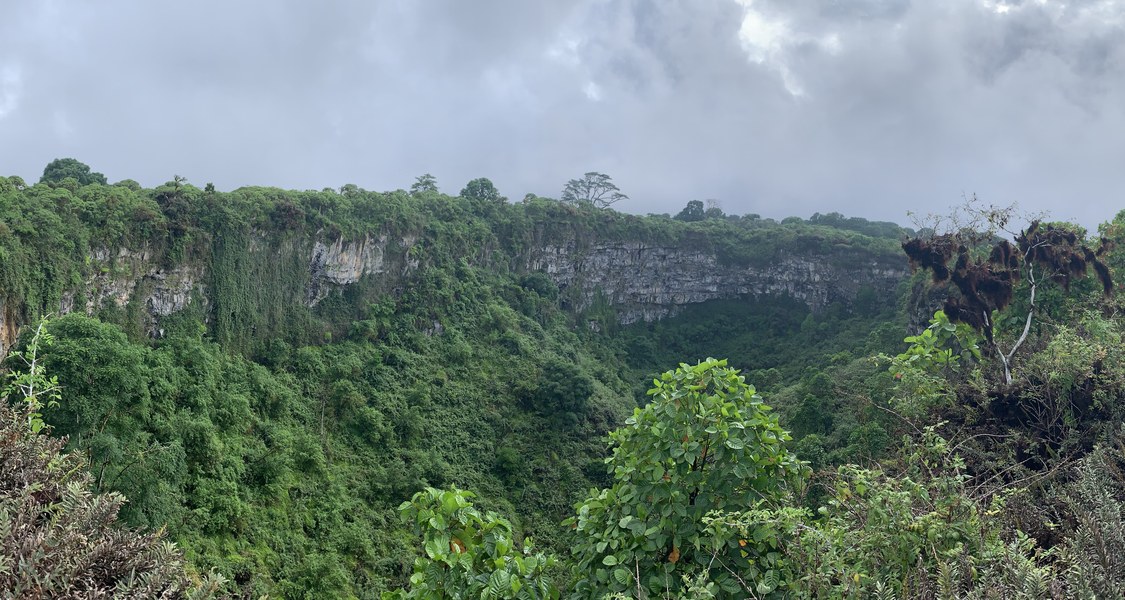
Since Charles Darwin’s pioneering research, the Galápagos Archipelago has been recognized for its extraordinary endemic biodiversity. However, this natural heritage faces increasing threats from climate change and the spread of invasive species. To better understand how these pressures may transform one of the islands’ most important ecosystems, GArua (Fog-dependent water relations and plant invasion in the Galápagos ARchipelago Under climAte change) has been established as a new research initiative that will investigate the interactions between water availability, cloud forests, and biodiversity across the archipelago, under the climate change influence.
The initiative is coordinated by Marburg University (Germany) and is being carried out in the Galápagos in close collaboration with the Charles Darwin Foundation (CDF) and its strategic partner, the Galápagos National Park Directorate (GNPD). The project is funded by the German Research Foundation (DFG) with an investment of approximately €5 million for an initial four-year period.
Galápagos: A Unique Ecosystem Under Pressure
The garúa, the characteristic fog that blankets the highlands of the Galápagos for much of the year, is an essential source of water for the islands’ terrestrial ecosystems. It sustains the iconic Scalesia forests and numerous species of mosses, ferns, lichens, and orchids that depend directly on atmospheric moisture. In addition, fog interception contributes to groundwater recharge, supporting freshwater supplies for both biodiversity and local communities.
“The cloud forest on the Galápagos Islands is a unique ecosystem shaped by species that occur only on the islands – including Scalesia, the “daisy tree”. Yet at the same time it is under severe threat from climate change and the encroachment of invasive plants,” says Dr Maaike Bader, Professor in the Department of Geography at Marburg University and spokesperson for the newly established GArua Research Unit.
Against this backdrop, the project will investigate how climate change may alter the formation of the garúa and what consequences this could have for the humid highland forests, biodiversity, freshwater availability, and the spread of invasive species.
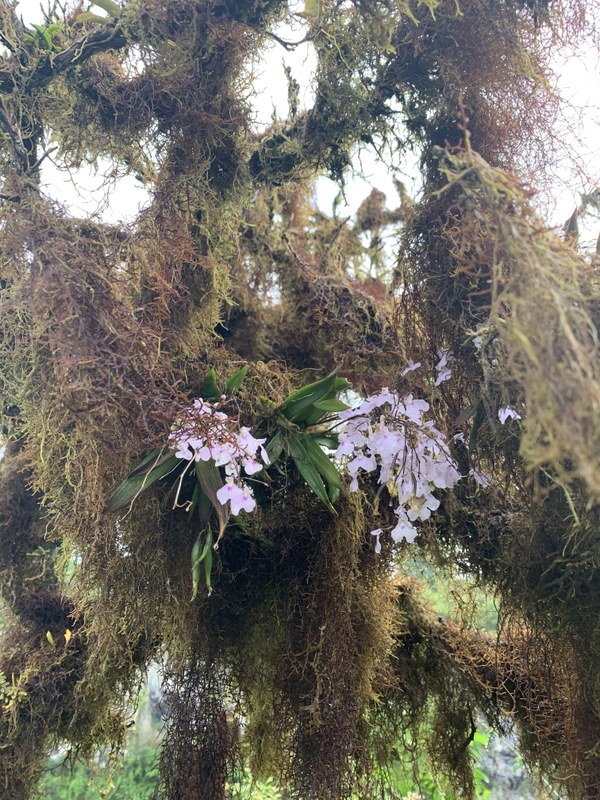
“However, a decline in atmospheric water supply from the garúa as a result of climate change could threaten not only the endemic biodiversity but also the archipelago’s freshwater supply”, says Dr Jörg Bendix, Professor in the Department of Geography at Marburg University and second spokesperson for the Research Unit. “Initial studies from the preparatory project DARWIN (“Dynamics of precipitation in transition: The water source for the Galápagos Archipelago under climate change”) indicate that future warming – as currently observed during strong El Niño events – could alter the low Pacific cloud layers that provide the garúa. This could reduce the ability of vegetation to capture water from fog.”
Although these projections raise significant concerns, there is still limited understanding of how such changes may affect the archipelago's hydrological cycle and biodiversity.
A research initiative to Understand the Consequences of Climate Change
To answer these questions, the research team will establish a network of monitoring and observation plots to collect data on endemic and invasive plants, epiphytes, microclimate, soil conditions, and the water cycle. One of the project's main objectives is to understand how vegetation and the hydrological cycle interact within the garúa forests in the highlands of Santa Cruz.
“We are measuring all relevant water fluxes in endemic and invasive tree species – including throughfall, stem flow, fog water interception, water transport within trees, evapotranspiration and soil water – in order to better understand interactions between vegetation types and the water cycle, particularly during warm El Niño events,” says Jörg Bendix.
In addition to field monitoring, the project will carry out ecological experiments using native and invasive tree species to better understand the processes regulating these ecosystems. The data collected will improve, parameterize, and validate numerical models capable of projecting how cloud forests may evolve under different climate change scenarios. The GArua initiative will also develop high-resolution climate change scenarios specifically for the Galápagos Islands.
Science to Strengthen Conservation in the Galápagos
"The garúa forests are key ecosystems for the functioning of the Galápagos Islands, sustaining unique biodiversity and playing a fundamental role in the islands' natural water cycle. Through GArua, we aim to understand how climate change is transforming these ecosystems and generate the scientific knowledge needed to anticipate these changes and support evidence-based conservation decisions. The establishment of this new research unit will strengthen Galápagos' scientific capacity to address one of the most significant environmental challenges of our time", says María José Barragán, Ph.D., Science Director, Charles Darwin Foundation.
"Galápagos has demonstrated that science and conservation achieve the greatest impact when they work together. As strategic partners in this project, the Galápagos National Park Directorate will provide the necessary support for field research. Through close collaboration with park rangers, we can generate valuable knowledge that strengthens the management and protection of this unique natural heritage”, says Lorena Sánchez, Mgs., Director of the Galápagos National Park Directorate.
In the long term, the initiative aims to optimize strategies for the sustainable protection of the Galápagos cloud forests while safeguarding the archipelago's freshwater resources. The knowledge generated will strengthen decision-making for the management and conservation of Galápagos' protected areas, supporting evidence-based actions to protect one of the world's most important and fragile ecosystems.
Participating Institutions
The GArua initiative brings together researchers from Marburg University, Justus Liebig University Giessen, Martin Luther University Halle-Wittenberg, the University of Tübingen, the Technical Universities of Berlin, Dresden, and Cottbus-Senftenberg, as well as the Charles Darwin Foundation (Puerto Ayora, Galápagos), together with several collaborating institutions in Ecuador and other countries.
Contact:
Prof. Dr Maaike Bader
Department of Geography
Ecological Plant Geography
Marburg University
Phone: 06421-28-28952
Email: maaike.bader@geo.uni-marburg.de
Prof. Dr Jörg Bendix
Department of Geography
Climatology and Environmental Modelling
Marburg University
Phone: 06421-28-24266
Email: bendix@staff.uni-marburg.de