Dr. Zohreh Fattahi
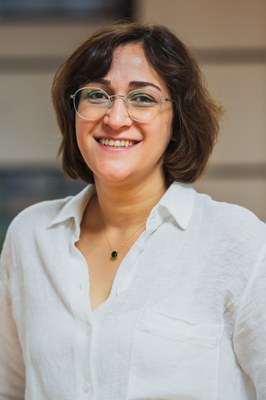
Postdoktorandin
Kontaktdaten
+49 6421 28-65412 zohreh.fattahi@pharmazie 1 Karl-von-Frisch-Straße 235032 Marburg
K|03 Biochemisch-Pharmakologisches Centrum (Raum: +2/1150)
Organisationseinheit
Philipps-Universität Marburg Pharmazie (Fb16) Institut für Pharmakologie und Klinische Pharmazie AG CulmseePublikationen
Zu den Publikationen im Forschungsinformationssystem (im Aufbau)Dr. Zohreh Fattahi
Curriculum Vitae
06/2023 – Heute: Postdoctoral researcher, AG Prof. Dr. Carsten Culmsee, Institute of Pharmacology and Clinical Pharmacy, Philipps University of Marburg, Germany
Working Title 1: CYLD: Linking Neuronal Stress, Ferroptosis and Mitochondrial Function
Working Title 2: ZBTB11 in Neuronal Differentiation and Mitochondrial Function
2019 - 06/2023: Research Assistant Professor, Genetics Research Center, University of Social Welfare and Rehabilitation Sciences, Tehran, Iran
2018 - 2019 : Research Associate, Working group of Prof. Hossein Najmabadi, Genetics Research Center, University of Social Welfare and Rehabilitation Sciences, Tehran, Iran
01/2018 : Doctorate (PhD)
Thesis Title: Elucidating the role of causative mutation in ZBTB11 gene, identified by linkage analysis followed by next generation sequencing in a family with Intellectual Disability03/2017: Visiting PhD student, Working group of Prof. Dr. Arzu Çelik (Senselab), BOĞAZIÇI University, Istanbul, Turkey
2016.01-2016.07: Visiting PhD student (Sabbatical leave), Working group of Dr. John B. Vincent, Centre for Addiction and Mental Health (CAMH), University of Toronto, Toronto, Canada
09/2012 - 12/2017: PhD student, Genetics Research Centre, University of Social Welfare and Rehabilitation Sciences, Tehran, Iran, Supervisor: Prof. Dr. H. Najmabadi
10/2011 – 02/2012: Visiting Researcher, Working group of Prof. Dr. Hans Hilger Ropers, Max Planck Institute for Molecular Genetics, Berlin, Germany
2010-2012: Research Associate, Working group of Prof. Dr. Hossein Najmabadi, Genetics Research Center, University of Social Welfare and Rehabilitation Sciences, Tehran, Iran
2007-2010: MSc in Human Genetics, Genetics Research Centre, University of Social Welfare and Rehabilitation Sciences, Tehran, Iran; Supervisor: Prof. Hossein Najmabadi
2002-2006: B.Sc. in Cellular & Molecular Biology, Department of Biology, Shiraz University, Shiraz, Iran
Publikationen
Moghadam MG, Shokouhian E, Soveyzi M, Elahi Z, Nafissi S, Najmabadi H, Fattahi Z, Kahrizi K. ‘’Expanding the molecular and clinical spectrum of POLR3A-related charcot-marie-tooth disease’’ Mol Biol Rep. 2026 Aug 27;53(1):1465. doi: 10.1007/s11033-026-12650-9.
Fattahi Z., Shokouhian E., Peymani F., …, Kahrizi K, Najmabadi H. ‘’Improved Diagnostic Yield in Recessive Intellectual Disability Utilizing Systematic Whole Exome Sequencing Data Reanalysis’’ Clin Genet. 2025 Jun;107(6):612-619. doi:10.1111/cge.14692.
Feizabadi MH, Alerasool M, Eslahi A, Esmaeilzadeh E, Mehrjardi MYV, Saket M, Farokhi S, Fattahi Z, Khorshid HRK, Mojarrad M. ‘’ Characterizing Homozygous Variants in Bardet-Biedl Syndrome-Associated Genes Within Iranian Families: Unveiling a Founder Variant in BBS2, c.471G>A’’ Biochem Genet. 2025 Feb;63(1):22-42. doi: 10.1007/s10528-023-10637-w.
Tang S., Fuß A., Fattahi Z., Culmsee C. ‘’ Drp1 depletion protects against ferroptotic cell death by preserving mitochondrial integrity and redox homeostasis’’ Cell Death Dis. 2024 Aug 27;15(8):626. doi: 10.1038/s41419-024-07015-8.Abolhassani A., Fattahi Z., Beheshtian M., …., Kariminejad A., Najmabadi H. ‘’Clinical application of next generation sequencing for Mendelian disease diagnosis in the Iranian population’’ PJ Genom Med. 2024 Feb 19;9(1):12. doi: 10.1038/s41525-024-00393-0.
Nashabat M., Nabavizadeh N, Saraçoğlu HL., Sarıbaş B., Avcı S., Börklü E., Beillard E., Yılmaz E., Uygur SE., Kayhan CK., Bosco L., Eren ZB., Steindl K., Richter MF., Bademci G., Rauch A., Fattahi Z., …, Oflazer ZP., Escande-Beillard N. ‘’ SNUPN deficiency causes a recessive muscular dystrophy due to RNA mis-splicing and ECM dysregulation’’ Nat Commun. 2024 Feb 27;15(1):1758. doi: 10.1038/s41467-024-45933-5.
Alinaghi S., Mohseni M., Fattahi Z "Genetic Analysis of 27 Y-STR Haplotypes in 11 Iranian Ethnic Groups"., …, Kahrizi K., Najmabadi H. ‘’https://pubmed.ncbi.nlm.nih.gov/38619031/. Arch Iran Med. 2024 Feb 1;27(2):79-88. doi: 10.34172/aim.2024.13.
Alinaghi S, Mohseni M, Fattahi Z, Beheshtian M, Ghodratpour F, Zare Ashrafi F, Arzhangi S, Jalalvand K, Najafipour R, Khorram Khorshid HR, Kahrizi K, Najmabadi H. Arch Iran Med. 2024 Feb 1;27(2):79-88. doi: 10.34172/aim.2024.13.Zare Ashrafi F, Mohseni M, Beheshtian M, Fattahi Z, …, Malekzadeh R, Kahrizi K, Jazayeri SM, Najmabadi H. ‘’ Implementation of an In-House Platform for Rapid Screening of SARS-CoV-2 Genome Variations’’ Arch Iran Med. 2023 Feb 1;26(2):69-75. doi: 10.34172/aim.2023.12.
Elahi Z., Soveyzi M., …, Fattahi Z. “Bi-allelic loss of function variant in the NRCAM gene is associated with motor-predominant axonal polyneuropathy; the second report” Mol Genet Genomic Med. 2023 Jan 6;e2131. doi: 10.1002/mgg3.2131.
Goleyjani Moghadam M, Elahi Z, Soveyzi M, Arzhangi S, Nafissi S, Najmabadi H, Kahrizi K, Fattahi Z. ‘’Expanding the Molecular Spectrum of HK1-Related Charcot-Marie-Tooth Disease, Type 4G; the First Report in Iran’’ Arch Iran Med. 2023 May 1;26(5):279-284. doi: 10.34172/aim.2023.43.
Sumathipala D., Strømme P., Fattahi Z., …, Misceo D. “ZBTB11 dysfunction: spectrum of brain abnormalities, biochemical signature and cellular consequences”, Brain. 2022 Jul 29; 145(7):2602-2616. doi: 10.1093/brain/awac034.
Fattahi Z., Mohseni M., ..., Jazayeri S.M., Najmabadi H. “Disease waves of SARS-CoV-2 in Iran closely mirror global pandemic trends” Archives of Iranian Medicine.’’ Arch Iran Med. 2022 Aug 1;25(8):508-522. doi: 10.34172/aim.2022.83.
Fattahi Z., Mohseni M., ..., Jazayeri S.M., Najmabadi H. “SARS-CoV-2 outbreak in Iran: The dynamics of the epidemic and evidence on two independent introductions” Transbound Emerg Dis. 2021 Apr 9;10.1111/tbed.14104. doi: 10.1111/tbed.14104.
Khoshbakht SH., Beheshtian M., Fattahi Z., ..., Najmabadi H. “CEP104 and CEP290; Genes with Ciliary Functions Cause Intellectual Disability in Multiple Families” Arch Iran Med. 2021 May 1;24(5):364-373. doi: 10.34172/aim.2021.53.
Sheikh T.I., Vasli N., Pastore S., Kharizi K., Harripaul R., Fattahi Z., ..., Vincent J.B. “Biallelic mutations in the death domain of PIDD1 impair caspase-2 activation and are associated with intellectual disability” Transl Psychiatry. 2021 Jan 5;11(1):1. doi: 10.1038/s41398-020-01158-w.
Beheshtian M, Akhtarkhavari T, Mehvari S, Mohseni M, Fattahi Z, …, Kahrizi K., “Comprehensive genotype-phenotype correlation in AP-4 deficiency syndrome; Adding data from a large cohort of Iranian patients.” Clin Genet. 2020 Sep 7. doi: 10.1111/cge.13845.
Mehvari S, Larti F, Hu H, Fattahi Z, …, Najmabadi H., "Whole genome sequencing identifies a duplicated region encompassing Xq13.2q13.3 in a large Iranian family with intellectual disability." Mol Genet Genomic Med. 2020 Jul 26:e1418. doi: 10.1002/mgg3.1418.
Taghizadeh S, Vazehan R, Beheshtian M, Sadeghinia F, Fattahi Z, …, Kahrizi K., "Molecular Diagnosis of Hereditary Neuropathies by Whole Exome Sequencing and Expanding the Phenotype Spectrum." Arch Iran Med. 2020 Jul 1;23(7):426-433. doi: 10.34172/aim.2020.39.
Neishabury M, Mehri M, Fattahi Z, Najmabadi H, Azarkeivan A.” Novel variants in Iranian individuals suspected to have inherited red blood cell disorders, including bone marrow failure syndromes.” Haematologica. 2020 Jan; 105(1):e1-e4. doi: 10.3324/haematol.2019.216069.
Bazazzadegan N, Vazehan R, Fadaee M, Fattahi Z, …, Najmabadi H., “Brief Report of Variants Detected in Hereditary Hearing Loss Cases in Iran over a 3-Year Period.” Iran J Public Health. 2019 Oct; 48(10):1910-1915.
Mehrjoo Z, Fattahi Z, …, Najmabadi H, Nothnagel M. “Distinct genetic variation and heterogeneity of the Iranian population.” PLoS Genet. 2019 Sep 24; 15(9):e1008385. doi: 10.1371/journal.pgen.1008385. eCollection 2019 Sep.
Fattahi Z, Beheshtian M, …, Najmabadi H.” Iranome: A catalogue of genomic variations in the Iranian population.” Hum Mutat. 2019 Jul 25. doi: 10.1002/humu.23880.
Beheshtian M, Fattahi Z, …, Kahrizi K. “Identification of disease-causing variants in the EXOSC gene family underlying autosomal recessive intellectual disability in Iranian families.” Clin Genet. 2019 Jun; 95(6):718-725. doi: 10.1111/cge.13549. Epub 2019 May 14.
Hosseini M., Larti F., Fattahi Z, …, Kahrizi K. “A splice-altering variant in LARP7 gene leads to exon exclusion” Gene Reports, Volume 15, June 2019, Article number 100375
Kahrizi K, Huber M, Galetzka D, Dewi S, Schröder J, Weis E, Kariminejad A, Fattahi Z, …, Winter J. “Homozygous variants in the gene SCAPER cause syndromic intellectual disability.” Am J Med Genet A. 2019 Jul;179(7):1214-1225. doi: 10.1002/ajmg.a.61172.
Kahrizi K, Hu H, Hosseini M, Kalscheuer VM, Fattahi Z, …, Ropers HH. “Effect of inbreeding on intellectual disability revisited by trio sequencing.” Clin Genet. 2019 Jan;95(1):151-159. doi: 10.1111/cge.13463.
Hosseini M, Fattahi Z, Abedini SS, Hu H, Ropers HH, Kalscheuer VM, Najmabadi H, Kahrizi K. “GPR126: A novel candidate gene implicated in autosomal recessive intellectual disability” Am J Med Genet A. 2019 Jan;179(1):13-19. doi: 10.1002/ajmg.a.40531. Epub 2018 Dec 14.
Fattahi Z, Sheikh TI, …, Vincent JB, Najmabadi H. “Biallelic missense variants in ZBTB11 can cause intellectual disability in human.” Hum Mol Genet. 2018 Jun 8. doi: 10.1093/hmg/ddy220.
Fattahi H., Fattahi Z., Ghorbani A. “Prospects of third-generation femtosecond laser technology in biological spectromicroscopy” Journal of Optics in May 2018.
Kazeminasab S, Taskiran II, Fattahi Z, …, Kahrizi K.” CNKSR1 gene defect can cause syndromic autosomal recessive intellectual disability.” Am J Med Genet B Neuropsychiatr Genet. 2018 Dec;177(8):691-699. doi: 10.1002/ajmg.b.32648.
Kariminejad A, Yazdan H, Rahimian E, Kalhor Z, Fattahi Z, Zonooz MF, Najmabadi H4, Ashrafi M. “SZT2 mutation in a boy with intellectual disability, seizures and autistic features.” Eur J Med Genet. 2018 Oct 22. pii: S1769-7212(17)30664-X. doi: 10.1016/j.ejmg.2018.10.008.
Hu H, Kahrizi K, Musante L, Fattahi Z, …, Najmabadi H. “Genetics of intellectual disability in consanguineous families” Mol Psychiatry. 2018 Jan 4. doi:10.1038/s41380-017-0012-2.
Edizadeh M, Vazehan R, Javadi F, Dehdahsi S, Fadaee M, Faraji Zonooz M, Parsimehr E, Ahangari F, Abolhassani A, Kalhor Z, Fattahi Z, …, Nafissi S. “De novo Mutation in CACNA1S Gene in a 20-Year-Old Man Diagnosed with Metabolic Myopathy.” Arch Iran Med. 2017 Sep;20(9):617-620. doi: 0172009/AIM.0010.
Fattahi Z, Kalhor Z, …, Najmabadi H. “Improved diagnostic yield of neuromuscular disorders applying clinical exome sequencing in patients arising from a consanguineous population.” Clin Genet. 2017 Mar; 91(3):386-402. doi: 10.1111/cge.12810.
Amos JS, Huang L, Thevenon J, Kariminedjad A, Beaulieu CL, Masurel-Paulet A, Najmabadi H, Fattahi Z, …, Boycott KM; Care4Rare Canada Consortium” Autosomal recessive mutations in THOC6 cause intellectual disability: syndrome delineation requiring forward and reverse phenotyping.” Clin Genet. 2017 Jan; 91(1):92-99. doi: 10.1111/cge.12793.
Fadaee M, Kariminejad A, Fattahi Z, Nafissi S, Godarzi HR, Beheshtian M, Vazehan R, Akbari MR, Kahrizi K, Najmabadi H. “Report of limb girdle muscular dystrophy type 2a in 6 Iranian patients, one with a novel deletion in CAPN3 gene.” Neuromuscul Disord. 2016 Apr-May; 26(4-5):277-82. doi: 10.1016/j.nmd.2016.02.003.
Zonooz M, Sabbagh-Kermani F, Fattahi Z, …, Kariminejad A. “Whole Genome Linkage Analysis Followed by Whole Exome Sequencing Identifies Nicastrin (NCSTN) as a Causative Gene in a Multiplex Family with γ-Secretase Spectrum of Autoinflammatory Skin Phenotypes.” J Invest Dermatol. 2016 Jun; 136(6):1283-6. doi: 10.1016/j.jid.2016.02.801.
Akhtarkhavari T, Joghataei MT, Fattahi Z, …, Kahrizi K. “Genetic Investigation of an Iranian Supercentenarian by Whole Exome Sequencing.” Arch Iran Med. 2015 Oct; 18(10):688-97. doi: 0151810/AIM.009.
Jazayeri R, Hu H, Fattahi Z, …, Kahrizi K.” Exome Sequencing and Linkage Analysis Identified Novel Candidate Genes in Recessive Intellectual Disability Associated with Ataxia.” Arch Iran Med. 2015 Oct; 18(10):670-82. doi: 0151810/AIM.007.
Davarniya B, Hu H, Kahrizi K, Musante L, Fattahi Z, …, Najmabadi H.” The Role of a Novel TRMT1 Gene Mutation and Rare GRM1 Gene Defect in Intellectual Disability in Two Azeri Families.” PLoS One. 2015 Aug 26;10(8)
Iqbal Z, Püttmann L, Musante L, Razzaq A, Zahoor MY, Hu H, Wienker TF, Garshasbi M, Fattahi Z, …, van Bokhoven H.” Missense variants in AIMP1 gene are implicated in autosomal recessive intellectual disability without neurodegeneration.” Eur J Hum Genet. 2015 Jul 15.
Fattahi Z, …, Najmabadi H.” Report of a patient with limb-girdle muscular dystrophy, ptosis and ophthalmoparesis caused by plectinopathy.” Arch Iran Med. 2015 Jan; 18(1):60-4
Kashef A, Nikzat N, Bazzazadegan N, Fattahi Z, …, Kahrizi K.” Finding mutation within non-coding region of GJB2 reveals its importance in genetic testing of hearing loss in Iranian population.” Int J Pediatr Otorhinolaryngol. 2015 Feb; 79(2):136-8. doi: 10.1016/j.ijporl.2014.11.024. Epub 2014 Dec 3.
Zeinali F, Mohseni M, Fadaee M, Fattahi Z, …, Kahrizi K.” Investigation of ATP6V1B1 and ATP6V0A4 genes causing hereditary hearing loss associated with distal renal tubular acidosis in Iranian families.” J Laryngol Otol. 2014 Dec; 128(12):1056-9.
Fattahi Z, …, Najmabadi H “Mutation profile of BBS genes in Iranian patients with Bardet-Biedl syndrome: genetic characterization and report of nine novel mutations in five BBS genes.” J Hum Genet. 2014 Jul; 59(7):368-75
Larti F, Kahrizi K, Musante L, Hu H, Papari E, Fattahi Z, …, Najmabadi H” A defect in the CLIP1 gene (CLIP-170) can cause autosomal recessive intellectual disability.” Eur J Hum Genet. 2014 Feb 26.
Fattahi Z, Najmabadi H.” Prevalence of ACTN3 (the athlete gene) R577X polymorphism in Iranian population.” Iran Red Crescent Med J. 2012 Oct; 14(10):617-22.
Babanejad M, Fattahi Z, …, Najmabadi H.” A comprehensive study to determine heterogeneity of autosomal recessive nonsyndromic hearing loss in Iran.” Am J Med Genet A. 2012 Oct; 158A (10):2485-92.
Fattahi Z, Shearer AE, …, Najmabadi H.” Screening for MYO15A gene mutations in autosomal recessive nonsyndromic, GJB2 negative Iranian deaf population.” Am J Med Genet A. 2012 Aug; 158A (8):1857-64.
Bazazzadegan N, Nikzat N, Fattahi Z, …, Najmabadi H.” The spectrum of GJB2 mutations in the Iranian population with non-syndromic hearing loss-A twelve-year study.” Int J Pediatr Otorhinolaryngol. 2012 Aug; 76(8):1164-74.
Davarnia B, Babanejad M, Fattahi Z, …, Smith RJ, Najmabadi H.” Spectrum of GJB2 (Cx26) gene mutations in Iranian Azeri patients with nonsyndromic autosomal recessive hearing loss.” Int J Pediatr Otorhinolaryngol. 2012 Feb; 76(2):268-71.). *Joint first authors.
Najmabadi H, Hu H, Garshasbi M, …, Cohen M, Fattahi Z, …, Ropers HH." Deep sequencing reveals 50 novel genes for recessive cognitive disorders. "Nature. 2011 Sep 21;478(7367):57-63.
Norouzi V, Azizi H, Fattahi Z, …, Smith RJ, Najmabadi H." Did the GJB2 35delG mutation originate in Iran?" Am J Med Genet A. 2011 Oct; 155A (10):2453-8.
Hildebrand MS, Thorne NP, Bromhead CJ, Kahrizi K, Webster JA, Fattahi Z, …, Smith RJ. "Variable hearing impairment in a DFNB2 family with a novel MYO7A missense mutation" Clin Genet. 2010 Feb 4.
1 Die vollständige E-Mail-Adresse wird nur im Intranet gezeigt. Um sie zu vervollständigen, hängen Sie bitte ".uni-marburg.de" or "uni-marburg.de" an, z.B. musterfr@staff.uni-marburg.de bzw. erika.musterfrau@uni-marburg.de.