27.10.2026 Ancient Egyptian Embalming: New Insights from Molecular Analysis and Historical Texts
Interdisciplinary research reveals Aloe-associated compounds in historical materials and possible connections between museum objects
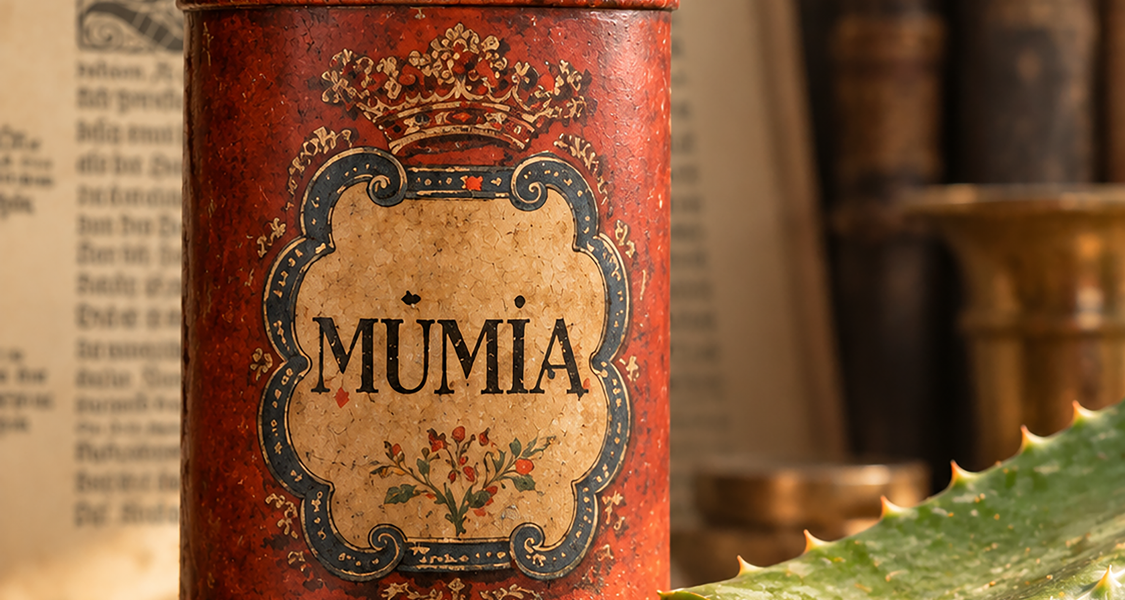
What materials did ancient Egyptians use to preserve the dead, and how can their composition still be investigated thousands of years later? An interdisciplinary team at Marburg University has combined modern natural product analysis with Egyptology and the history of pharmacy to investigate these questions. In their study “New molecular and historical evidence on ancient Egyptian embalming,” published in the journal Proceedings of the National Academy of Sciences (PNAS), they combine molecular analyses with the examination of historical written sources, uncovering new evidence regarding the use of plant-based substances in embalming. The findings also open up new possibilities for researching the history of historical collections.
Traces of aloe in a mummy’s head dating back approximately 2,700 years and in medieval medicine
Ancient Egyptian mummification was a complex process involving not only the evisceration of the body but also the use of various plant, animal, and mineral materials. Previous chemical analyses had identified coniferous resins and tars, pistachio resins, plant oils, animal fats, beeswax, and bitumen in the embalming mixtures. Evidence of additional exotic plant resins, such as elemi or dammar, had also been found.
Despite these findings, numerous questions remained unanswered: Which plant species were actually used? How did embalming recipes differ across various periods, regions, and body parts? And which of the substances described in ancient Egyptian texts can be linked to specific plant-based raw materials? The Marburg study has now discovered previously undetected plant-derived compounds in mummy material that had been used as medicine since the late Middle Ages.
For their study, the researchers analyzed 24 objects from university and museum collections, including a mummified skull from the Zoological Collection of Marburg University. Radiocarbon dating assigned the skull to the 8th century BCE. Chemical analyses of this skull and a second sample - a historical preparation of the medicinal drug Mumia vera aegyptiaca from the 18th century, originating from the Löwen Pharmacy in Offenbach am Main (now housed in the Heidelberg Pharmacy Museum) - revealed traces of several plant-derived compounds -associated with aloe.
“This finding is significant for research for two reasons: Until now, aloe had not been identified as a component of ancient Egyptian embalming materials through molecular analysis. At the same time, aloe was linked to mummy material used as medicine in later centuries, particularly in medieval texts. It was previously assumed that the authors of these texts were speculating and relying on biblical passages (e.g., John 19:39), as knowledge about ancient Egyptian embalming had been lost. The new findings suggest that this association may have deeper historical roots,” explains Prof. Dr. Tanja Pommerening, who heads Germany’s only Institute for the History of Pharmacy and Medicine at Marburg University.
It is important to make a distinction here: The historical term “aloe” referred to various plant materials. In addition to plants of the genus Aloe, it could also denote agarwood, particularly the wood of the genus Aquilaria, which was used as a fragrant material. The identified plant compounds point to products derived from the genus Aloe and not agarwood.
The researchers therefore re-examined ancient Egyptian written sources. In doing so, the term ꜥnḫ-jm.j came into focus. Certain descriptions of the substance and its use suggest that it may have referred to aloe or an exudate derived from it. However, a definitive identification has not yet been achieved.
Since Aloe-associated compounds were detected in only two of the 24 analyzed objects, it cannot be concluded that aloe was generally used in mummification. It is possible that such materials were used only in specific embalming practices, depending, for example, on the period or availability of raw materials.
Molecular Fingerprints Reveal Possible Connections Between Museum Objects
Another discovery relates to the history of the examined objects. Using untargeted metabolomics, the researchers compared the chemical compositions of various samples from the German Pharmacy Museum in Heidelberg. Supported by computational and machine learning-assisted analytical methods, the researchers were able to annotate and compare characteristic molecular patterns. This revealed striking similarities between a mummified head and a separately catalogued powder sample. The findings suggest that the two objects may originally have shared a material or historical connection, although no such association is documented in the surviving collection records.
This approach thus opens up new perspectives for provenance research and museum studies. Historical collections often contain objects whose origins or original associations are no longer fully documented. Chemical comparison methods could help reconstruct such connections retrospectively.
Re-Evaluating Historical Medicines
The study also focuses on Mumia vera aegyptiaca, a medicinal substance used in Europe during the late Middle Ages and the early modern period. It was obtained from mummy material and associated embalming substances or traded as a prepared product. The exact composition of these historical products has so far been only partially understood. The analyses revealed considerable variation in the chemical composition of the historical preparations, although several contained characteristic compounds of aged conifer-derived resins. Certain constituents of conifer resins have been reported to exhibit antimicrobial activity in experimental studies.
Hence, the research team additionally investigated the anti-infective profile of selected preparations. An extract from the Wigand Medicinal Collection in Marburg showed a moderate protective effect against influenza virus-induced cell damage in cell culture experiments. However, the isolated main compound, 7-oxodehydroabietic acid, did not reproduce this effect. Therefore, the specific ingredients responsible for the observed activity in the extract remain unknown. Importantly, the results do not provide evidence that the historical remedy was effective against influenza in humans, despite textual sources indicating its use for severe cold symptoms such as headaches, cough, sore throat, and dizziness.
A Dialogue Between Molecular Analysis and Historical Research
The results demonstrate how historical sources, philological text analysis, and modern molecular analytics can complement one another. Chemical findings provide new clues for re-analysis and interpretation of ancient texts. Conversely, historical descriptions help contextualize scientific measurement data and understand possible uses of the materials under investigation. Further investigations aim to clarify which additional plant-derived compounds were used in embalming practices and whether the indications of aloe in previous samples can be confirmed in additional specimens.
“In the long term, we aim to establish a research approach that combines historical written sources, archaeological objects, and modern natural product analysis. Our goal is not only to analyze the chemical composition of ancient medicines and embalming materials, but also to gain a deeper understanding of their production, use, historical transmission, and cultural context,” explains Prof. Dr. Raphael Reher from the Institute of Pharmaceutical Biology and Biotechnology at Marburg University.
Original Publication
T. Berger,A. Naimi,K. Hardes,C. Sachße,R. Gericke,M. Marner,F. Mühlemeyer,T. Pommerening, & R. Reher, New molecular and historical evidence on ancient Egyptian embalming, Proc. Natl. Acad. Sci. U.S.A. 123 (45) e2624362123, https://doi.org/10.1073/pnas.2624362123 (2026).
Contact
Prof. Dr. Tanja Pommerening
Tel.: 06421 28-22828
Mail: tanja.pommerening@pharmazie.uni-marburg.de
Institute for the History of Pharmacy and Medicine
Marburg University