07.07.2026 Marburg University strengthens AI research with new Joint Lab
Researchers in Marburg and Hanover will develop AI methods and digital tools for research, higher education and scientific practice
How does artificial intelligence change the way science is conducted and how students learn? And how can these changes be harnessed to genuinely improve both? These are the central questions that researchers at the newly established “Joint Lab AI & Scholarly Data Analytics TIB-UMR” will set out to answer.
The Joint Lab is a collaboration between TIB – Leibniz Information Centre for Science and Technology and the Department of Mathematics and Computer Science at Marburg University. It was inaugurated at a kick-off workshop, where 13 founding members of the Joint Lab from both institutions convened to define the lab’s focus areas and lay the groundwork for future joint research.
“With the Joint Lab, we are establishing a strategic partnership with TIB. Following the expansion of the department with three hessian.AI professorships in recent years, the collaboration of TIB and Marburg University on AI research creates new opportunities for jointly advancing AI methods that benefit both research and practice,” says Professor Thomas Nauss, President of Marburg University.
“The research focus of TIB’s research groups on knowledge graphs and neuro-symbolic AI complements our AI expertise very well. Furthermore, our students and doctoral candidates will benefit from direct access to research, services, and data at TIB,” says Professor Bernd Freisleben, Dean of the Department of Mathematics and Computer Science at Marburg University.
Research Focus Areas: Methods for Supporting Science and Education
The lab’s research is organised around two interconnected themes. The first theme concerns scientific workflows: how AI is transforming the practices of researchers, and how it can be deployed to strengthen open science, knowledge management, and research infrastructure. The second area concerns in educational contexts at universities: how do intelligent systems affect learning processes, and how tools and methods can be designed to support learners more effectively.
Taken together, these two strands reflect a shared conviction that the responsible and effective use of AI requires both strong methodological foundations and a deep understanding of real-world application contexts.
“Our competencies complement each other perfectly: the methodological AI expertise from Marburg and the TIB’s applied research infrastructure make it possible to test and establish intelligent tools directly in daily research practice. The Joint Lab thus offers precisely the synergy needed to develop future-oriented digital solutions for practical application,” says TIB Director Sören Auer.
The research groups will collaborate on several levels, for example, co-supervision of Bachelor and Master theses, collaboration on research questions and publications, development of AI-based information services for researchers and students, and acquiring third-party funds for research and development projects.
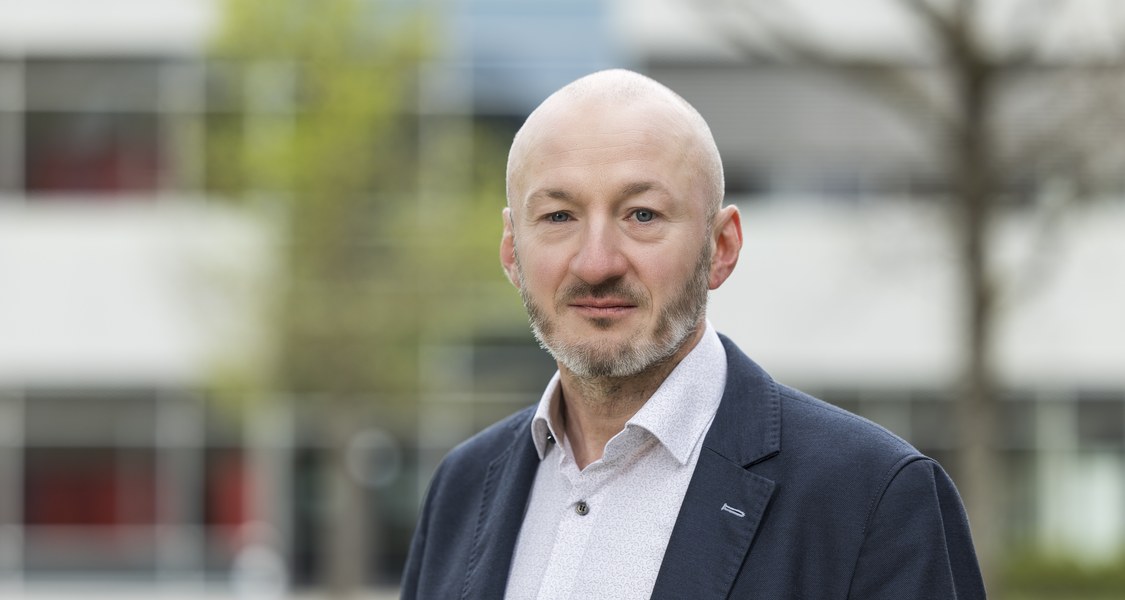
“The development of innovative information services for science and education also requires a perspective on human interaction aspects. Through this cooperation, we can investigate, for example, human-centered AI methods for science support and develop better information services for researchers and students,” adds Ralph Ewerth, professor at Marburg University in collaboration with hessian.AI.
The Joint Lab is led by Professor Sören Auer, Director of TIB and Professor of Data Science and Digital Libraries at Leibniz Universität Hannover, and Professor Ralph Ewerth, Professor of Multimodal Modelling and Machine Learning at Marburg University.