10.11.2026 Publication alert - MEK1/2 inhibition ameliorates clinical lesions in experimental pemphigus vulgaris
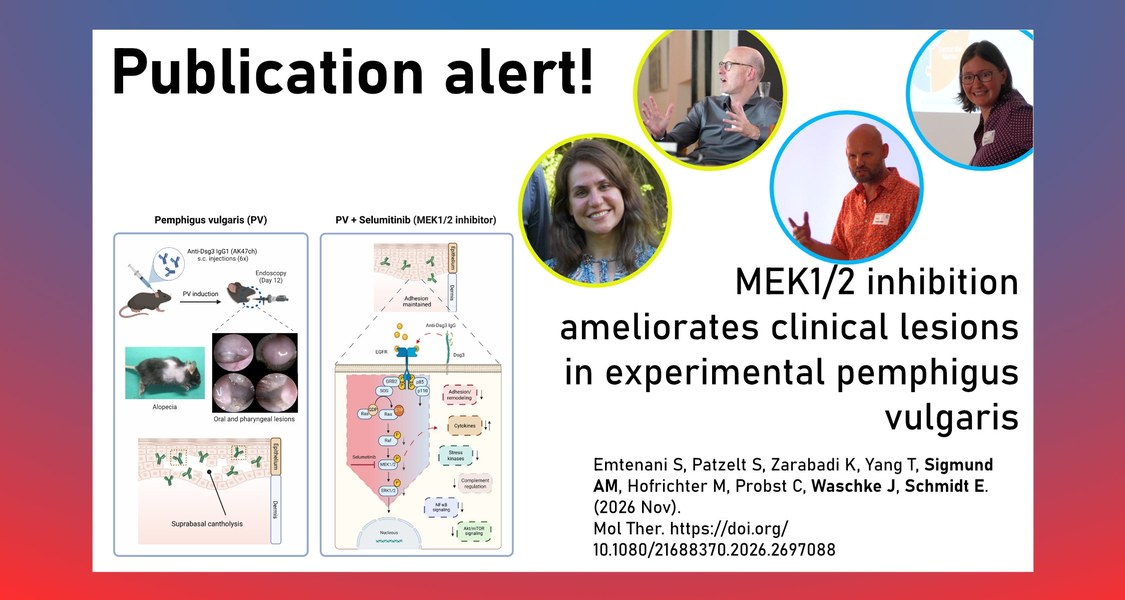
Have you ever heard about Pemphigus vulgaris? We hope, you did not!
Although we are fascinated by the science behind this disease and the gained knowledge on desmosomal (dys)function, it still is a life-threatening autoimmune disease we do not wish upon anyone. 👨⚕️
Pemphigus shows itself by painful blisters and erosions on the skin and mucous membranes.
The disease is mainly driven by the immune system attacking the own body: so-called autoantibodies target the protein desmoglein 3 (Dsg3), which results in loss of cell cohesion and therefore leading to the blisters and erosions.
Current therapies can suppress autoantibody production but cannot restore the desmosomal adhesion of the cells. 🩹
In this publication, Shirin Emtenani, Enno Schmidt, Jens Waschke, Anna Sigmund and their teams show a mouse model of Pemphigus to study treatment strategies. 🐭
They specifically looked into the selective MEK1/2 inhibitor selumetinib. Selumetinib has previously shown to
- block anti-Dsg3 IgG-induced cell dissociation in vitro ❌
- reduce disease severity in clinically affected mice and ↘️
- reduce MEK1/2 phosphorylation in lesional mucosa. ↘️
In this study, MEK1/2 inhibition was not only associated with reduced expression linked to inflammation, but also increased expression related to cellular homeostasis.
This model provides a platform for preclinical evaluation of desmosome-stabilizing therapies and identifies the MEK/ERK signaling axis as a pharmacologically actionable target in Pemphigus vulgaris. 🎯
One step closer to understanding desmosomes and Pemphigus as a disease – and maybe one step closer to better treatment strategies! 👩⚕️💊
Read the full paper here!