26.06.2026 Panel Discussion, Workshop and Gender Lecture with Prof. Nadje Al-Ali
In June, Prof. Nadje Al-Ali, Robert Family Professor of International Studies and Professor of Anthropology and Middle East Studies at Brown University, visited the LOEWE GenDem research cluster in Marburg
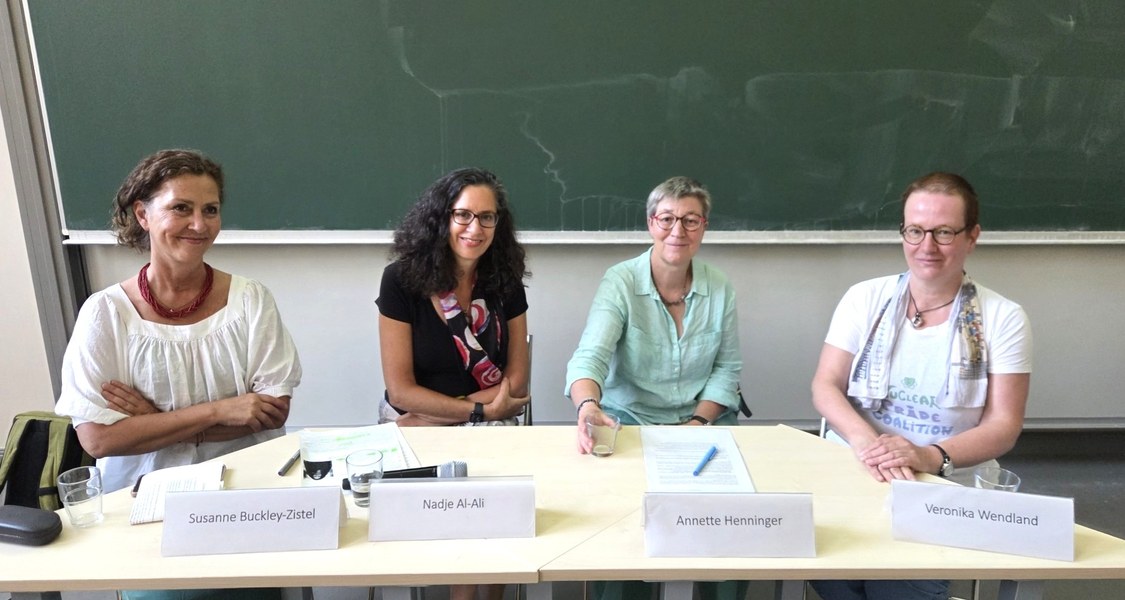
What is the state of academic freedom in times of growing political polarization? This question was the focus of a panel discussion with Prof. Nadje Al-Ali (Brown University) during her visit to the LOEWE GenDem research cluster in Marburg.
Under the title “Academic Freedom at Risk? Experiences from Germany and the U.S.,” this issue was discussed on June 23 in the lecture hall of the Faculty of Political Science in Marburg.
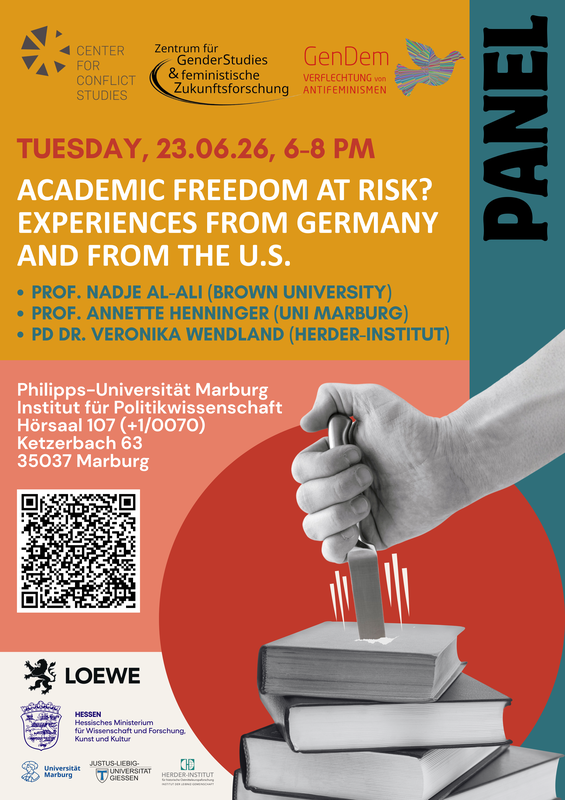
During the panel discussion, Prof. Nadje Al-Ali was joined by GenDem spokesperson Prof. Annette Henninger (Philipps University of Marburg) and GenDem co-spokesperson PD Dr. Veronika Wendland (Philipps University of Marburg, Herder Institute for Historical Research on East Central Europe).
The panel brought together perspectives from the United States and Germany to examine both the similarities and the key differences in these developments. Rather than viewing recent events as isolated incidents, the panelists explored what they reveal about deeper societal anxieties regarding the handling of dissent, public criticism, and the limits of permissible expression within contemporary academic institutions.
Another key issue here was how scholars, students, and universities deal with the increasing political and social pressures resulting, among other things, from nationalism, securitization, the influence of private donors, media campaigns, and the control and sanctioning of political expression.
Financial Dependence as a Threat to Academic Freedom
On the subject of funding, Al-Ali pointed out, for example, that the current U.S. administration had recently cut $200 million in research funding, adding: “There is a direct link between autonomy, academic freedom, and financial independence.”
In Germany, too, there are fears of financial dependence on the government, according to Wendland: "State financing means dependance on state funding” and “Do we have enough power to fight back without state funding?”
Threats to Science on Both Sides of the Atlantic
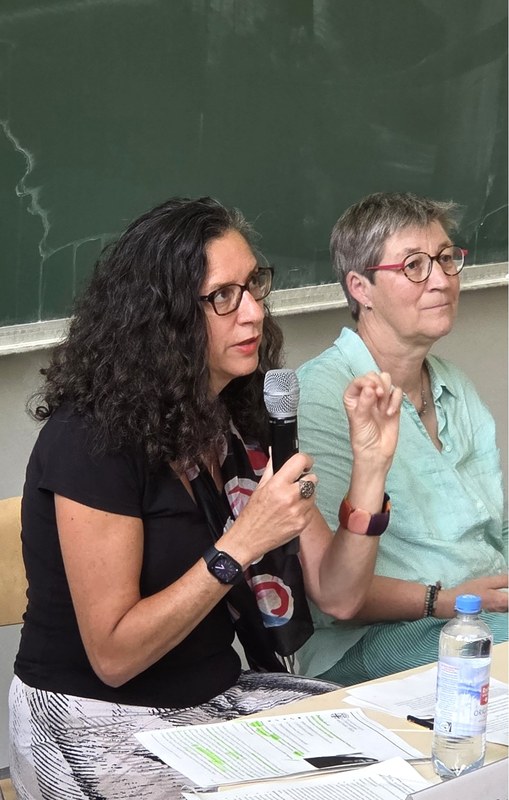
The panelists described different, yet in some ways comparable, challenges to academic freedom in Germany and the United States. Henninger emphasized the importance of universities remaining places where people can express their opinions and speak freely.
According to Henninger, the threat level in Germany is rising, partly due to the ongoing shift to the right: “With the looming threat of the AfD coming to power, there is a lot of pressure.” So far, she noted, the German state has not yet acted as an “aggressor” against academia, but that could change soon. Wendland shares this assessment: “State interference is on the rise.”
In the U.S., however, Al-Ali says, a concrete threat to researchers can already be identified, particularly in states like Florida. University teaching is marked by the constant threat of being discredited by students: “I feel that when I’m in the classroom, students are encouraged to report faculty.”
Al-Ali has strong words for U.S. government policy: “What is happening in the U.S. is against the Constitution.” In her view, the U.S. is evolving into a totalitarian system in which laws are becoming increasingly irrelevant. She also criticized the decline of rational public debate. This, she said, extends to the academic world: “Academic freedom is being used by Trumpists to claim the earth is flat.”
Resistance Through Community and Solidarity
The panelists also agree on how to deal with this acute threat: They aim to resist government pressure and stand up for science together:
“We do have to stay and fight,” Henninger insists, for example. Al-Ali emphasizes that this can only be achieved as a scientific community: “Individuals can’t do that much; people need to work together.”
The event concluded with a call for solidarity and collective commitment to academic freedom.
More GenDem events featuring Nadje Al-Ali
During her visit to Marburg, Al-Ali also participated in an internal GenDem workshop on the topic of “Critique of Western Exceptionalism,” which explored how we must and can think beyond “Western-centered” discourses.
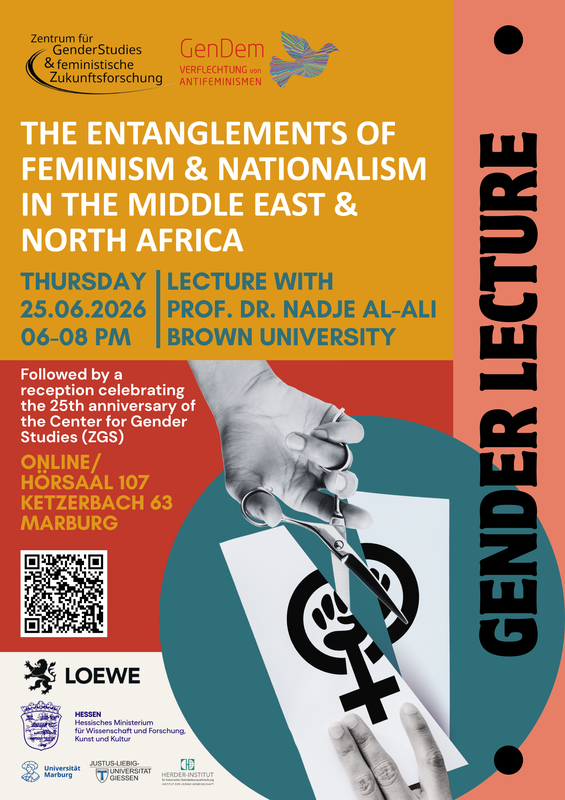
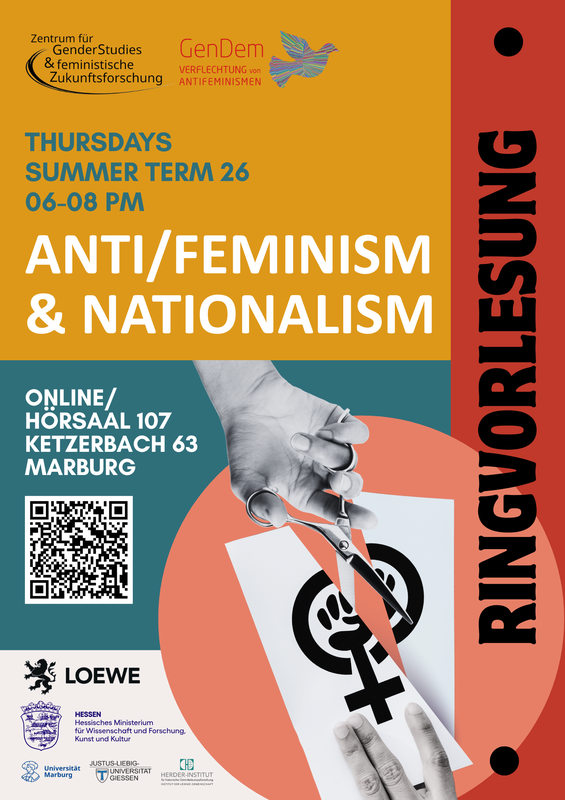
Al-Ali also spoke at this year’s Gender Lecture hosted by the Center for Gender Studies and Feminist Future Studies (ZGS), which took place on June 25 as part of the joint lecture series organized by GenDem and the ZGS on the topic of “ANTIFEMINISM & NATIONALISM.”
Al-Ali’s lecture, titled “The Entanglements of Feminism and Nationalism in the Middle East and North Africa,” explored the numerous interconnections between feminism and nationalist projects in the MENA region. The lecture is available now for listening here.