Main Content

Job Postings
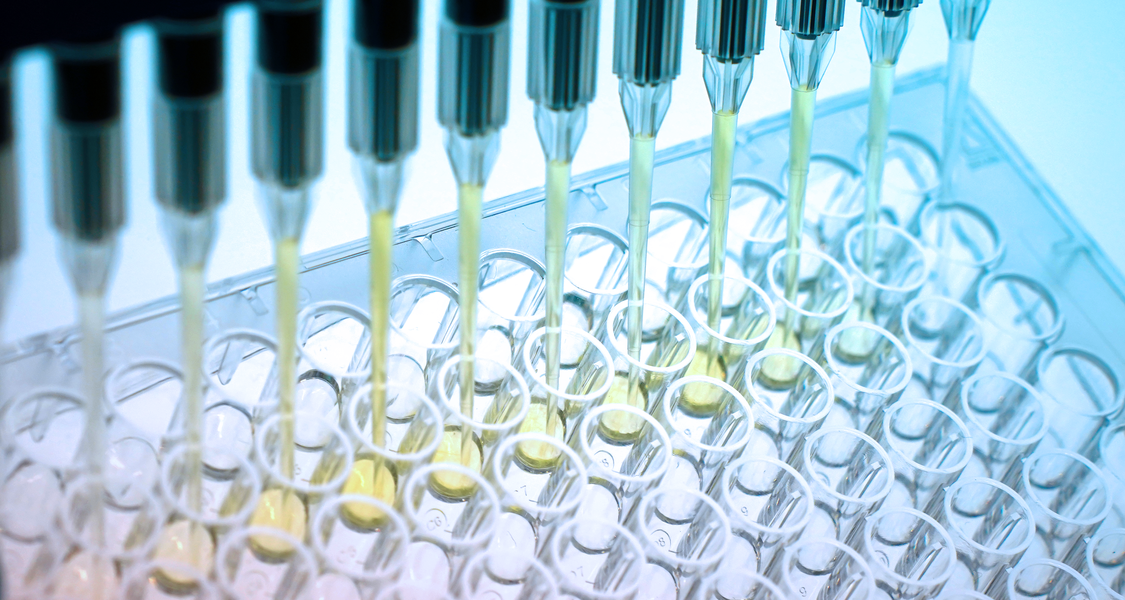
Multi-pipette filling
Photo: MPI Marburg / Virginia Geisel

Open positions

Apply here: https://stellenangebote.uni-marburg.de/jobposting/215527873d72481d46ab02663bbde019bfb3c5ca0 

Application Deadline: 20.08.2026

Please indicate the project number(s) you are applying for (please select minimum one to maximum of three projects).

Required documents: Motivation letter, CV, copies of all relevant certificates (including Master's and PhD certificates), and the contact information of your referees.

Projects for Postdoctoral positions:

Project 1: A structural alphabet for the origin of metabolism

Project description: Structural phylogenetics has revolutionized our ability to infer the deepest historical events in cellular history. In this project, we will develop new ways to infer how the earliest metabolisms evolved. 

Your Profile: The Hochberg lab is looking for strong candidates with a doctorate in computational phylogenetics or adjacent field, who will help us develop new structure based alphabets for phylogenetics. These methods will then be applied to resolve the origin of autotrophic carbon fixation in the Archaean. In this framework, the successful candidate will also be supported to develop their own research program in phylogenetics or wider evolutionary biology

PIs: Georg Hochberg, Alexander Goesmann, Jan Schuller

Host institution: Marburg University

Renumeration: TV-H 13, 100%


Project 2: A sugar (-bis) phosphate library for identifying the function of the dark metabolome in central carbon metabolism.

Project description: The project will build up a comprehensive library of sugar compounds for the screening, evolution and engineering of novel sugar converting enzymes with so far unknown activities, including aldolases, dehydratases, as well as ancient and engineered Rubisco variants.

Your Profile: We look for a candidate with a PhD in organic synthesis and/or chemical biology with experience in the synthesis, purification and analysis of sugar (acid) derivatives and sugar phosphates to build up a comprehensive library of unusual sugar compounds. This library will then be used to identify and engineer novel enzyme functions in collaboration with evolutionary biologists, bioinformaticians and enzyme designers and using the high-throughput experimentation, metabolomics and NMR facilities at the Max Planck Institute for Terrestrial Microbiology and the University of Marburg.

PIs: Tobias Erb, Georg Hochberg, Olalla Vazquez

Host institution: Max Planck Institute for Terrestrial Microbiology, Marburg

Renumeration: TVöD-Bund 13, 100%


Projects for Doctoral positions:

Project 3: Evolution of the 3-hydroxypropionate/4-hydroxybutyrate cycle in archaea 

Project description: The 3-hydroxypropionate/4-hydroxybutyrate cycle has evolved independently in two distinct archaeal groups. This project aims to characterise the different homologues of the enzymes of the cycle in various microorganisms, study the evolution of these pathways using phylogenetic methods and reconstruct and characterise ancestral enzymes.

Your Profile: MSc (or equal) degree in Microbiology, Biochemistry, or related area, comprehensive knowledge and hands-on experience in microbial metabolism and physiology as well as protein biochemistry. Experience in working with modern analytic technics and phylogenetics is advantageous.

PIs: Ivan Berg, Georg Hochberg, Tobias Erb

Host Institution: University Münster

Renumeration: TV-L 13, 65%


Project 4: Fluorescence imaging in anaerobes

Project description: Currently, the lack of suitable tools hampers live-cell fluorescence imaging in bacteria and archaea that grow under strictly anaerobic conditions. As a consequence, the cell biology of these ecologically, biotechnologically and medically highly relevant organisms remains largely unexplored. This project aims to establish new fluorescent protein tags to enable the analysis of protein localization and dynamics in strict anaerobes with a critical role in global CO2 conversion processes, thereby enabling an in-depth understanding of their physiology, cell biology and application potential. It will involve the screening, engineering and/or de novo design of oxygen-independent self-labeling fluorescent proteins, the evaluation and chemical optimization of fluorescent dyes, and the application of these new tools to relevant biological systems, using molecular biological, (bio)chemical and computational approaches combined with state-of-the-art fluorescence imaging in microfluidic setups.

Your profile: Master degree in molecular biology, biochemistry, biophysics or a related area. Expertise in molecular biology and protein biochemistry. A good understanding of organic chemistry. Experience in the computational analysis of protein structures. Interest and, optimally, experience in microbiology and fluorescence imaging. Fluency in English.

PIs: Martin Thanbichler, Victor Sourjik, Jan Schuller

Host Institution: Marburg University

Renumeration: TV-H 13, 65%


Project 5: Base exchanges in nucleotide cofactors: Implications for prebiotic chemistry and synthetic biology.

Project description: Investigating how the exchange of the nucleotide in organic cofactors affects their use under abiotic setting such as mineral surface environments, and in enzymatic reactions to elucidate reasons for the prevalence of adenosine across cofactor families. 

Your profile: MSc (or equal) degree in Biochemistry, Chemistry or a related area. As the project is highly interdisciplinary, we are looking either for expertise in organic synthesis (NMR, GC, LC, MS), heterogeneous catalysis (XRD, EM, FTIR, Raman), or a strong background in standard microbiological techniques for protein production (PCR, Golden Gate assembly, bacterial cell cultivation, FPLC purifications) and enzymatic assays (UV-Vis, Fluorescence or HPLC/MS based).

PIs: Martina Preiner, Maren Nattermann

Host Institution: Max Planck Institute for Terrestrial Microbiology, Marburg

Renumeration: TVöD-Bund 13, 65%


Project 6: Regulation of Coenzyme A Biosynthesis by Stress Signaling Nucleotides

Project description: Investigating how stress signaling nucleotides regulate coenzyme A (CoA) biosynthesis and bacterial metabolism during stress adaptation. Comparative studies in Bacillus subtilis, Synechococcus elongatus, and Thermoanaerobacter kivui will reveal the evolutionary conservation and physiological relevance of this regulatory pathway, with implications for CO₂ fixation and microbial stress responses.

Your profile: MSc (or equivalent) degree in Microbiology, Biochemistry, Molecular Biology, or a related field. Experience in microbial physiology, bacterial genetics, and molecular biology. Hands-on expertise with biochemical and enzymatic assays, protein purification, metabolomics, proteomics, and molecular cloning is desirable. Familiarity with structural biology techniques (e.g. X-ray crystallography, cryo-EM), ligand-binding assays, and bacterial stress signaling pathways is an advantage. Interest in microbial metabolism, protein regulation, and CO₂-fixing microorganisms is highly desirable.

PIs: Gert Bange, Georg Hochberg, Jan Schuller, Judith Klatt

Host Institution: Marburg University

Renumeration: TV-H 13, 65%


Project 7: Methods and tools to characterize and engineer metabolism in bacteria by closed-loop control 

Project description: This project aims to 1) establish a closed-loop microscopy-based analysis platform that synergizes with traditional methods for probing metabolism in bacteria to 2) inform models of natural and synthetic network modules and 3) implement metabolic engineering strategies to achieve desired outcomes.

Your profile: MSc (or equal) degree in Molecular Biotechnology, Systems Biology or related areas. Comprehensive knowledge of bacterial metabolism, systems and synthetic biology, biophysics and bioinformatics. Hands-on experience with microscopy & microfluidics, genome & metabolic engineering and a solid background in modeling approaches. 

PIs: Ilka Bischofs, Tobias Erb, Peter Graumann

Host Institution: Max Planck Institute for Terrestrial Microbiology, Marburg

Renumeration: TVöD-Bund 13, 65%


Project 8: Environmental regulation and evolution of alternative photosynthesis in cyanobacteria

Project description: Investigating how cyanobacteria adapt carbon and nitrogen acquisition to changing environmental electron donors in modern analogues of Precambrian ecosystems. Combining field work, microbial physiology, biogeochemistry and multi-omics with comparative genomics and evolutionary reconstruction to uncover the regulation and evolutionary assembly of oxygenic and anoxygenic photosynthesis in cyanobacteria.

Your profile: MSc (or equivalent) degree in Microbiology, Molecular Biology or a related discipline; Experience in microbial physiology, microbial cultivation and environmental microbiology; experience with biogeochemical methods, microsensors, molecular biology, omics or field work are an advantage.

PIs: Judith Klatt, Georg Hochberg, Alex Goesmann, Tobias Erb

Host Institution: Marburg University

Renumeration: TV-H 13, 65%


Project 9: An Ancient Two-Component Signaling in Photosynthetic CO₂ Fixation Control

Project description: Investigating how the chloroplast sensor kinase CSK/Hik2, an ancient cyanobacterial two-component signaling module, was repurposed to control photosystem stoichiometry and photosynthetic CO₂ fixation. The project combines structural biology, biochemistry, Chlamydomonas and cyanobacterial genetics, evolutionary analysis and quantitative signaling approaches to reveal how light and redox information regulate PSI/PSII balance and robust photosynthetic performance.

Your profile: MSc degree in Biochemistry, Molecular Biology, Plant Biology, Microbiology, Structural Biology or a related area. Previous hands-on experience in protein purification and cryo-EM single-particle data processing is required. Experience with photosynthesis research, cyanobacterial or algal genetics, and handling of Chlamydomonas or cyanobacterial systems is highly desirable. Interest in structural biology, signaling, evolution and photosynthetic CO₂ fixation is expected.

PIs: Jan Schuller, Felix Willmund, Georg Hochberg

Host Institution: Marburg University

Renumeration: TV-H 13, 65%

Cooperation Partners