23.10.2026 Three forces, many natural products: How bacteria constantly reinvent their weapons
A new study illuminates for the first time the complex interplay of evolutionary forces that shape some of the world's most versatile natural products.
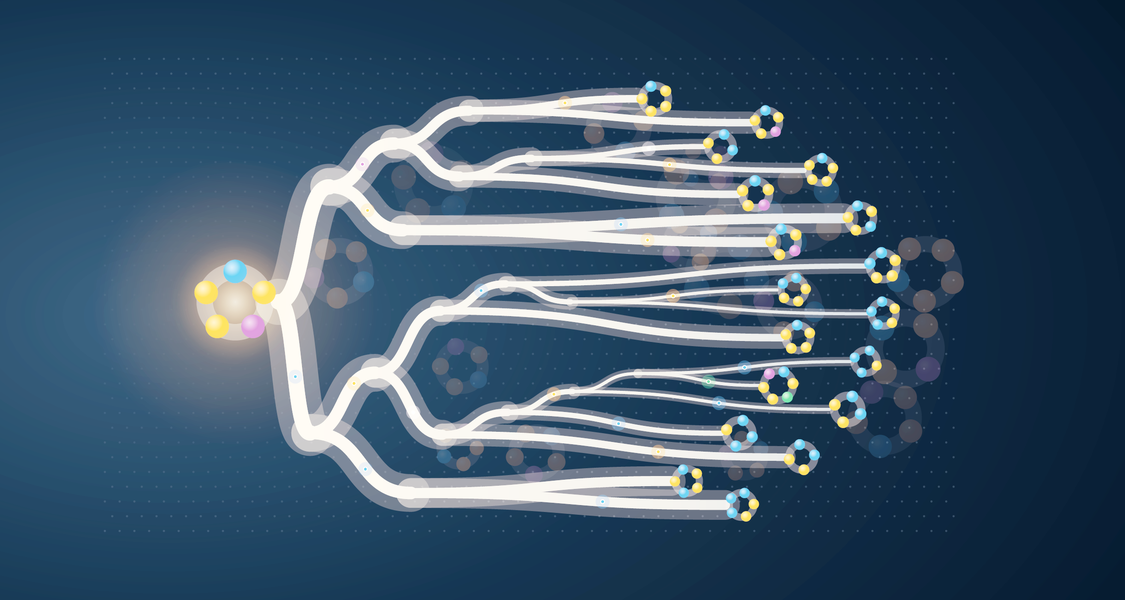
Researchers at the Max Planck Institute for Terrestrial Microbiology and Marburg University have systematically uncovered why certain bacteria produce a stunning diversity of natural products. The key lies in a complex interplay of natural selection, chance, and a genetic bias for similarity.
At a glance
Nonribosomal peptide synthetases are bacterial enzyme machineries that work like molecular assembly lines, producing natural products such as antibiotics and insecticides.
Researchers at the Max Planck Institute for Terrestrial Microbiology have now deciphered how evolution generates the remarkable diversity of these compounds: through a complex interplay of natural selection, chance, and a genetic bias for similarity.
Understanding these mechanisms can help uncover hidden bioactive variants in natural product families, potentially leading to new antibiotics that overcome existing resistances.
Click here for the full news info