30.09.2026 Heimstatt der Geister
Vor 60 Jahren: Die Uni bezieht die „Philfak“
English version below: Home of the Spirits
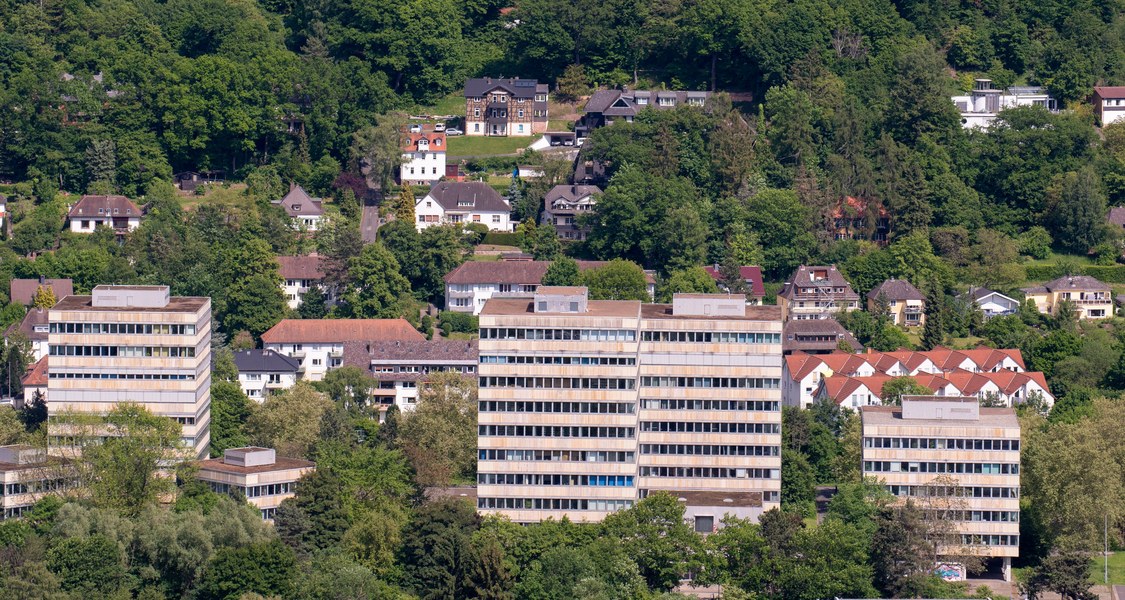
Vor 60 Jahren, im Jahr 1966 zog die Philosophische Fakultät der Marburger Universität in den Neubau an der Wilhelm-Röpke-Straße – ein zentrales Gebäude, das die verstreuten Geisteswissenschaften vereinte. Mit dem Bau der „PhilFak“ wurde nicht nur ein architektonisches Statement errichtet, sondern auch ein Zeichen für die wachsende Bedeutung der Geisteswissenschaften gesetzt.
Obwohl die Philosophische Fakultät 1971 aufgelöst und in mehrere eigenständige Fachbereiche aufgeteilt wurde, blieb der Name „PhilFak“ im kollektiven Gedächtnis erhalten. Der Neubau war ursprünglich vor allem als Antwort auf die steigenden Studierendenzahlen konzipiert; gleichzeitig zeigte die Uni Präsenz im städtischen Leben.
Von Anfang an wurde der Bau kontrovers diskutiert. Schon immer haben viele die markanten Türme als Fremdkörper im Stadtbild empfunden. Dennoch: Die „PhilFak“ hat sich zu einem Ort der Begegnung, der Proteste, der kreativen Ausdrucksformen und der studentischen Geschichte entwickelt.
Die „PhilFak“ bewegt. Sie bewegt Menschen. Mit ihrer Geschichte, mit ihrer Architektur, mit ihrem Ausdruck. Das macht sie zu einem unverzichtbaren Teil von Universität und Stadt.
Text: Ricarda Skarabela
- Rubrik 'Weißt du noch?' in Andererseits Winter 2025/26: Mit großen Augen - 60 Jahre Unikita
- Rubrik 'Weißt du noch?' in Andererseits Sommer 2026: Umstrittener Deal - 20 Jahre Klinikprivatisierung
***
Home of the Spirits
60 years ago: The university moved into the ‘Philfak’
Sixty years ago, in 1966, the Faculty of Philosophy at the University of Marburg moved into its new building on Wilhelm-Röpke-Straße – a central building that brought together the previously scattered humanities departments. The construction of the ‘PhilFak’ not only made an architectural statement but also signalled the growing importance of the humanities.
Although the Faculty of Philosophy was dissolved in 1971 and split into several independent departments, the name ‘PhilFak’ has remained in the collective memory. The new building was originally designed primarily as a response to rising student numbers; at the same time, it demonstrated the university’s presence in city life.
From the outset, the building was the subject of heated debate. Many have always perceived the striking towers as an eyesore in the cityscape. Nevertheless, the ‘PhilFak’ has developed into a place of encounter, protest, creative expression and student history.
The ‘PhilFak’ moves people. It moves people with its history, its architecture and its expression. This makes it an indispensable part of both the university and the city.
Author: Ricarda Skarabela
- ‘Do you remember?’ column in Andererseits Winter 2025/26: With wide-eyed wonder – 60 years of Unikita
- ‘Do you remember?’ column in Andererseits Summer 2026: A controversial deal – 20 years of hospital privatisation