16.06.2026 First Visiting Scholars at a GenDem Workshop on Antifeminism and Crisis Narratives
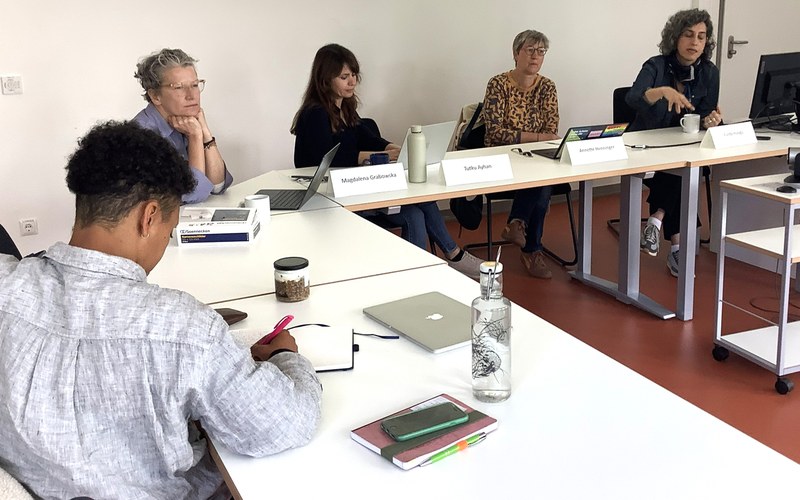
In June, the LOEWE GenDem research cluster welcomed its first international visiting scholars, Dr. Tutku Ayhan and Prof. Magdalena Grabowska, to a joint workshop.
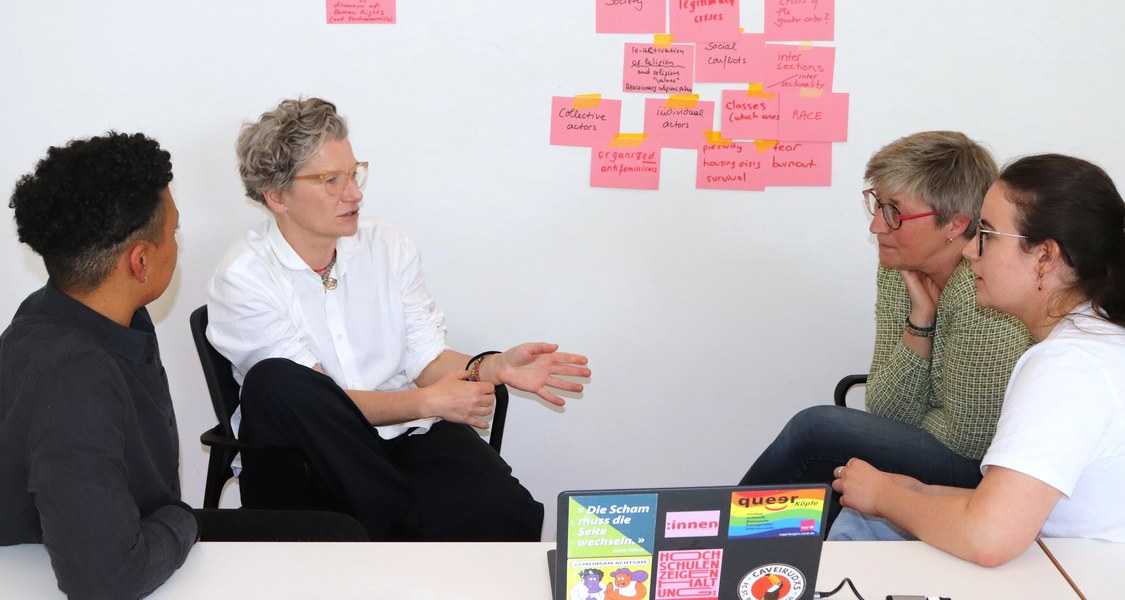
On June 11 and 12, the guests joined GenDem staff in a discussion on the topic “Antifeminism in Times of Crisis.” The discussion was based on the widely held assumption in research that antifeminist mobilizations arise particularly in times of crisis and are linked to social uncertainties. The GenDem research project also builds on these considerations.
The workshop focused on how different actors understand and narrate crises, the gender-specific and socioeconomic foundations on which these crisis narratives are based, and the roles they play in the context of anti-feminist mobilizations.
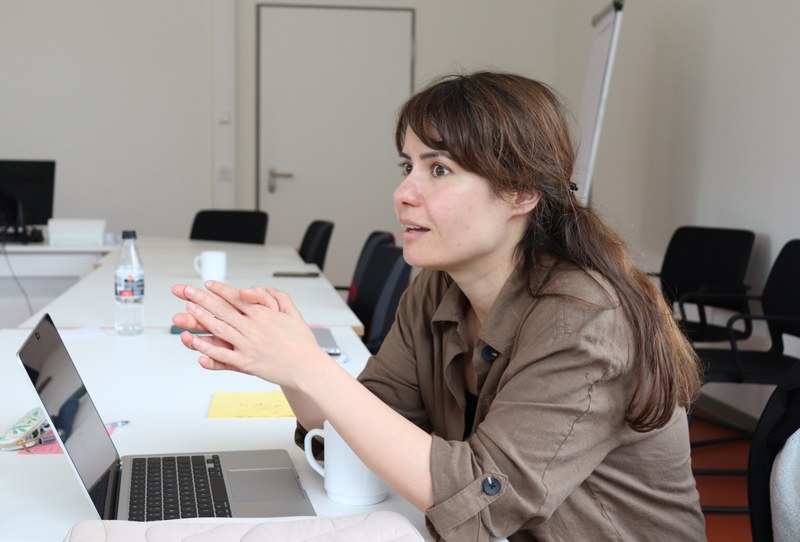
The first day of the workshop was devoted to the theoretical foundations of various crisis concepts. Prof. Dr. Annette Henninger and Dr. Funda Hülagü from GenDem introduced participants to the political science concept of the polycrisis as well as to the assumption, common in gender studies, of crises of the gender regime. The guest scholars then presented their current research: Dr. Tutku Ayhan (Institut Barcelona d'Estudis Internacionals (IBEI)) presented her research on the situation in Turkey, while Prof. Magdalena Grabowska (Polish Academy of Sciences in Warsaw) provided insights into current anti-feminist movements in Poland.
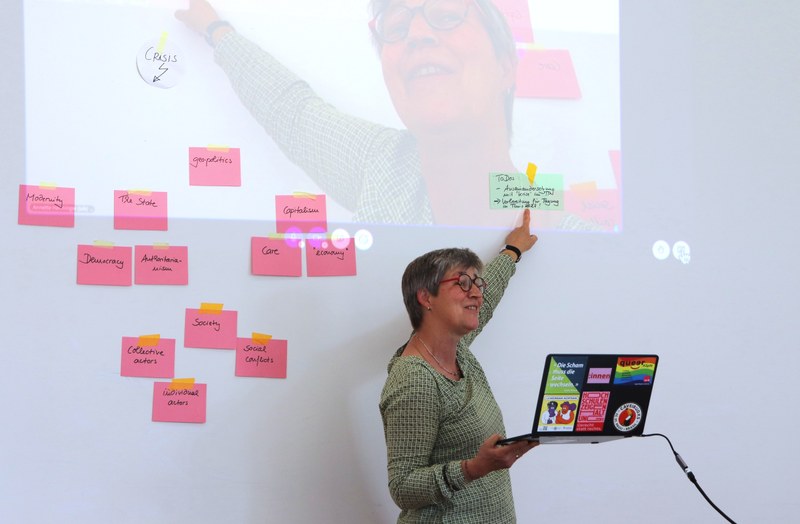
Based on these case studies, the participants collaboratively developed a multi-level crisis matrix. Global political developments were situated at the macro level, while topics such as modernity, statehood, capitalism, democracy, authoritarianism, and the economy were situated at the meso level. The micro level encompassed social groups, collective and individual actors, and experiences of social crisis.
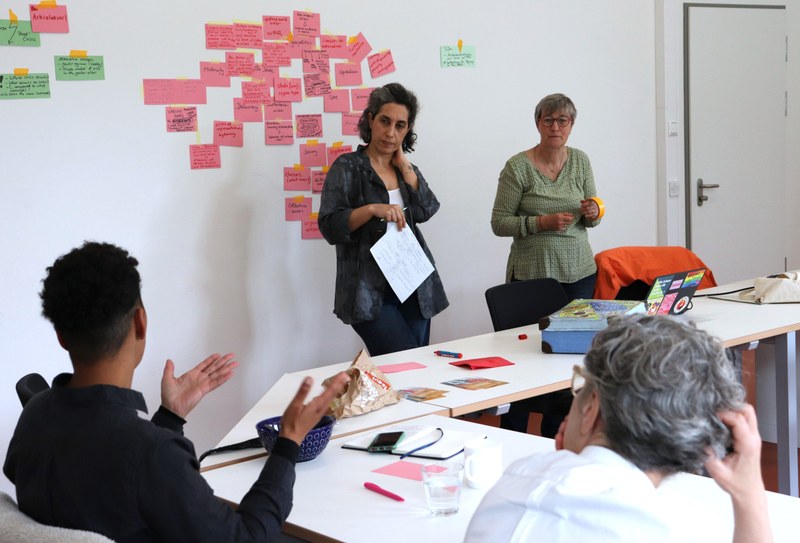
This systematization formed the basis for the in-depth discussion on the second day of the workshop. The participants first worked in small groups to expand the crisis matrix with additional perspectives and then analyzed different levels of anti-feminist mobilizations – with a focus on state and societal dynamics. Finally, the results were compiled and discussed.
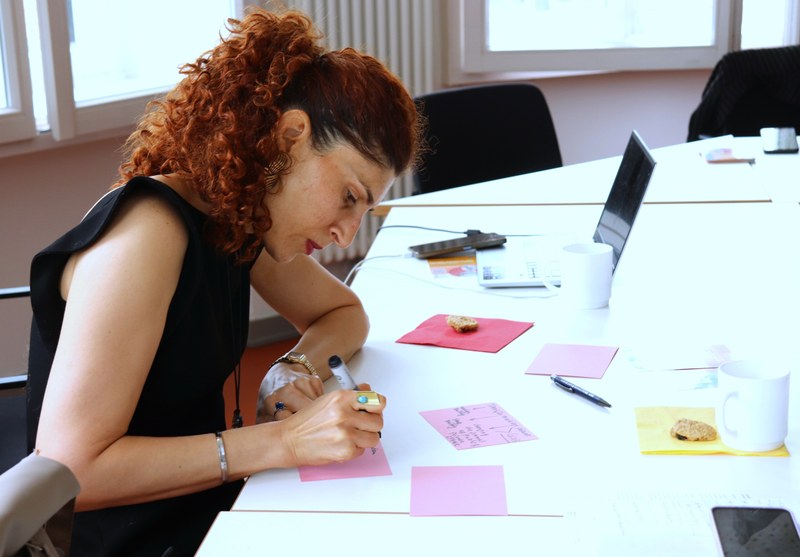
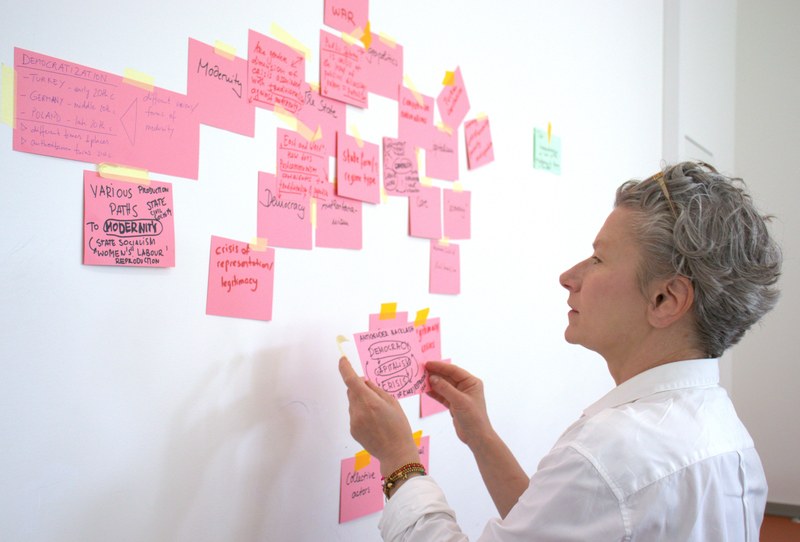
A key finding of the workshop was the realization that crises must be analyzed at different levels and that, in particular, greater attention should be paid in the future to individual experiences of crises. At the same time, the collaborative work on the crisis matrix showed that research projects do not need to cover all levels of crisis equally but can instead focus specifically on individual levels of analysis.
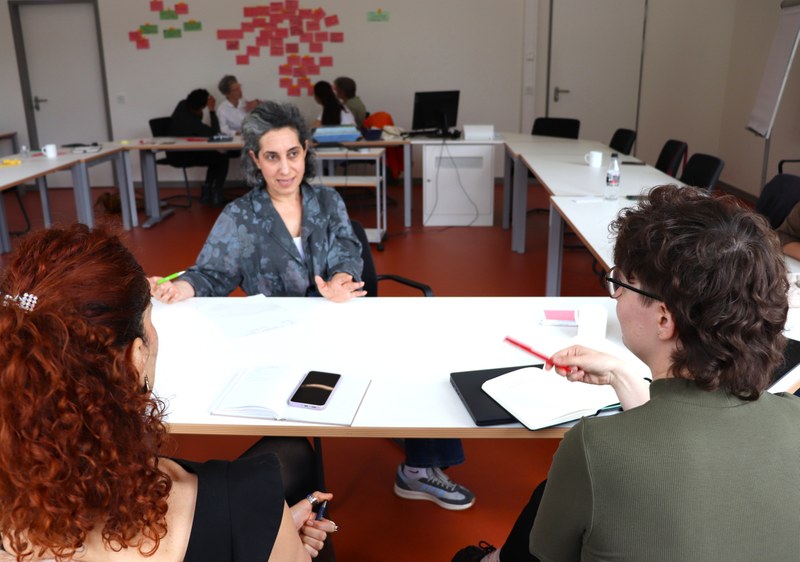
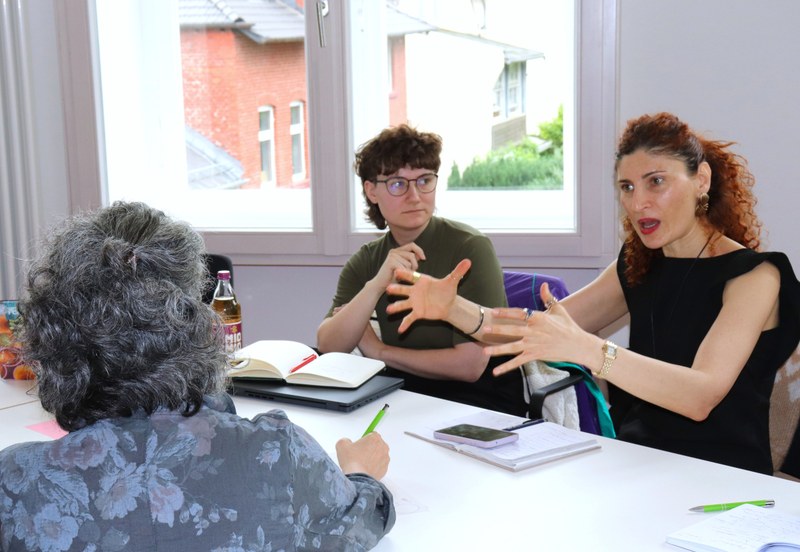
The two guests’ visit took place as part of a research fellowship co-funded by the EU COST Action CA 23149 “Antigender Politics. Prof. Magdalena Grabowska also spoke on June 11 at the lecture series organized by GenDem in the summer semester of 2026 in collaboration with the Center for Gender Studies and Feminist Future Studies on the topic “ANTIFEMINISM & NATIONALISM.” Her presentation on “Reproducing Life, Reproducing the Nation: Social Reproduction, Abortion, and Nationalism in Poland” can be listened to here.
As part of the lecture series, Dr. Tutku Ayhan gave a presentation on June 18 titled “Anti-Gender Politics as Authoritarian Governance: The Case of Türkiye.” You can listen to it here.
The collaboration will continue in the fall of 2026 with a joint blog post for “The Loop: Gendering Democracy,” a political science blog run by the European Consortium for Political Research (ECPR).