Main Content
Career Paths in Management
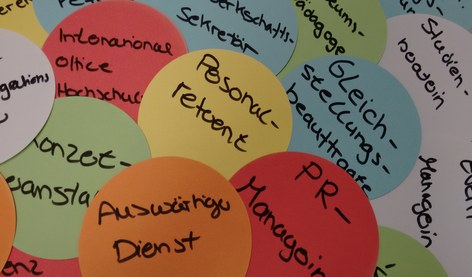
Science Management, Knowledge Management, Cultural and Event Management, Migration and Integration Management, Project Management, Corporate Management, Human Resources Management
Possible Tasks
- As a manager, your tasks include planning, organizing, and developing curricula, language courses, and learning materials.
- You work in university administration and support research and teaching through strategic and conceptual development efforts.
- You develop ideas for events and programs and organize cultural and leisure events.
- You negotiate with both customers and sponsors, e.g. to secure funding.
- In cultural administration, you put together cultural programs in cooperation with the local arts and culture scene.
- In tourism and leisure management, you are involved in the structural and cultural development of specific regions.
- For companies, you organize cultural sponsorship activities, for example.
- As a project manager, you are responsible for the successful planning, monitoring, and controlling of tasks and resources for the project. You also raise additional financial resources.
- You develop proposals for both business development and the marketing and sales approach of companies.
- You take on specialized human resources tasks in the areas of staff planning, recruiting, and administration.
- You ensure that interlingual and intercultural issues are taken into account in both organizational and staff development.Industries and Occupations
- Higher education
- Large and medium-sized companies in all industries
- Educational institutions, foundations, associations, clubs
- Public sector administration (including cultural offices and departments)
- (International) organizations
- Political parties and institutions
- Business and employer associations (e.g. chambers of commerce and industry), professional associations, trade unions
- Adult continuing education centers
- Federal volunteering organizations
- Religious communities
- Event venues for theater, concerts, leisure, and sports
- Museums
- Foundations
- Cultural associations
- Publishing houses
- Agencies
- Management consulting, especially arts and culture consulting
- Commercial enterprises
- Associations, organizations, interest groupsJob Boards an Professional Associations
- Stellenangebote WiLa-Arbeitmarkt
- Jobbörse der Agentur für Arbeit
- Karriereportal der Deutschen Industrie- und Handelskammer und der Auslandshandelskammern
- Netzwerk Wissenschaftsmanagement
- Deutsches Institut für Internationale Pädagogische Forschung (DIPF)
- Deutsches Institut für Erwachsenenbildung
- Interamt - Jobportal für den öffentlichen Dienst
- KULTweet
- Forum Deutsch als Fremdsprache