Prof. Dr. Albrecht Fuess
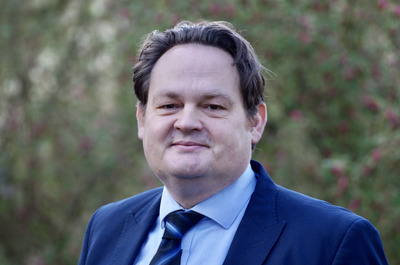
Leiter, Universitätsprofessor
Kontaktdaten
+49 6421 28-21302 albrecht.fuess@staff 1 islamwissenschaft@ 1 Deutschhausstraße 1235032 Marburg
F|14 Institutsgebäude (Raum: 00A38) Di 10-12 und n.V.
Organisationseinheit
Philipps-Universität Marburg Centrum für Nah- und Mittelost-Studien (CNMS) Fachgebiet IslamwissenschaftPublikationen
Zu den Publikationen im Forschungsinformationssystem (im Aufbau)Vita
Prof. Dr., studierte Geschichte und Islamwissenschaft an der Universität zu Köln (1996 Magisterarbeit zur deutschen Gemeinde in Ägypten zwischen den Weltkriegen) und an der Universität Kairo. Als Stipendiat der Studienstiftung des deutschen Volkes (währenddessen jeweils einjähriger Forschungsaufenthalt als Gastwissenschaftler am Orient-Institut Beirut und an der School of Oriental and African Studies) promovierte er 2000 in Köln mit einer Arbeit zur syro-palästinensischen Küste in mamlukischer Zeit (1250–:1517).
Nach einer Tätigkeit als freier Mitarbeiter in der Auslandsredaktion des ZDF in Mainz wurde er 2002 wissenschaftlicher Assistent am Lehrstuhl Islamwissenschaft der Universität Erfurt. Von 2007 bis 2009 war er „Le Studium“ – Fellow, dem Wissenschaftskolleg der „Région Centre“, an der Equipe Monde Arabe et Méditerranée (Université de Tours) an einem Forschungsprojekt zum Systemvergleich der Osmanen, Safaviden und Mamluken im 16. Jahrhundert.
Seit 2010 lehrt er als Professor für Islamwissenschaft an der Universität Marburg.
Seine Forschungsschwerpunkte sind Geschichte des Nahen Ostens (13.–17. Jahrhundert), Kultur- und Sozialgeschichte der Mamluken, Islam in Europa und zeitgenössische islamische Jugendkulturen.
Laufende Forschungsprojekte
LOEWE Center DynaRel researches religious diversity. The LOEWE Center DynaRel – Dynamics of the Religious: Ambivalent Neighborhoods between Judaism, Christianity, and Islam in Historical and Contemporary Contexts – is a new interdisciplinary research initiative that explores the complex religious, cultural, and political dynamics among the three major monotheistic religions. Central to this approach is the concept of "ambivalent neighborhoods," which examines both the close historical and spatial connections and the tensions between these religions.
The project aims to provide a nuanced understanding of current challenges at the intersection of religion and politics. The center is led by Prof. Dr. Christian Wiese from Goethe University Frankfurt, with co-spokespersons Prof. Dr. Armina Omerika and Dr. Antje Röder. The Marburg team includes Prof. Dr. Albrecht Fuess from Islamic Studies and Prof. Dr. Antje Röder from Sociology, who collaborate on interdisciplinary questions related to multireligious coexistence, migration, and the handling of diversity in plural societies.
DynaRel is situated in Hesse, particularly focusing on the Rhine-Main region, but its implications extend beyond this context. The project is funded by the state of Hesse from January 2026 to December 2029 with a total of €19 million, involving close cooperation between the universities of Marburg, Frankfurt, and Giessen, as well as other national and international partners.
For more information, you can visit the official website of the LOEWE Center DynaRel: HereAbgeschlossene Forschungsprojekte
- DAAD Ta'ziz Science Cooperations 2023-2025!
TA'ZIZ at CNMS promotes research and academic exchange in Islamic Studies between Germany and the MENA region, funded by the DAAD. The project aims to bring the fields of Egyptology, Antiquity Studies, Islamic Studies, Archaeology and the History of Pharmacy and Medicine from Marburg University together with colleagues from Germany, Egypt and Lebanon in order to develop a holistic approach on materiality in research and teaching. At the university of Marburg we build on decades of research, archaeological work, digital archiving and teaching of the involved colleagues in Germany, Egypt and Lebanon. The project is funded by the DAAD in the framework of the Ta'ziz Science Cooperations 2023-2025.. Project Website.
- EGYLandscape Project:
Exploring Egypt's Landscapes During the 13th-18th Centuries [ANR-DFG]
Project Coordinators: Muhammad Shaaban and Anthony Quickel Project Lead in Marburg: Albrecht Fuess Website
- “The Clash of Muslim Empires. Ottomans, Safavides and Mamluks in the Sixteenth Century ”(Individual research project)
The leitmotiv is the historical continuity after the downfall of the Mamluks in 1517 in the sense of Fernand Braudels “longue durée,” comparing the Ottoman, Safavid, and Mamluk empires and their systems of governance and trade in the context of increasing European expansion.
The research project will explore the reasons of the disappearance of the Mamluk Empire as well as the surprising rise of the Safavids at the beginning of the sixteenth century.
Both empires, however, were decisively defeated by the Ottomans. The research analysis will therefore explore the underlying structures behind the Ottoman success. The military and economic sector and the question of resources will receive special attention as the Ottomans introduced new military techniques and revived their trade by initiating large naval activities in the Mediterranean. In the mid of the sixteenth century, the Ottomans were seemingly at the height of their might, but already at the end of the century the Safavids had learned the lessons of their earlier defeats and had initiated important reforms.
Finally they could challenge Ottoman hegemony and successfully retake territories at the beginning of the 17th century.
Another vital aspect in this process of confrontation is the religious legitimization of empires. Sunni Ottoman / Mamluk and Shii Safavi propaganda play a crucial role and will be explored.A working hypothesis is so far that the Middle East witnessed an "Ottomanization" in the sixteenth century even outside the realm of the Ottoman Empire. Both, the Mamluks and the Safavids tried to carry through "Ottoman style" reforms. For different reasons, however, the Mamluks failed, while the Safavids succeeded.
The primary sources of the project are historiographical writings and documents in Arabic, Persian, Ottoman and European languages.
- Music and Islam in France (Individual research project II):
In recent years a tendency of islamization of the Music of Muslim migrants in the French banlieu is bcoming visible. This islamization is not to be found in Music alone. It reflects the general tendency in European countries to islamize the discourse about Muslim Migration and Integration. Turks in Germany, Arabs in France and Southasians in Britain are increasingly linked by the majority society to Islam instead of ethnicity.
Many aspects in this discussion go thereby far beyond the religious sphere. Valerie Amiraux comments this process for Europe as follows: “The 'Islam and Muslim' question is thus simultaneously considered to be a political, social and cultural question”. What is special about France is that this issue is mostly debated in the context of “laïcité”, the strict separation of religion and the state. French officials tend to see “laïcité” as a “core value and a regulatory principle” every citizen has to obey.
It is still publicly disputed, though, were Muslim migrants are to be put concerning the “laïcité”, This ongoing discussion is reflected as well in popular culture
Verbundprojekte:
- Transottomanica: Eastern European-Ottoman-Persian Mobility Dynamics [DFG- SPP 1981]
Co-coordinator: Albrecht Fuess Website
- Mediating Islam in the Digital Age [Horizon2020]
Work Package Training:Albrecht Fuess and Maike Neufend Website
Abgeschlossene Promotionen
- Abdulaziz Jardan, "The Sayf al-mulūk wa-l-ḥukkām of Muḥyī ad-Dīn Muḥammad ibn Sulaymān al-Kāfiyağī (d. 1474), edition, translation and commentary". (In cooperation with Prof. Dr. Stefan Weninger, Semitic studies) (2015) (Initial report) [Funded by a doctoral grant from the Syrian state]
- Abderrahmane Ammar-Haueis, "Religiousness of Young Muslims of Moroccan Origin in Germany" (Co-tutelle with the University of Marrakech (Université Cadi Ayyad) / Prof. El-Moujahid) (2019) (joint first reviewer)
- El-Mustapha Moujib, “General Developments in Adolescent Language and Culture in the Maghreb: A Sociolinguistic Study of Language Mixing in Adolescents Using Hip-Hop Culture”. (In cooperation with Prof. Dr. Richard Wiese, German Linguistics, Faculty 09) (2020) (Second report)
- Maike Neufend: "The differences in the religious construction of gender", (In cooperation with the International Graduate Center for the Study of Culture, University of Giessen) (2021) (second report)
- Ahmed Sheir, “The Legend of Prester John and its Political Implications on the Conflict between the Muslim East and Latin West (12th-16th centuries)”, [Funded by the Yousef Jameel Academic Program, Dubai] (2021) (initial report)
- Hala Ghoname, “The Wāli's Soft Power in Europe: Orientalists 'Portraits of Muḥammad' Alī Bāshā; between Historic Documentation, Political Propaganda, and the Sa'eedian Paradigm of Orientalism ”, (2021) [Funded by the Yousef Jameel Academic Program, Dubai] (initial assessment)
- Bianca Devos, "The emergence of a modern Iranian press: Journalism in the authoritarian state of Riżā Šāhs using the example of the daily newspaper IṭṭilāÝāt, 1926-1941." (2011) (second report) (University of Marburg)
- Batoul Al-Muhaissen, “La position du français in L'université de Yarmouk: enjeux d'évaluation pour la formation des adultes en Jordan”. (2012) (second report) (University of Marburg)
- Abderrahman Aresmouk, “Islamism in the Maghreb as a Challenge for EU Security Policy. The example of Algeria ”. (2013) (second report) (University of Marburg)
- Louay Radhan, "Muslims against the Islamic State: Arab Critics and Supporters of Alī Abdarrāziq's (1888-1966) Islamic Laicism". (2013) (initial assessment) (University of Marburg)#Clement Onimus, "Les émirs dans le sultanat mamelouk sous les sultans
- Barquq et Farag (784-815 / 1382-1412). Restauration sultanienne et conflits émiraux "(Rapporteur et membre du jury) (Ecole Pratique des Hautes Etudes, IVe section, Paris) (2013)
- Tilmann Schreinemacher, “Content and composition of Arabic ʾAmālī works. Which areas of knowledge do the books that are considered to be recordings of Islamic dictation sessions contain? ”(Since January 2020, financed by the MARA grant of the University of Marburg).
- Anthony Quickel, "Patterns of Book Ownership among Ottoman Cairo's Merchant Class - 16th - 18th Centuries." (Since 2015) [Funded by the DFG, DYNTRAN project]
- Anne Troadec "Les Mamelouks dans l'Espace Syria: Stratégies de Domination et Résistances (658 / 1260-741 / 1341)" (Rapporteur et membre du jury) (Ecole Pratique des Hautes Etudes, IVe section, Paris) (2014)
Laufende Promotionen
- Ragab Kamal Abouhalima, „Die islamische Pilgerfahrt in den Manuskripten der Forschungsbibliothek Gotha“.
PhD student.- Saadat Ahmed, “Islamic Welfare and Pastoral Care for Muslim Young People in Germany. An analysis of existing concepts and instructions for needs-based action ”. PhD student.
- Philipp Rückriem, Stereotyping the Middle East Conflict. Analyzer of German documentary films 1948-2010. (Since 2014) [Funded by the Gerda Henkel Foundation]
Publikationen (Bücher)
- (2024) Mobility Dynamics between Eastern Europe and the Near East. Exploring a Cross-Regional Shared History. Fuess, Albrecht (Hrsg.); Hein-Kircher, Heidi (Hrsg.); Obertreis, Julia (Hrsg.); Rohdewald, Stefan (Hrsg.) Aus der Buchreihe Quellen und Studien zur Geschichte des östlichen Europa, Band 96 erschienen bei Franz Steiner Verlag, 2024.
- (2001) Verbranntes Ufer. Auswirkungen mamlukischer Seepolitik auf Beirut und die syro-palästinensische Küste (1250-1517), Leiden: E. J. Brill 2001. (Islamic History and Civilization 39, hrsg. von Wadad Kadi).
Rezensionen:
• Stephan Conermann, in: Zeitschrift der Deutschen Morgenländischen Gesellschaft, 157/2 (2007), 474-476.
• Patrick Franke, in: Mamluk Studies Review, 10/2 (2006), 191-193;
• Thomas Herzog, in: Journal of the Economic and Social History of the Orient, 47/2 (2004), 274-275;
• Roman Míšek, in: Archiv Orientální, 71 (2003), 104-105;
• Andrew C. Hess, in: International Journal of Middle East Studies, 35 (2003), 496-498;
• Richard van Leeuwen, in: Bibliotheca Orientalis, 60 (2003), 480-481;
• Guy Ducatez, in: Bulletin Critique des Annales islamologiques, 18 (2002), 68-72.;
• (1996) Die deutsche Gemeinde in Ägypten von 1919-1939, Hamburg: Lit-Verlag 1996. (Hamburger Islamwissenschaftliche und Turkologische Arbeiten und Texte 8, hrsg. von Gernot Rotter und Petra Kappert)
Herausgeberschaften:
• Zusammen mit Christoph Werner, Maria Szuppe und Nicolas Michel, Dynamics of Transmission: Families, Authority and Knowledge in the Early Modern Middle East (15th-17th centuries), Turnhout: Brepols, 2021.
• Zusammen mit Volker Leppin und Stefan Schreiner, Jerusalem – Ziel, Vision, Vorbild Fünf Geschichten eines Erinnerungsortes in Judentum, Christentum,Islam und Baha'i, Tübingen: Mohr Siebeck 2021.
• (2019) Zusammen mit Stefan Rohdewald und Stephan Conermann: Transottomanica: Osteuropäisch-osmanisch-persische Mobilitätsdynamiken. Perspektiven und Forschungsstand, Göttingen: V&R Unipress.
• (2017) Zusammen mit Stefan Weninger: „A Life with the Prophet? Examining Hadith, Sira and Qur’an”. In Honor of Wim Raven, Berlin: EB Verlag.
• (2013) Zusammen mit Bernard Heyberger: La frontière méditerranéenne (15e – 17e siècles). Échanges, circulations, et affrontements, (Publications de la Société Internationale de Recherches Interdisciplinaires sur la Renaissance, hrsg. von Marie-Luce Demonet), Turnhout: Brepols.
• (2011) Zusammen mit Jan-Peter Hartung: Court Cultures in the Muslim World (7th-19th Centuries), (SOAS/Routledge Studies on the Middle East, hrsg. von Benjamin C. Fortna und Ulrike Freitag), London: Routledge.
Rezensionen:
• Ali Anooshar, in: Indian Economic Social History Review, 49 (2012), 591 593.
• Aziz Al-Azmeh, in: The Medieval History Journal, 16/1 (2013), 199-206.
Artikel (thematisch geordnet)
I. History of the Near and Middle East (13th – 17th centuries)
II. Social and Cultural History of the Mamluks
III. The Mediterranean between the Near East and Europe in an Historical Perspective
IV. Transottomanica
V. Islam in Europe
VI. Islamic Fundamentalism
VII. The German Community in Egypt in the 20th century
VIII. Varia
IX. Selected Media Contributions
X. Articles in Encyclopaedias
XI. Book reviewI. History of the Near East (13th – 17th Centuries)
1. „The Urgent Need for Cash: Thoughts on the Taxation of Land in the Late Mamluk Sultanate”, in: Mamluk Studies Review, 25 (2022), 1-18. (Refereed Journal)
2. “Why Domenico had to die and black slaves wore red uniforms? Military Technology and its decisive role in the Ottoman conquest of Egypt 1517”, in: The Mamluk-Ottoman Transition. Continuity and Change in Egypt and Bilad al-Sham in the Sixteenth Century, Vol. 2, ed. by Stephan Conermann and Gül Şen, Göttingen: V&R Unipress, Bonn University Press: 2022, 131-154. (Ottoman Studies 10)
3. “The role of military technology and firearms in the Ottoman conquest of the Mamluk realm 1516-1517”, in: The Memory of Arabs 4 (2020), Bibliotheca Alexandrina, 9-24.
4. “Waqfization in the late Mamluk Empire: A deliberate policy or chaos management?”, EGYLandscape Working Papers, n° 1, online edition, June 2020, Here.
5. “Three’s a Crowd. The Downfall of the Mamluks in the Near Eastern Power Struggle, 1500-1517”, in: The Mamluk Sultanate and its Neighbors: Economic, Social and Cultural Entanglements, ed. by Reuven Amitai and Stephan Conermann, Göttingen: Bonn University Press 2019, 431-452. (Mamluk Studies 17)
6. “How to Cope with the Scarcity of Commodities? The Mamluk‘s quest for Metal”, in: The Mamluk Sultanate and its Neighbors: Economic, Social and Cultural Entanglements, ed. by Reuven Amitai and Stephan Conermann, Göttingen: Bonn University Press 2019, 61-74. (Mamluk Studies 17)
7. „Von der Belagerung Wiens (1529) zum antiimperialistischen Kampf. Wandelnde Konzepte von ‚Heiligem Krieg‘ (ǧihād und ġazwa) im Nahen Osten zwischen dem 16. und 19. Jahrhundert“, in: Historisches Jahrbuch 134 (2014), ed. by Christoph Kampmann et al., 10-28.
8. „Ottoman Ghazwa – Mamluk Jihad. Two arms on the same body?“, in: Everything is on the Move. The “Mamluk Empire” as Node in (Trans-)Regional Networks, ed. by Stephan Conermann, Göttingen: Bonn University Press 2014, 269-282. (Mamluk Studies 7)
9. „Mamluk Politics“, in: Ubi sumus? Quo vademus? Mamluk Studies – State of the Art, ed. by Stephan Conermann, Göttingen: Bonn University Press 2013, 95-117. (Mamluk Studies 3)
10. «Fini ‚la belle vie des Tcherkesses’. La conquête de l’Égypte reconsidérée dans le Durar al-Athmān d’Ibn Abî al-Surûr al-Bakrî (m. après 1653)», in: Conquête ottomane de l’Égypte (1517). Impacts et échos d’un événement majeur, ed. by Nicholas Michel and Benjamin Lellouch, Leiden: Brill 2012, 401-415.
11. “Taxation and Armies in the Mediaeval Middle East, 11th – 17th Centuries”, in: New Cambridge History of Islam, Vol. 2, ed. by Maribel Fierro, Cambridge: CUP 2010, 607-631.
12. “Les Janissaires, les Mamlouks et les armes à feu. Une comparaison des systèmes militaires ottoman et mamlouk à partir de la moitié du quinzième siècle”, in: Turcica, 41 (2009), 209-227. (Refereed Journal).
13. „Déplacer une ville au temps des Mamloukes: Le cas de Tripoli“, in: Chronos (Revue d’histoire de l’Université de Balamand, Liban), 19 (2009), 157 – 172. (Refereed Journal)
English Version: “From the Sea to the Foothill: The Dislocation of Tripoli by the Mamluks after 1289”, in: Burgen und Schlösser, 4 (2009), 218-223.14. “Dreikampf um die Macht zwischen Osmanen, Mamluken und Safawiden (1500-1517). Warum blieben die Mamluken auf der Strecke?”, in: Die Mamlūken. Studien zu ihrer Geschichte und Kultur. Zum Gedenken an Ulrich Haarmann (1942-1999), ed. by Anja Pistor Hatam and Stephan Conermann, Hamburg: EB-Verlag 2003, 239-250.
15. «La région du Liban à l’époque des Mamelouks», in: Liban, l’autre rive, Paris: Institut du Monde Arabe and Flammarion 1998, 244-249.
16. “Beirut in Mamluk Times (1291-1516)”, in: Aram, 9&10 (1997-1998), (The Mamluks and the Early Ottoman Period in Bilad al-Sham: History and Archaeology), 85-101. (Refereed Journal)
II. Social and Cultural History of the Mamluks
17. Medieval Quibbling: Yāsā as Legal Concept between Mongols, Mamluks, and Ottomans, in: Mamluk Studies Review, 27 (2024), 169-182. (Refereed journal)
18. “A Mamluk Sultan in Genoa: How the Sīrat Baybars Shaped the Egyptian Mental Map towards Europe and the Mediterranean”, in: Entangled Religions, 15(3) (2024). Click Here (Refereed Journal)
19. “A “Medieval Islamist” versus an “Arab Machiavelli”? The legacy of the Mamluk scholars Ibn Taymīya (1263-1328) and Ibn Nubāta (1287-1366)”, in: Order into Action. How Large-Scale Concepts of World-Order determine Practices in the Premodern World, ed. by Klaus Oschema and Christoph Mauntel, Turnhout: Brepols 2022, 97-125.
20. “Ṣihr and Muṣāhara in Mamluk Royal Relations: Transmitting Power and Enlarging Networks Through In-Law Ties in Pre-Modern Egypt”, in: Dynamics of Transmission: Families, Authority and Knowledge in the Early Modern Middle East (15th-17th centuries), ed. by Christoph Werner, Maria Szuppe, and Nicolas Michel, Turnhout: Brepols 2021, 155-169.
21. “The Syro-Egyptian Sultanate in Transformation, 1496–1498. Sultan al-Nāṣir Muḥammad b. Qāytbāy and the Reformation of Mamlūk institutions and Symbols of State Power”, in: Trajectories of State Formation across Fifteenth-Century Islamic West-Asia Eurasian Parallels, Connections and Divergences, ed. by Jo van Steenbergen, Leiden: Brill 2020, 201-223.
22. “Legitimacy through female lineage? The Role of in-Laws (aṣhār) in the Royal Mamluk Households of the Fifteenth Century”, in: Eurasian Studies 15 (2017), 200-221., (Refereed Journal)
23. “How to marry right: Searching for a royal spouse at the Mamluk court of Cairo in the fifteenth century”, DYNTRAN Working Papers, n° 21, online edition, February 2017, available here
24. “Between Dihlīz and Dār al-‛Adl. Forms of Outdoor and Indoor Royal Representation at the Mamluk Court in Egypt”, in: Court Cultures in the Muslim World, (7th -19th centuries), ed. by Albrecht Fuess and Jan-Peter Hartung, London: Routledge 2011, 149-167.
25. “Legends against Arbitrary Abuse: The Relationship between the Mamluk Military Elite and their Arab Subjects”, in: Towards a Cultural History of Bilad al-Sham in the Mamluk Era. Prosperity or Decline, Tolerance or Persecution?, ed. by Souad Slim, Mahmoud Haddad Arnim Heinemann and John L. Meloy, Beirut: Ergon Verlag Würzburg 2010, 141-151. (Beiruter Texte und Studien 118)
26. “Zulm by Mazālim? About the Political Implication of the Use of Mazālim Jurisdiction by the Mamluk Sultans”, in: Mamluk Studies Review, 13/1 (2009), 121-147. (Refereed journal)
27. “Sultans with Horns. About the Political Significance of Headgear in the Mamluk Empire”, in: Mamluk Studies Review, 12/2 (2008), 1-24. (Refereed Journal)
III. The Mediterranean between the Near East and Europe in an Historical Perspective
28. “Black Sea Pirates and Bandits—until 1475“, in: Handbook on the History and Culture of the Black Sea Region, ed. by Ninja Bumann, Kerstin S. Jobst, Stefan Rohdewald and Stefan Troebst, Berlin: De Gruyter 2025. 579-599.
29. Der Maghreb und die Sahara. Neu ausgerichtet nach Norden (nicht mehr nach Osten), in: Geschichte der Arabischen Welt, ed. by Andreas Kaplony, München: C.H. Beck 2024, 571-590.30. „Wie beherrscht man die „See der Römer“? Seestrategien bei Mamluken und Osmanen (13. bis 16. Jahrhundert)”, in: Thalassokratien im Mittelalter, ed. by Jan Rüdiger and Nikolas Jaspert, Paderborn: Fink-Schöningh 2023, 327-340. (Mittelmeerstudien 25)
31. “Why Venice, not Genoa? How Venice Emerged as the Mamluks’ Favourite European Trading Partner after 1365,” in: Union in Separation – Diasporic Groups and Identities in the Eastern Mediterranean (1100-1800), ed. by Georg Christ et al., Rome: Viella 2015, 251-266.
(Reprinted in: Studies in Peace-Building. History between East and West through the Middle Ages and Modern Era, ed. by Ali Ahmed El-Sayed, Abdallah al-Naggar and Ahmed Mohammad Sheir, Cairo: Sanabil Bookshop 2019, 124-144.)32. “Braudel and the Sea. What to make today out of Braudel’s Méditerranée for the study of Mediterranean history from the 15th to the 17th century”, in: La frontière méditerranéenne (15e – 17e siècles). Échanges, circulations, et affrontements, ed. by. Albrecht Fuess and Bernard Heyberger Turnhout: Brepols 2013, 47-65.
33. Muslime und Piraterie im Mittelmeer (7-16. Jahrhundert), in: Gefährdete Konnektivität- Piraterie im Mittelmeerraum in Antike, Mittelalter und Neuzeit, ed. by Sebastian Kolditz and Nikolaus Jaspert, Paderborn: Ferdinand Schöningh 2013, 175-198.
34. “Prelude to a Stronger Involvement in the Middle East: French Attacks on Beirut in the Years 1403 and 1520”, in: Al-Masaq: Islam and the Medieval Mediterranean, 17/2 (2005), 171-192. (Refereed Journal)
35. “Was Cyprus a Mamluk Protectorate? Mamluk Influence on Cyprus between 1426 and 1517”, in: Journal of Cyprus Studies, 11 (2005), [28/29], 11-28. (Refereed Journal)
36. “An Instructive Experience: Fakhr al-Din’s Journey to Italy, 1613-18”, in: Les Européens vus par les Libanais à l’époque ottomane, ed. by Bernard Heyberger and Carsten Walbiner, , Beirut: Orient-Institut der Deutschen Morgenländischen Gesellschaft 2002, 23-42. (Beiruter Texte und Studien 74)
37. “Handel und Piraterie. Die syro-palästinensische Küste in mamlukischer Zeit (1291-1517)”, in: Norm und Abweichung, ed. by Hartmut Schild and Stefan Wild, (Proceedings of the XXVII conference of the German Oriental Society, Bonn 1998), Würzburg: Ergon 2001, 279-290.
38. “Rotting Ships and Razed Harbours: The Naval Policy of the Mamluks”, in: Mamluk Studies Review, 5 (2001), 45-71. (Refereed Journal)
Reprinted in: Medieval Ships and Warfare, ed. by Susan Rose, (International Library of Essays in Military History), Aldershot: Ashgate 2008, 267 -295.
Reprinted in: A Naval History of the Middle East 500-2020, ed. by John Dunn and Donald Stoker, (Wolverhampton Military Studies, 44) Warwick: Helion & Company, 92-116.IV. Transottomanica
39. Together with Heidi Hein Kirchner and Stefan Rohdewald, “Introduction”, in: Mobility Dynamics between Eastern Europe and the Near East. Exploring a Cross-Regional Shared History, ed. by. Albrecht Fuess, Heidi Hein Kirchner, Julia Obertreis, Stefan Rohdewald, Stuttgart: Franz Steiner 2024, 9-26.
40. „Mobile Metals. On the Role of Natural Resources in the Geopolitical Context of the Eastern Mediterranean and the Middle East in the Fifteenth and Sixteenth Centuries, in: Transottoman Matters. Objects Moving through Time, Space, and Meaning, ed. by Arkadiusz Blaszcyk, Robert Born und Florian Riedler, Göttingen: V & R Unipress 2021, 61-82. (Transottomanica 5)
41. Together with Stefan Rohdewald and Stephan Conermann: Einleitung. Transottomanica: Eastern European-Ottoman-Persian Mobility Dynamics, in: Diyâr, Journal of Ottoman, Turkish and Middle Eastern Studies, 2/1 (2021), 5–13.
42. Together with Stefan Rohdewald and Stephan Conermann: „Einführung: Transosmanische Mobilitätsdynamiken. Mobilität als Linse für Akteure, Wissen und Objekte“, in: Transottomanica – Osteuropäisch-osmanisch-persische Mobilitätsdynamiken: Perspektiven und Forschungsstand, ed. by Stefan Rohdewald, Stephan Conermann and Albrecht Fuess, Göttingen: V & R Unipress 2019, 47-57. (Transottomanica 1)
43. Together with Stefan Rohdewald, Florian Riedler and Stephan Conermann: „Wissenszirkulation“, in: Transottomanica – Osteuropäisch-osmanisch-persische Mobilitätsdynamiken: Perspektiven und Forschungsstand, ed. by Stefan Rohdewald, Stephan Conermann and Albrecht Fuess, Göttingen: V & R Unipress 2019, 83-103.
44. „Handel und Waren“, in: Transottomanica – Osteuropäisch-osmanisch-persische Mobilitätsdynamiken: Perspektiven und Forschungsstand, ed. by Stefan Rohdewald, Stephan Conermann and Albrecht Fuess, Göttingen: V & R Unipress 2019, 105-133.
45. „Osmanisch-arabisch-iranische Verflechtungen (16.-19. Jahrhundert“), in: Transottomanica – Osteuropäisch-osmanisch-persische Mobilitätsdynamiken: Perspektiven und Forschungsstand, ed. by Stefan Rohdewald, Stephan Conermann and Albrecht Fuess, Göttingen: V & R Unipress 2019, 219-230.
46. „DFG-Schwerpunktprogramm 1981: Transottomanica: Osteuropäisch-osmanisch-persische Mobilitätsdynamiken“, in: Jenseits etablierter Meta-Geographien. Der Nahe Osten und Nordafrika in transregionaler Perspektive, ed. by Steffen Wippel, Andrea Fischer-Tahir, Baden-Baden: Nomos 2018, 150-151.
V. Islam in Europe
47. „Arabische Kultur in Europa, Süd- und Nordamerika. Einwander-Subkulturen auf dem Weg der Integration“, in: Geschichte der Arabischen Welt, ed. by Andreas Kaplony, München: C.H. Beck 2024, 624-634.
48. “Islam in der Diaspora”, in: Islam III, ed. by Peters Antes, Stuttgart: Kohlhammer 2022, 124-155. (Die Religionen der Menschheit)
49. Together with Zeynep Aydin (Main Author), Thijl Sunier, Marcel Förster, “When Birds of a Feather Instagram Together: Debating the Image of Islam in Echo Chambers and Through Trench Warfare on Social Media”, in: Social Media and Society, July-September 2022, 1-13. (Refereed journal)
50. Together with Zeynep Aydin (Main Author), Thijl Sunier, Araceli Gonzalez Vazquez, “The Web of Hate: Fragmentation of Media Authority and its Link to Right-Wing Populism and Cyber Islamophobia”, in: Jurnal Komunikasi: Malaysian Journal of Communication, 37/3 (2021), 231–243. (Refereed journal)
51. „(Architektonische) Transparenz von Moscheen im Migrationskontext. Islamwissenschaftliche Perspektiven“, in: Moscheen in Bewegung. Interdisziplinäre Perspektiven auf muslimische Kultstätten im Migrationskontext, ed. by Ömer Alkın, Mehmet Bayrak und Rauf Ceylan, Berlin De Gruyter, 2021, 25-40.
52. «L’islamisation de la musique populaire à travers l’Europe», in : Islam de France, Islam d’Europe, ed. by Elise Voguet et Anne Troadec,. Paris : Editions Diacritiques 2019, 85-93. (Les conférences de l’Institut d’Etudes de l’Islam et des Sociétés du Monde Musulman)
53. “‘The War of First Names’. Music and Islam in France, in: Recontextualizing Resistance, ed. by Loubna Youssef and Emily Golson, Newcastle: Cambridge Scholars Publishing 2017, 312-325.
54. „Islam in Europa und Amerika“, in: Einführung in den Islam, ed. by Rainer Brunner, Stuttgart: Kohlhammer 2016, 550-573.
55. “The role of “religious” Music among young Muslims in Europe”, in: " Role of Youth in enhancing the value of dialogue", ed. by Senad Mrahorovic. (DICID-Conference Proceedings Series/ Proceedings of the 11th Doha Interfaith Dialogue), Doha: DICID 2015, 155-160.
56. „Die Geschichte des Islams in Europa“, in: Vielfalt islamischer Glaubenspraxis. Katalogband zu einer Ausstellung der Marburger Religionskundlichen Sammlung, ed. by Edith Franke and Konstanze Runge, Marburg: Diagonal 2013, 107-117.
57. “Die Einrichtung Islamischer Theologien an deutschen Universitäten. Ziele und Verfahren“, in: Das Verhältnis zwischen Islamwissenschaft und Islamischer Theologie, ed. by Mouhanad Khorchide and Marco Schöller, Münster: Agenda 2012, 172-183. (Abridged German version of 58)
58. „Die gläserne Moschee. Überlegungen zur Präsenz von Muslimen in Deutschland und Frankreich“, in: Präsenz Interdisziplinär. Kritik und Entfaltung einer Intuition. With a preface by Hans Ulrich Gumbrecht, ed. by Sonia Fielitz, Heidelberg: Winter 2012, 271-286.
59. „Überlegungen zum Islamischen Religionsunterricht in Hessen“, in: Europa braucht Freiheit, Vielfalt, Neugier und Integration in der Stadt der Zukunft. Tagungsreader zum Kongress der Hessischen Europaschulen, ed. by the Ministry of Education in the Federal State of Hesse, Gießen 2011, 91-94.
60. “Introducing Islamic Theology at German Universities. Aims and Procedures”, lecture held at the Centre for European Islamic Thought, University of Copenhagen, 17 Seiten, online Publication, see: Copenhagen: 2011. Available Here
61. “Unifying Islam in Europe. A Comparison of the French and German Approaches towards their Muslim Minorities”, in: Islam in Europe: Case Studies, Comparisons and Overviews, ed. by Reuven Amitai and Amikam Nachmani, Jerusalem: European Forum at the Hebrew University 2007, 73 – 83.
62. “Islamic Religious Education in Western Europe: Models of Integration and the German Approach”, in: Journal of Muslim Minority Affairs, 27/2 (2007), 215-239. (Refereed journal)
63. “Two Types of Aicha. The Image of Women in the „Aicha“ Songs of Cheb Khaled and Outlandish”, in: Fikrun wa-Fann. Journal of the German Goethe-Institut, 86 (2007), 54-58.
64. “Die Situation nichtchristlicher Religionsgemeinschaften in Europa am Beispiel Frankreichs und Deutschlands”, in: Multireligiöses Zusammenleben in der Türkei und in Europa – Gestern und Heute], ed. by the Konrad-Adenauer Foundation, Ankara 2006, 105-125.
65. “Fragen und Probleme eines islamischen Religionsunterrichts aus islamwissenschaftlicher Sicht”, in: Islamische Religionsgemeinschaften und islamischer Religionsunterricht: Probleme und Perspektiven, ed. by Christine Langenfeld, Volker Lipp and Irene Schneider, Göttingen: Universitätsverlag 2005, 45-59.
66. “Europa und die islamische Welt. Geschichte gegenseitiger Fehleinschätzungen”, in: Dialog der Kulturen 4 (2004), 20-27; Dialog der Kulturen 5 (2004), 17-23.
VI. Islamic Fundamentalism
67. „Was ist Salafismus ? – Begriffserklärungen, theologische Positionen, einzelne Strömungen“ [Explaining Salafism, Hearing in the Parlament of Hesse] , in: Ausschussvorlage. Anhörung des Hessischen Landtags, 16.01.2015, 42 -53. available here
68. „Die “Geistliche Anleitung” der Attentäter des 11. Septembers 2001”, Übersetzung und Edition, together with Tilman Seidensticker and Moez Khalfaoui, in: Terror im Dienste Gottes. Die “Geistliche Anleitung” der Attentäter des 11. September 2001, ed. by Hans Kippenberg and Tilman Seidensticker, Frankfurt: Campus 2004, 17-27; 117-127.
English Translation and Arabic Text, in: The 9/11 Handbook. Annotated Translation and Interpretation of the Attackers’ Spiritual Manual, ed. by Hans Kippenberg and Tilman Seidensticker, London: Equinox 2006, 11-18, 79-88.
Italian Translation and Arabic Text, in: Terrore al servizio di Dio. La guida spirituale degli attentatori dell’11 settembre 2001. Con testo arabo a fronte, ed. by Hans Kippenberg and Tilman Seidensticker, transl. by Pier Cesare Bori, Macerata: Quodlibet 2007, 26-45.69. „Die islamische Schlachtrede und die “Geistliche Anleitung””, in: Terror im Dienste Gottes. Die “Geistliche Anleitung” der Attentäter des 11. September 2001, ed. by Hans Kippenberg and Tilman Seidensticker, Frankfurt: Campus 2004, 55-65.
Italian Translation (“Il «discorso di guerra» islamico et la Guida spirituale”), in: Terrore al servizio di Dio. La guida spirituale degli attentatori dell’11 settembre 2001.Con testo arabo a fronte, ed. by Hans Kippenberg and Tilman Seidensticker, transl. by Pier Cesare Bori, Macerata: Quodlibet 2007, 71-79.VII. The Germans in Egypt in the 20th Century
70. “Zwischen Internierung und Propaganda. Die deutsche Gemeinde in Ägypten von 1919-1939”, in: Annäherung an das Fremde, ed. by Holger Preissler and Heidi Stein, (Proceedings of the XXVI conference of the German Oriental Society, Leipzig 1995), Stuttgart: Franz Steiner 1998, 334-343.
71. “Propaganda at the Pyramids: The German Community in Egypt 1919-1939”, in: Ägypten und Deutschland im 19. und 20. Jahrhundert im Spiegel von Archivalien, ed. by Wageh Atek and Wolfgang Schwanitz, Cairo: Dār al-Thaqāfa 1998, 100-122.
VIII. Varia
72. Est-ce que la politique européene actuelle de financement dans les sciences humaine influence le regard globale sur le monde arabe ?, Iḍāfāt (Contributions) en lettres et Sciences Humaines. Revue scientifique publiée par l’école doctorales « structures, système, modèles et pratiques an Lettres et Science Humaines et Sociales », Faculté des Sciences Humaines et Sociales de Tunis, Université de Tunis, 1 (2024), 37-46.
73. Vorwort zu: Katja Symank, Warum Islamwissenschaft? Studiengründe, Berufsziele und Einstellungen von Studierenden des Fachs in Deutschland, Baden-Baden: Tectum 2024, V-VI.
74. In Memoriam Josef van Ess (1934-2021), in: Les Cahiers de Tunisie 70, 73/2023, 13-15.
75. „Im Herzen der Städte“, in: 1971–2021. 50 Jahre Städtepartnerschaft Marburg – Sfax. Ed. by Freundeskreis Marburg-Sfax e.V., Marburg 2022, 37-45.
76. „Der Felsendom (Qubbat aṣ-Ṣaḫra) im Spiegel seiner Reproduktionen in Vergangenheit und Gegenwart“, in: Jerusalem – Ziel, Vision, Vorbild, ed. by Albrecht Fuess and Volker Leppin, Tübingen: Mohr Siebeck 2021, 47-82.
77. „‘Füllt das Herz mit Licht‘. Das Weltenzentrum der Bahai in Palästina und die ‚Häuser der Andacht‘, in: Jerusalem – Ziel, Vision, Vorbild, ed. by Albrecht Fuess and Volker Leppin, Tübingen: Mohr Siebeck 2021, 201-222.
78. „Fachperspektive Islamwissenschaft“, in: Mediävistik 2021. Positionen, Strategien, Visionen, Das Mittelalter 2021 (26/1) 173-179.
79. Zusammen mit Eva von Contzen und Jonathan Reinert: „Mediävist*innen von morgen fördern“ in: Mediävistik 2021. Positionen, Strategien, Visionen, Das Mittelalter 2021 (26/1), 87-100.
80. „Vom Fluch der Franken und dem Segen der Türken. Paul Cobb erklärt wie das arabische Zeitalter den Kreuzzügen zum Opfer fiel“, literaturkritik.de (2017), available here
81. “Verrichtet das Gebet und zahlt die Almosensteuer”. Zur islamischen Konzeption der Almosengabe, in: Milde und andere Gaben in Religion und Gesellschaft, ed. by Alexandra Grund, Stuttgart: Kohlhammer 2015, 94-107.
82. “Challenges of political dialogue methodology and it’s impact on Human Rapprochement“, in: Proccedings of the Week of Rapprochement and Human Harmony (3rd), ed. by the Sultan Qaboos Centre for Culture and Science/ Diwan of Royal Court, Muscat/Oman 2014, 45-50.
83. “Comparing Transformation Processes in a Historic and Transregional Perspective: The research network ‘Re-Configurations. History, Remembrance and Transformation Processes in the Middle East and North Africa’”, in: Egyptian-German Science Monitor, 1 (2014), 22-23.
84. Together with Jan-Peter Hartung: “Introduction”, in: Court Cultures in the Muslim World, (7th -19th Centuries), ed. by Albrecht Fuess and Jan-Peter Hartung, London: Routledge 2011, 1-17.
85. “Gotteswort und Prophetenwort. Zur Rolle von Koran und Hadith im Islam”, in: Heilige Schriften: Ursprung, Geltung und Gebrauch,] ed. by Christoph Bultmann, et. al., Münster: Aschendorff 2005, 86-98.
86. “Islam’s Compatibility with Secularism”, in: Der Islam im Westen – Der Westen im Islam, ed. by Peter Graf, Göttingen: V & R Unipress 2004, 69-76.
IX Selected Media contributions
اقتصاد قائم على النقد: تفسير التغيرات الضريبية أواخر العصر المملوكي :
- The RIWAQ seminar is a cooperation between the Institut Français d’Archéologie Orientale and the Faculty of Archaeology, Aïn Shams University in Cairo, 13.4.2025. Available Here- Die starke Frau hinter dem Propheten Mohammed: Khadija, 555: Prof. Dr. Albrecht Fuess im Audio-Beitrag von WDR- Zeitzeichen 25.01.2025, Available here
- Sultan Süleyman I. der Prächtige erobert Bagdad 4.12. 1534: Prof. Dr. Albrecht Fuess im Audio-Beitrag von WDR- Zeitzeichen 4.12.2024, Available here
- Heritage docu-series Pilgrimage in History (Ludovico de Varthema) with Prof. Fuess on Saudi channel STV and Shahid VOD, 30th October 2024.Available here
- 4. März 1193 - Todestag von Saladin, Sultan von Syrien und Ägypten. Prof. Dr. Albrecht Fuess im Audio-Beitrag von WDR- Zeitzeichen – 4. März 2023. Available here
Zu Gast beim Podcast von Nadja Danilenko, 2020.
Folge 6: Die Mamluken. Available hereReligiöse Trends in Deutschland 2019. Available here
- Together with Christoph Werner: „Tausenundeine Nacht. Scheinbar unversöhnlich stehen sich vom Nahen Osten bis nach Zentralasien Sunniten und Schiiten gegenüber, angeblich seit Jahrtausenden sind Araber und Perser einander in Feindschaft verbunden. Was ist dran an den vielen Erzählungen?“, Frankfurter Allgemeine Zeitung, 18.01.2016.
- „Der alte Mann in der Pyramide“ [The Old Man in the Pyramid], Interview with the Egyptian author and Noble Prize winner Nagib Machfus, in: BuchJournal 3/1993.
- “Das Kreuz mit dem Islam” [Problems with Islam], in: BuchJournal 4/1994.
- “Egypt’s Mixed Courts: A Colourful Legal History”, in: Middle East Times, Cairo (15/6/1993)X Articles in Encyclopaedias
1. “Beirut“; “Cyprus“, “Tripoli“, in: The Chicago Online Encyclopedia of Mamluk Studies; Available here
2. “Mamluken”, in: Enzyklopädie der Neuzeit. Band VII, Stuttgart 2008, 1156-1158.
3. “Ṣāliḥ ibn Yaḥyā ibn Buḥtur”, in: Encyclopedia of the Medieval Chronicle. Vol. 2 (J-Z), ed. by R.G. Dunphy, Leiden: Brill 2010, 1317.
4. “Bāniyās” [Baniyas/ Buluniyas/ Bilīnās] and “Bāniyās” [Baniyas/ Banias /Paneas], in: Encyclopaedia of Islam 3rd edition, ed. by Gudrun Krämer et al., Leiden: Brill 2010, 141-143.
5. Ludovico de Varthema, in: Christian-Muslim Relations: A Biographical History, Vol. 6. Western Europe, (1500-1600), ed. by David Thomas, Leiden: Brill 2014, 405-409.
6. Arnold Ritter von Harff, in: Christian-Muslim Relations: A Biographical History, Vol 7. Central and Eastern Europe, Asia, Africa and South America, ed. by David Thomas, Leiden: Brill 2015, 46-49.
XI Book Reviews
1. Halm, Heinz and Pittioni, Manfred, Von Mekka nach Stambul—Islamische Mächte am Mittelmeer: Islamische Renaissancen, Teil 1. Berlin: LIT, 2020, in: Speculum, 98/3 (2023), 881-882.
2. Stefan Hanß, Die materielle Kultur der Seeschlacht von Lepanto (1571). Materialität, Medialität und die historische Produktion eines Ereignisses, 2 vols., Würzburg: Ergon 2017, 1006 p. (Istanbuler Texte und Studien 38), in: Archivum Ottomanicum, 39 (2022), 310-313.
3. Double – review of: Yüvel Sivri, Die transkontinentale Wahrnehmung des Fremden und das christliche Türkenbild. Eine literarisch-historische Studie der spätantiken und mittelalterlichen Quellen (Kulturgeschichtliche Beiträge zum Mittelalter und zur frühen Neuzeit 8), Berlin 2018, and Florian Schmitz, Der Orient in Diskursen des Mittelalters und im "Willehalm" Wolframs von Eschenbach. (Kultur, Wissenschaft, Literatur. Beiträge zur Mittelalterforschung 32), Berlin 2018, in: Zeitschrift für deutsches Altertum und deutsche Literatur (ZfdA), 151 (2022), 419-425.
4. Işıksel, Güneş, La diplomatie ottoman sous le règne de Selîm II : paramètres et périmètres de l’Empire ottoman dans le troisième quart du XVIe siècle, (Collection Turcica XXII), Louvain: Peeters 2016, in : Archivum Ottomanicum, 37 (2020), 276-278.
5. Ben-Bassat, Yuval (Hg.), Developing Perspectives in Mamluk History: Essays in Honor of Amalia Levanoni, Leiden: Brill 2017, (Islamic History and Civilization, 143), in: Mamlūk Studies Review, 23 (2020), 231-234.
6. Double review: Peter Feldbauer, At-Tiǧāra. Handel und Kaufmannskapital in der islamischen Welt des 7.-13. Jahrhunderts. Wien: Mandelbaum Verlag 2019 Doppelbesprechung: Gottfried Liedl and Peter Feldbauer, Al-Filāḥa. Islamische Landwirtschaft. Wien: Mandelbaum Verlag, 2017, in: Die Welt des Islams, 61 (2021), 131-135.
7. Oßwald, Rainer, Das islamische Sklavenrecht. Würzburg: Ergon 2017, in: Orientalistische Literaturzeitung, 113/3 (2018), 253-255.
8. Igarashi, Daisuke, Land Tenure, Fiscal Policy, and Imperial Power in Medieval SyroEgypt. Chicago Studies on the Middle East, 10 (Chicago: Middle East Documentation Center, 2015), in: Mamluk Studies Review, 20 (2017), 256- 261.
9. “’It Takes Two to Tango’: Double Crime (Re-)Search in the Mamluk Empire”, Carl F. Petry, The Criminal Underworld in a Medieval Islamic Society. Narratives from Cairo and Damascus under the Mamluks, Chicago: The Center for Middle Eastern Studies 2012. (Chicago Studies on the Middle East, 9)/ Bernadette Martel-Thoumian, Délinquance et ordre social. L’état mamlouk syro-égyptien face au crime à la fin du IXe – XVe siècle, Bordeaux : Ausonius Éditions 2012. (Scripta Mediaevalia 21), in: Der Islam, 94/2 (2017), 596-601.
10. Leder, Stefan (ed.), Crossroads Between Latin Europe and the NeAr East: Corollaries of the Frankish Presence in the Eastern Mediterranean (12th – 14th centuries), (Istanbuler Texte und Studien 24), edited by the Orient Institut Istanbul, Würzburg: Ergon Verlag 2011, in: Turcica, 47 (2016), 419-422.
11. Milwright, Marcus, The Fortress of the Raven. Karak in the Middle Islamic Period (1100-1650) , (Islamic History and Civilization 72), Leiden: Brill 2008, in: Zeitschrift der Deutschen Morgenländischen Gesellschaft, 164/2 (2014), 565-566.
12. Hirschler, Konrad, The Written Word in the Medieval Arabic Lands: A Social and Cultural History of Reading Practices, Edinburgh: Edinburg University Press: 2012, in: Bulletin of SOAS, 76/3 (2013), 502-503.
13. Ghadban, Ralph, Tariq Ramadan und die Islamisierung Europas, Berlin: Hans Schiler 2006, in: Die Welt des Islams, 51 (2011), 117-121.
14. Peskes, Esther, Al-‘Aidarūs und seine Erben. Eine Untersuchung zu Geschichte und Sufismus einer hadramitischen Sāda-Gruppe vom fünfzehnten bis zum achtzehnten Jahrhundert, Stuttgart: Franz Steiner 2005, in: Journal of Near Eastern Studies, 69/2 (2010), 283-284.
15. Massoud, Sami G., The Chronicles and Annalistic Sources of the Early Mamluk Circassian Period. Leiden: Brill 2007, (Islamic History and Civilization 67), in: Zeitschrift der Deutschen Morgenländischen Gesellschaft, 160/2 (2010), 476-478.
16. Appellániz Ruiz de Galarreta, Francisco Javier, Pouvoir et Finance en Méditerranée pré-Moderne: Le deuxième état mamelouk et le commerce des épices (1382-1517), Barcelona: Consejo Superior de Investigaciones Científicas 2009, (Anuario de Estudios Medievales Anejo 66), in: Mediterranean Historical Review, 25/1 (2010), 93 – 96.
17. Hirschler, Konrad, Medieval Arabic Historiography. Authors as Actors, London: Routledge 2006, (SOAS/Routledge Studies on the Middle East 5), in: Zeitschrift der Deutschen Morgenländischen Gesellschaft, 160/1 (2010), 188-191.
18. Vermeulen, Urbain/ Van Steenbergen, Jo (eds.): Egypt and Syria in the Fatimid, Ayyubid and Mamluk Eras IV, Leuven: Peeters 2001, (Orientalia Lovenensia Analecta 102), in: Mamluk Studies Review, 13/2 (2009), 165-168.
19. Herzog, Thomas, Geschichte und „Imaginaire“. Entstehung, Überlieferung und Bedeutung der Sīrat Baibars in ihrem sozio-politischen Kontext, Wiesbaden: Harrassowitz 2006, (Diskurse der Arabistik 8), in: Journal of Semitic Studies, 54 (2009), 606-608.
20. Mayeur-Jaouen, Cathrine/ Heyberger, Bernard (eds.), Le corps et le sacré en Orient musulman, Aix-en-Provence: Édisud 2007, 383 S. (Revue des mondes musulmans et de la Méditerranée 113-114), in: Sehepunkte, 8 (2008), Nr. 10 [15.10.2008], (Rezensionsjournal für die Geschichtswissenschaften). Available here
21. Kennedy, Hugh (ed.), An Historical Atlas of Islam, Leiden: Brill 2002, in: Zeitschrift der Deutschen Morgenländischen Gesellschaft, 158/2 (2008), 458-459.
22. Sievert, Henning, Der Herrscherwechsel im Mamlukensultanat. Historische und historiographische Untersuchungen zu Abū Hāmid al-Qudsī und Ibn Taġrībirdī, Berlin: Klaus Schwarz 2003, (Islamkundliche Untersuchungen 254), in: Zeitschrift der Deutschen Morgenländischen Gesellschaft, 158/2 (2008), 468-471.
23. Reinfandt, Lucian, Mamlukische Sultansstiftungen des 9./15. Jahrhunderts. Nach den Urkunden der Stifter al-Ašraf Ināl und al-Mu’ayyad Ahmad Ibn Ināl, Berlin: Klaus Schwarz 2003, (Islamkundliche Untersuchungen 257), in: Zeitschrift der Deutschen Morgenländischen Gesellschaft, 158/2 (2008), 465-468.
24. Borgolte, Michael, Stiftungen in Christentum. Judentum und Islam vor der Moderne. Auf der Suche nach ihren Gemeinsamkeiten und Unterschieden in religiösen Grundlagen, praktischen Zwecken und historischen Transformationen, Berlin: Akademie Verlag, (Stiftungsgeschichten 4), in: Mamluk Studies Review, 11/2 (2007), 221-223.
25. Vermeulen, Urbain/ Van Steenbergen, Jo (eds.), Egypt and Syria in the Fatimid, Ayyubid and Mamluk Eras IV, Leuven: Peeters 2005, (Orientalia Lovenensia Analecta 140), in: Sehepunkte, 7 (2007), Nr. 7/8, (Rezensionsjournal für die Geschichtswissenschaften). Available here
26. Reichmuth, Stefan/ Bodenstein, Mark/ Kiefer, Michael/ Väth, Birgit (eds.), Staatlicher Islamunterricht in Deutschland, Berlin: Lit-Verlag 2006, (Islam in der Lebenswelt Europa 1), in: Sehepunkte, 6 (2006), Nr.9 [15.09.2006], (Rezensionsjournal für die Geschichtswissenschaften). Available here
27. Kaplony, Andreas, The Haram of Jerusalem 324-1099. Temple, Friday Mosque, Area of Spiritual Power. Stuttgart: Steiner 2002, in: Zeitschrift der Deutschen Morgenländischen Gesellschaft, 156/1 (2006), 200-202.
28. al-Harithy, Howayda (ed.): The Waqf Document of Sultan al-Nāsir Hasan b. Muhammad b. Qalāwūn for his Complex in al-Rumaila, Beirut: In Kommission bei „das Arabische Buch“ Berlin 2001, in: Zeitschrift der Deutschen Morgenländischen Gesellschaft, 156/1 (2006), 202-204.
29. Robinson, Chase: Islamic Historiography, Cambridge, Cambridge University Press 2003, in: Al-Masaq: Islam and the Medieval Mediterranean, 17/2 (2005), 259-260.
30. Kennedy, Hugh: The Armies of the Caliphs, Military and Society in the Early Islamic State, London: Routledge 2001, in: Zeitschrift der Deutschen Morgenländischen Gesellschaft, 155/2 (2005), 630-631.
31. Heidemann, Stefan: Die Renaissance der Städte in Nordsyrien und Nordmesopotamien. Städtische Entwicklung und wirtschaftliche Bedingungen in ar-Raqqa und Harran von der Zeit der beduinischen Vorherrschaft bis zu den Seldschuken, Leiden: Brill 2002, in: International Journal of Middle East Studies, 36 (2004), 675-676.
32. Panzac, Daniel: Les corsaires barbaresques. La fin d’une épopée, 1800-1820, Paris: CNRS Éditions 1999, in: Die Welt des Islams, 41/2 (2001), 264-266.
Ausführlicher Lebenslauf
1 Die vollständige E-Mail-Adresse wird nur im Intranet gezeigt. Um sie zu vervollständigen, hängen Sie bitte ".uni-marburg.de" or "uni-marburg.de" an, z.B. musterfr@staff.uni-marburg.de bzw. erika.musterfrau@uni-marburg.de.