17.07.2026 Book Banning in the U.S. A seminar and exhibit by Laura Hartmann
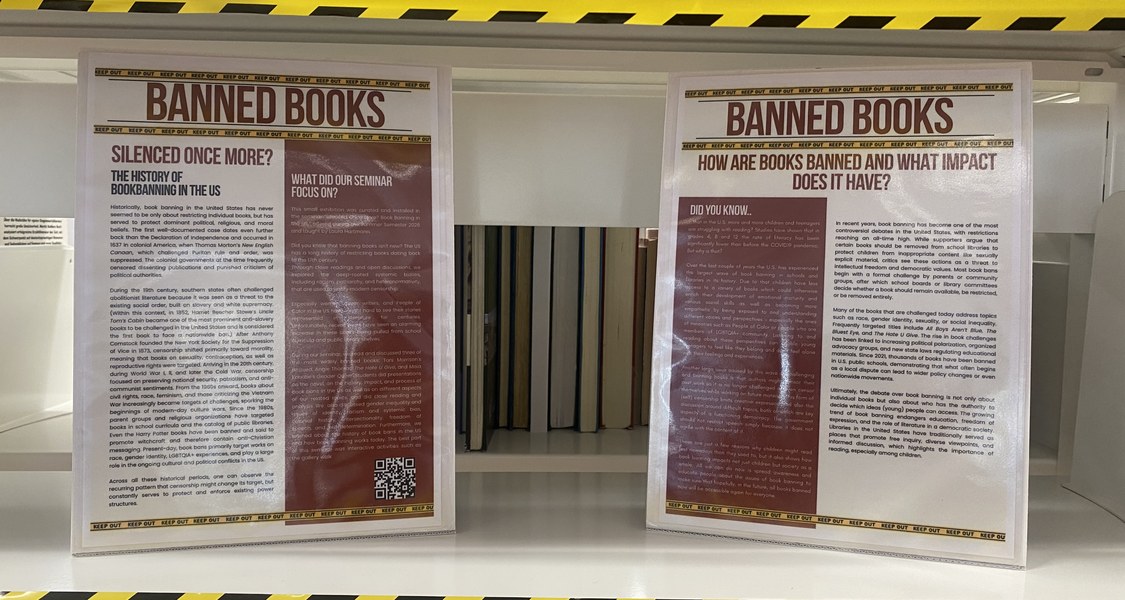
"Silenced once more? Book banning in the U.S."
What does it mean when books disappear from school libraries and classrooms?
Who decides which stories can be read, and who is protected—or silenced—by these decisions?
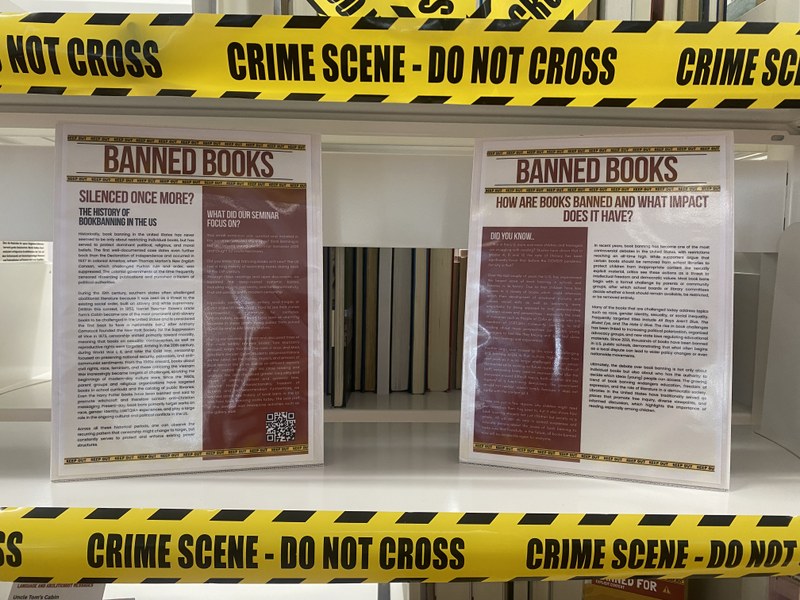
These were some of the central questions explored in the block seminar “Silenced Once More? Book Banning in the US”, taught by lecturer Laura Hartmann during this summer term. Seventeen students from a range of degree programs in the Department of English and North American Studies and the Center for Gender Studies spent two weekends in June and July examining one of the most contested issues in contemporary U.S.-American culture: the rise of book bans. While many students were aware of the recent surge in challenges to books across the US, they were surprised to learn that book banning has a much longer history.
The first documented banned book (New English Canaan by Thomas Morton) in what is now the United States dates back to the seventeenth century, demonstrating that attempts to restrict access to literature have accompanied American history since colonial times. Throughout the seminar, students explored how books become challenged and banned, the organizations and political movements behind these efforts, and the legal and cultural debates surrounding censorship. Discussions also addressed current anti-DEI legislation and the role of the First Amendment in protecting freedom of expression. The students talked about the far-reaching consequences of censorship—not only for readers and writers, but also for educational institutions, society as a whole, and democracy.
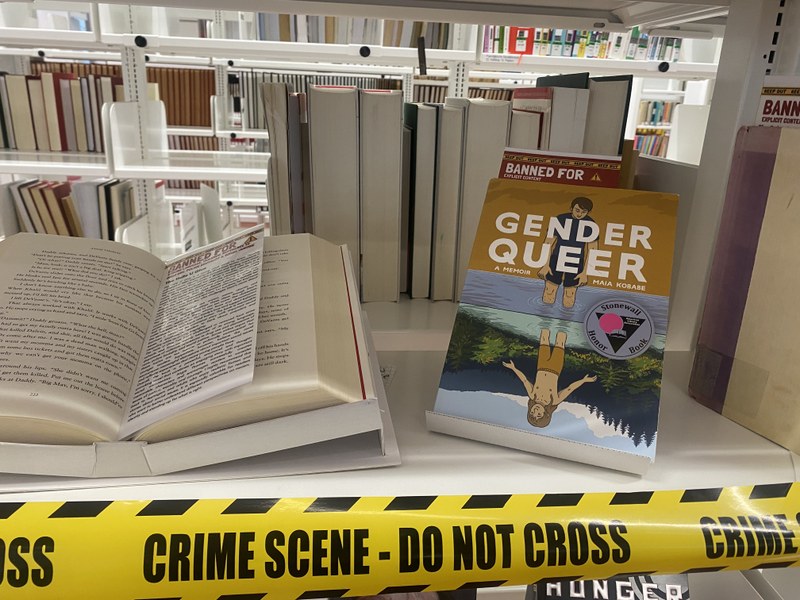
Among the primary texts were three of the most frequently banned books: Beloved by Toni Morrison, The Hate U Give by Angie Thomas, and Gender Queer by Maia Kobabe. Beyond examining why and where these works have been challenged, students engaged in lively discussions about their literary qualities, including narrative techniques, symbolism, and recurring motifs. They also critically reflected on their own reading experiences and discussed aspects they particularly liked or disliked. These conversations demonstrated that defending the freedom to read does not require uncritical admiration of every text. Some of the seminar’s most thought-provoking discussions centered on broader questions about censorship and responsibility. Do book bans genuinely protect children, or do they limit young people’s opportunities for personal growth? Is there a difference between a parent deciding that a particular book is not appropriate for their own child and the state or a school district restricting access for all children? Further discussions addressed the role of trigger warnings and content notes: Do they help readers make informed choice, or can they themselves become a form of censorship? Ultimately, the seminar repeatedly returned to one fundamental question: Who should have the authority to decide which stories are considered acceptable and which are not?
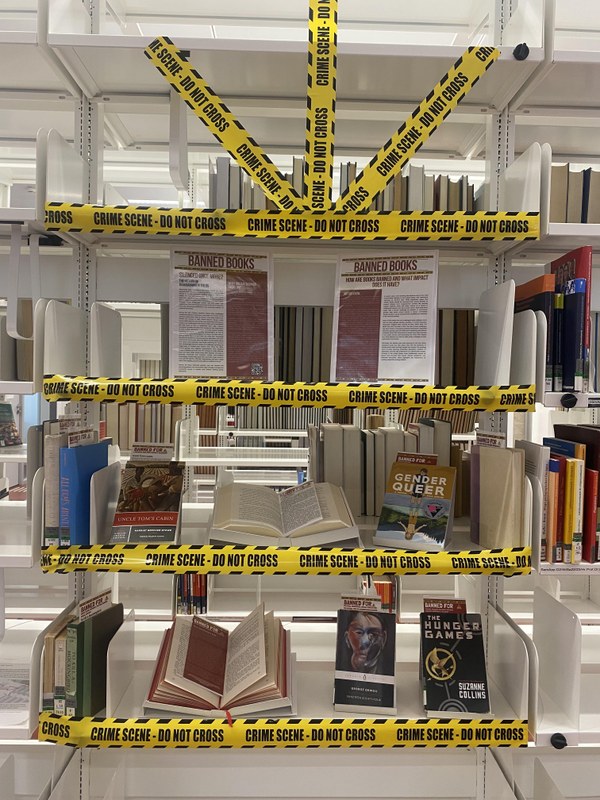
One of the highlights of the seminar was the curation of a small exhibition, which is currently on display on the ground floor of the University Library. Visitors can learn more about the history and present-day realities of banned books written by the students. A QR Code invites visitors to leave comments and reflections on the exhibition. Laura Hartmann extends her sincere thanks to the library team, especially Sylvia Langwald (subject librarian for the Department of English and North American Studies) and Sabine Schacht (bookbinder), whose expertise and support made the exhibition possible. She also thanks the students, whose curiosity, openness, and willingness to share personal experiences and perspectives created a respectful and welcoming learning environment. Their thoughtful engagement not only resulted in the successful exhibition but also made the seminar a rewarding learning experience for everyone involved.
The list of banned books compiled during the seminar include:
- Thomas Morton: New English Canaan
- Harriet Beecher Stowe: Uncle Tom’s Cabin
- Angie Thomas: The Hate U Give
- Angie Thomas: On the Come Up
- Angie Thomas: Concrete Rose
- Toni Morrison: Beloved
- Toni Morrison: The Bluest Eye
- Toni Morrison: Song of Solomon
- Maia Kobabe: Gender Queer
- Art Spiegelmann: Maus: A Survivor’s Tale
- John Green: Looking for Alaska
- J.D. Salinger: Catcher in the Rye
- George M. Johnson: All Boys Aren’t Blue
- Malcolm X: The Autobiography of Malcolm X
- Sherman Alexie: An Absolute True Diary of a Part-Time Indian
- Alice Walker: The Color Purple
- Alison Bechdel: Fun Home
- Harper Lee: To Kill a Mockingbird
- George Orwell: 1984
Kontakt
Laura Hartmann