06.11.2026 The Future of Building Peace | Rückblick Zentrumstage 2026
Throwback and reflections on our Conference on the Future of Building Peace
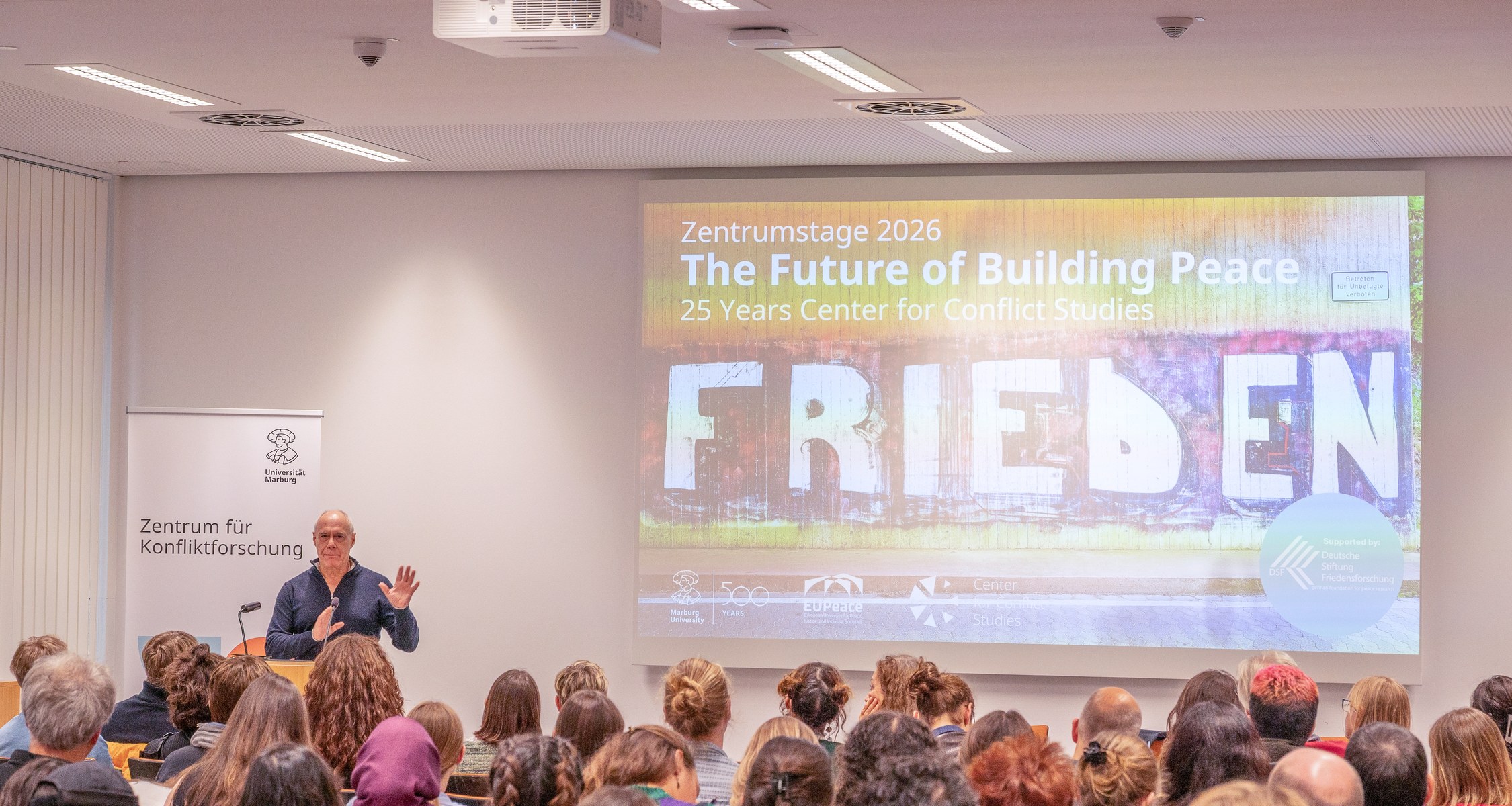


In a world marked by escalating violence, ongoing wars and growing geopolitical tensions, questions about how peace can be understood, negotiated and sustained are becoming increasingly urgent. Our conference brought together scholars and practitioners from Peace and Conflict Studies and related disciplines to reflect on the changing global landscape of peacebuilding.
The conference opened with welcoming remarks by Prof. Dr. Sabine Pankuweit, Vice-President of Philipps-Universität Marburg, and Prof. Dr. Susanne Buckley-Zistel, Executive Director of the Center for Conflict Studies at Marburg University. Bringing together around 160 participants, the conference featured 10 panels and 3 roundtables, creating space for critical reflection and dialogue on the future of Peace and Conflict Studies.
Highlights from the programme
25 Years of the Center for Conflict Studies: Transformations and Future Challenges of Peace and Conflict Research
The conference kicked off with a panel moderated by the center's Deputy Executive Director Prof. Dr. Thorsten Bonacker. Bringing together former managing directors of the Center for Conflict Studies, as well as perspectives from the wider field, the panel reflected on 25 years of research and institutional development. The discussion explored how Peace and Conflict Studies has evolved, which continuities and ruptures have shaped the field, and what challenges and responsibilities lie ahead. Building on these reflections, the second panel turned to critical perspectives and collective action:
Critical Voices and Collective Action for the Future of Peace and Conflict Studies: Collectives, Initiatives, and Networks in and around Peace and Conflict Studies
Moderated by Nilgün Yelpaze, this roundtable explored questions of inclusion, representation and structural change within academia. Participants discussed how collective action and critical engagement can challenge inequalities related to class, gender, race, age, academic hierarchies and dominant forms of knowledge production and how more inclusive, solidaristic and epistemically just academic cultures can be fostered.
Keynote Lecture: Peacemaking in the Shadow of War
The keynote by Prof. Dr. Keith Krause from the Centre on Conflict, Development and Peacebuilding at the Geneva Graduate Institute addressed the growing crisis of international peace and security institutions. Against the backdrop of rising military expenditure, increasing numbers of armed conflicts and declining resources for peacebuilding, the lecture examined whether principled and pragmatic pathways towards peacemaking remain possible in today's geopolitically turbulent climate.
Closing Remarks: Imagining and Building More Peaceful Futures
The panel discussion, moderated by Buckey-Zistel, explored the role of utopian thinking in reimagining peacebuilding in an era of polycrisis. The discussion examined how alternative visions of the future can challenge the status quo and inspire transformative action. Against the backdrop of war, securitisation and dominant narratives of permanent crisis, the panel reflected on strategies and practices for imagining more peaceful futures.
Across these discussions, one central question connected the contributions: How can peacebuilding remain meaningful and effective in a rapidly changing world? Other themes included international peace and security interventions, political representation and inequality, environmental conflicts, migration and human rights, transitional justice, peace education, gender and LGBTQ+ rights, and post-colonial power relations.
Kontakt
Dr. Stéphane Voell