05.06.2026 Marburg–Fez Academic Cooperation Visit
An Academic Visit from Germany to Fez for the Signing of a Cooperation Agreement between the Universities of Marburg and Sidi Mohammed Ben Abdellah in Fez, Morocco
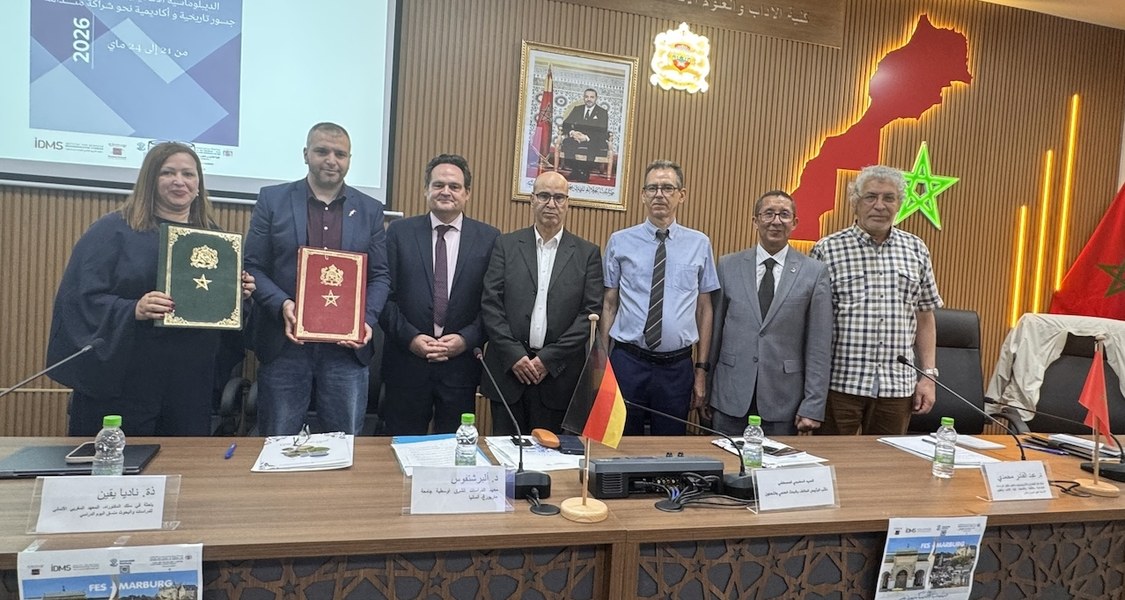
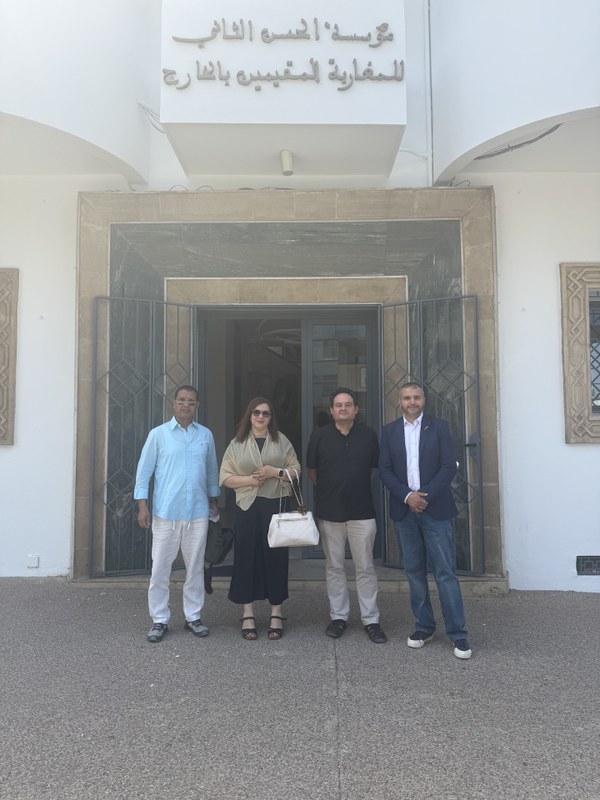
As part of the academic and cultural cooperation between the Kingdom of Morocco and the Federal Republic of Germany, Sidi Mohammed Ben Abdellah University in Fez, represented by the Faculty of Letters and Human Sciences “Dhar al-Mahraz” and the Laboratory for Social, Cultural, and Philosophical Studies, welcomed an academic delegation from the Center for Near and Middle Eastern Studies (CNMS) at the University of Marburg from May 22 to 24, 2026. This meeting was coordinated by the Institute for German-Moroccan Studies and supported by the Hassan II Foundation for Moroccans Living Abroad.
This visit represented a genuine expression of the shared commitment of both academic institutions to deepen scholarly exchange, establish strong and sustainable academic partnerships, and strengthen the cooperative ties between the cities of Fez and Marburg, which are connected through their distinguished scholarly and historical significance. Fez is home to Al-Qarawiyyin University, one of the world’s oldest and longest-standing universities, founded in 859 CE, while Marburg is home to the world’s first Protestant university of its kind, founded in 1527 CE.
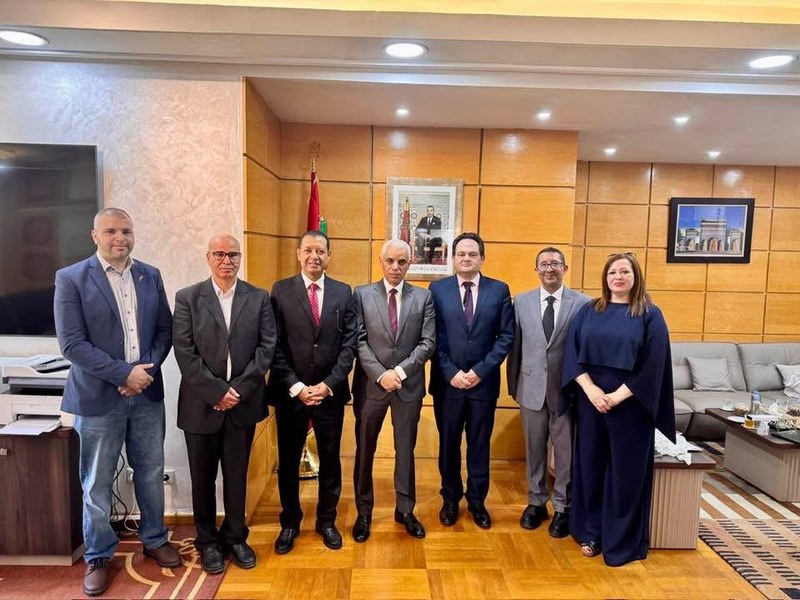
On the first day of the visit, a meeting was held with the Governor of the Fez-Meknes region, Khalid Ait Taleb. The exchange with the governor focused on clarifying future perspectives and planning several upcoming projects between the universities, as well as between the cities of Fez and Marburg.
.
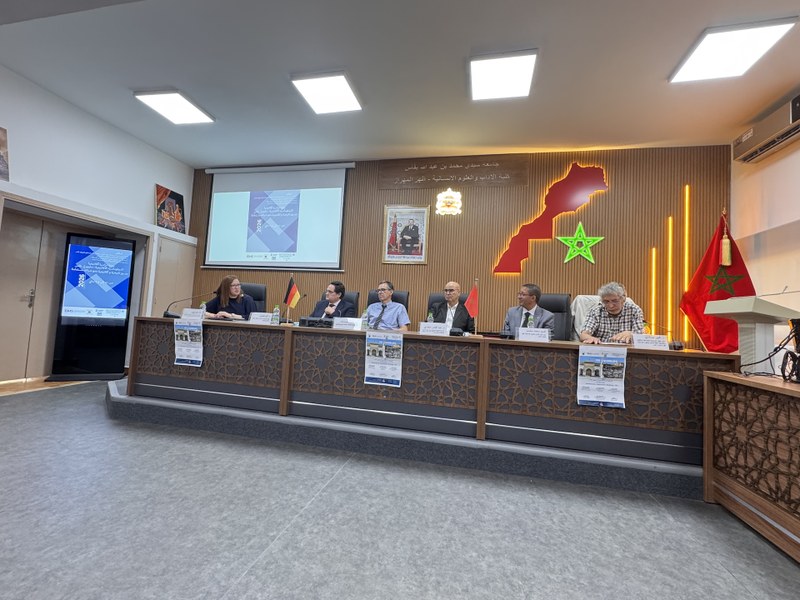
In the Al-Qarawiyyin Hall at the Faculty of Letters and Human Sciences in Dhar al-Mahraz, an international study day was organized under the theme: “Academic Diplomacy: Marburg – Fez, Academic and Historical Bridges for a Sustainable Partnership.” This meeting provided a valuable opportunity for dialogue, the exchange of experiences, and the development of a roadmap for future cooperation between both sides, from which Moroccan and German students and researchers alike will benefit.
The opening session was chaired by Dr. Abdelkader M’hamdi, member of the Laboratory for Social, Cultural, and Philosophical Studies. Among the participants were:
- Dr. Mustafa El Hadrami, Vice President of Sidi Mohammed Ben Abdellah University
- Dr. Mohammed Moubtasime, Dean of the Faculty of Letters and Human Sciences in Dhar al-Mahraz
- Dr. Kabir Sandy, Director of the Laboratory for Social, Cultural, and Philosophical Studies
- Dr. Albrecht Fuess, Head of the Department of Islamic Studies at the CNMS, University of Marburg
- Ms. Nadia Yakine, Director of the Institute for German-Moroccan Studies
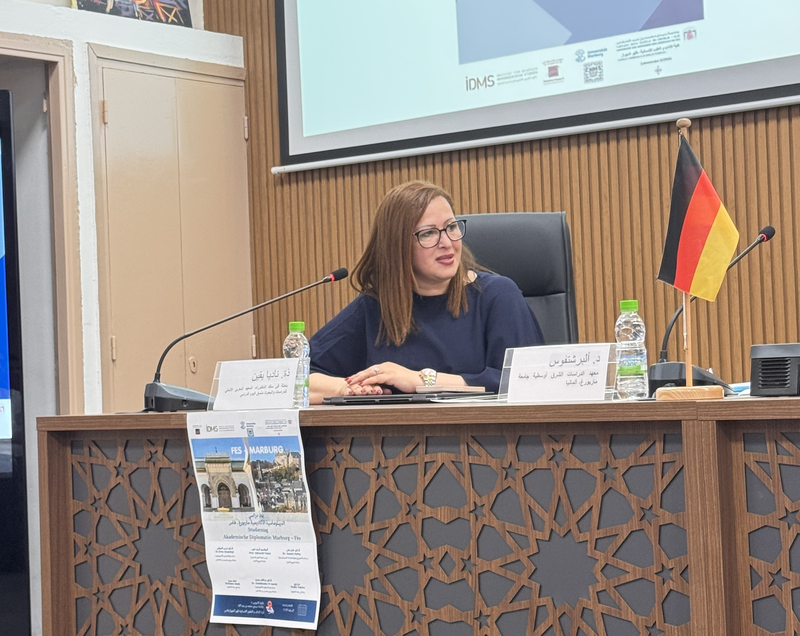
.
In their opening speeches, the speakers unanimously emphasized the great importance of university partnerships in serving students, researchers, and academic staff. They proposed opening new perspectives for the joint supervision of Master’s and doctoral students and establishing joint Master’s programs in the field of German Studies. Furthermore, they all stressed the central role of universities as key actors in parallel academic diplomacy by contributing to the building of bridges for cultural and scholarly dialogue between peoples and by strengthening the values of openness and mutual understanding.
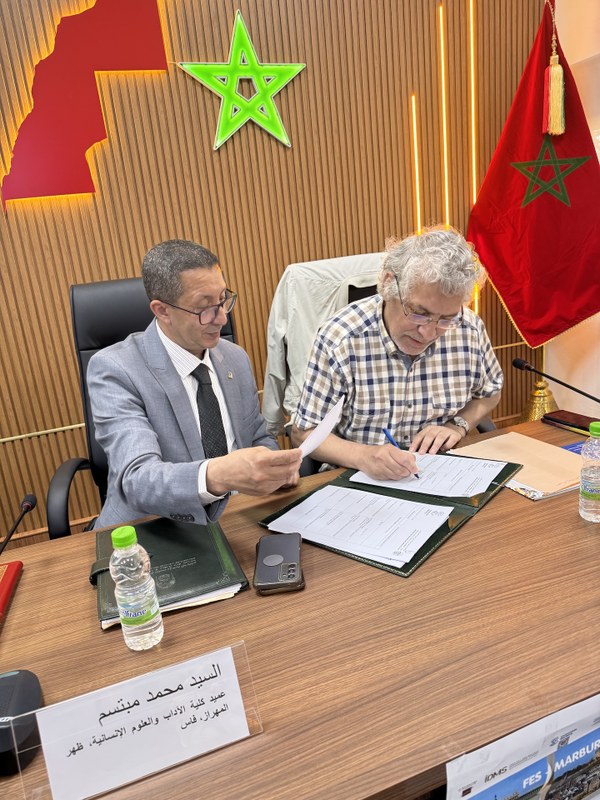
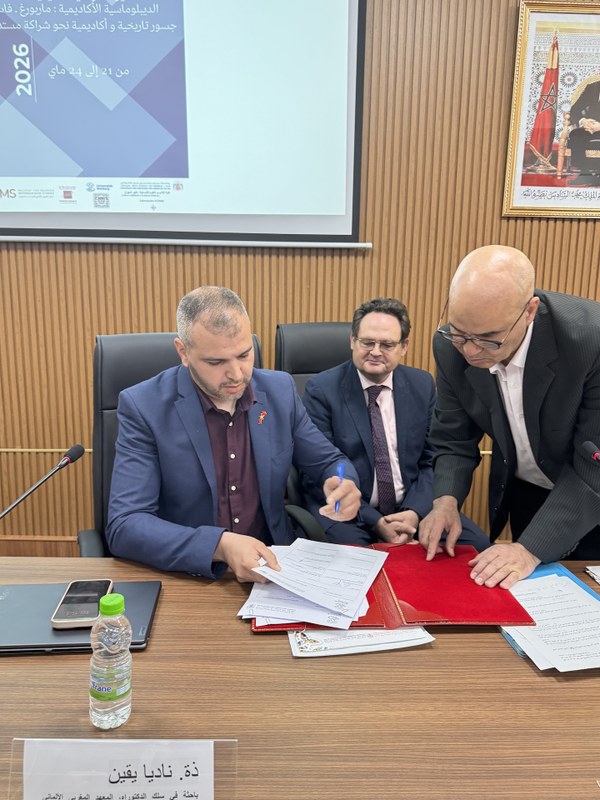
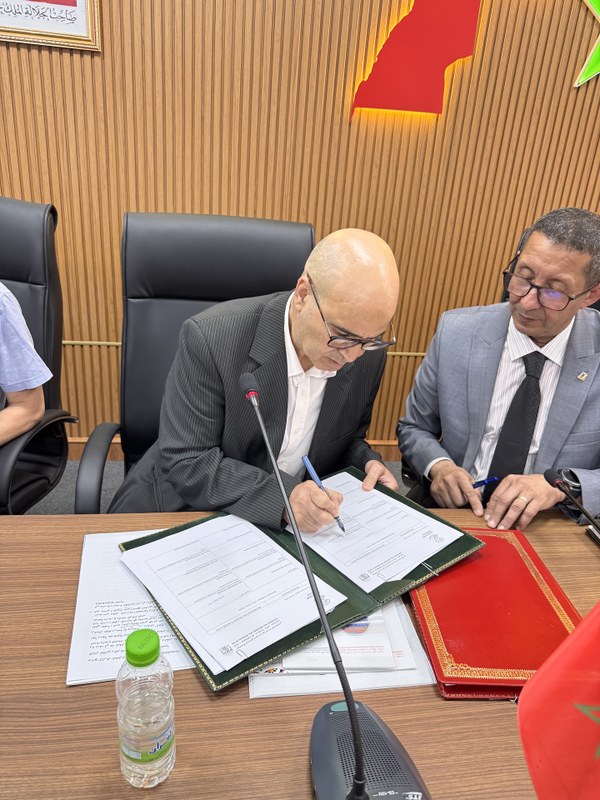
The opening session culminated in a significant academic event: the signing of a partnership agreement for the joint supervision of two doctoral candidates, Nadia Yakine and Hichame Abidi, within the framework of cooperation between the Faculty of Letters and Human Sciences in Dhar al-Mahraz and the Laboratory for Social, Cultural, and Philosophical Studies at Sidi Mohammed Ben Abdellah University on the one hand, and the Center for Near and Middle Eastern Studies (CNMS) at the University of Marburg on the other. The joint supervision will be conducted by Dr. Abdelkader M’hamdi from the University of Fez and Dr. Albrecht Fuess from the University of Marburg.
This agreement represents an important milestone in expanding joint supervision programs and bilateral academic exchange, while opening the door for other researchers to benefit from this pioneering model of cooperation.
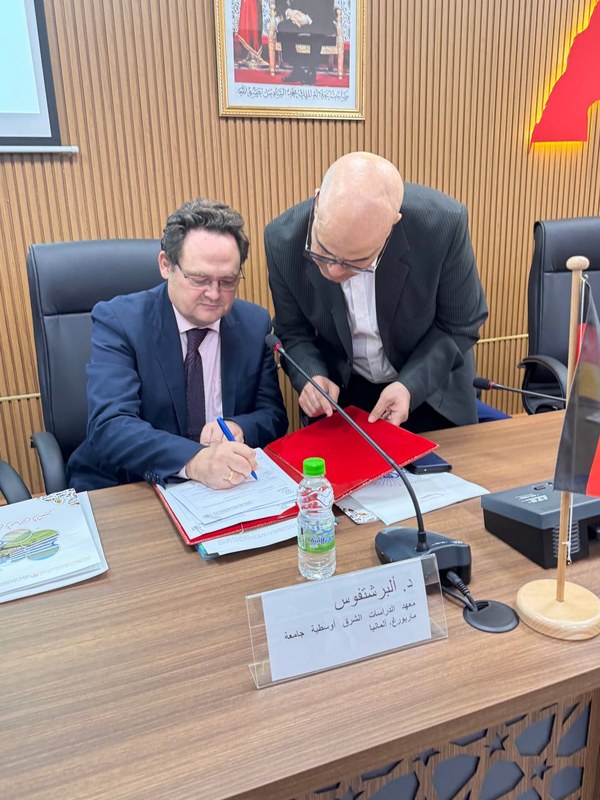
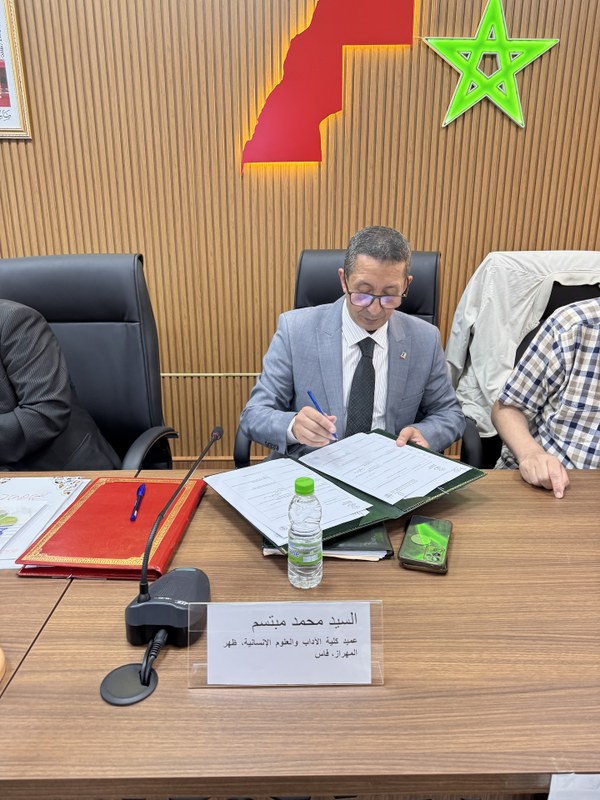
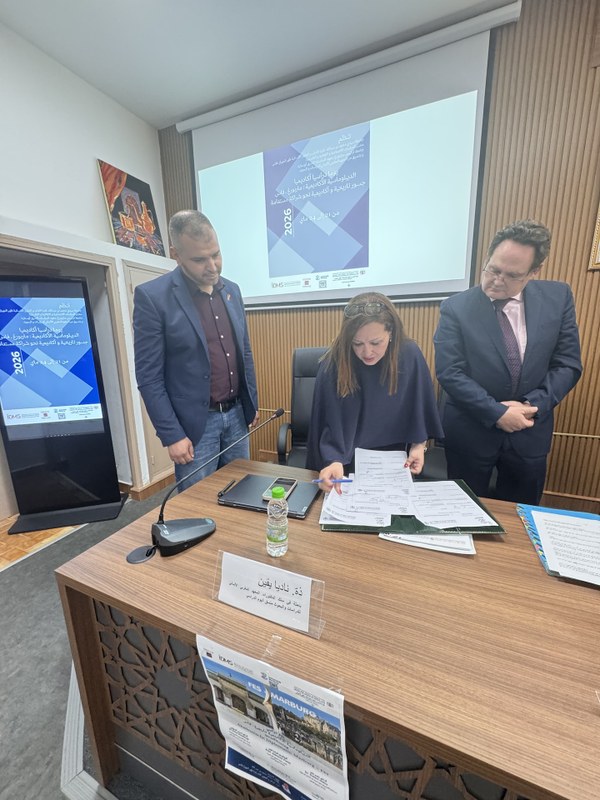
.
.
The academic session provided ample space for in-depth scholarly dialogue and included a variety of contributions:
Dr. Driss Essanhaji delivered a lecture presenting the city of Fez as a historic university city. He highlighted its centuries-long role in the production and dissemination of knowledge and emphasized its significance as a center of scholarship and culture.
Dr. Albrecht Fuess addressed the topic of Islam and Muslims in Germany. He emphasized the role of mosques in promoting coexistence and peacebuilding within German society and highlighted the contribution of the Moroccan community to Germany’s social and cultural life.
Dr. Assem Hefny, Academic Councillor at the Center for Near and Middle Eastern Studies (CNMS) at the University of Marburg, focused in his presentation on the importance of academic cooperation and joint scientific research. Drawing on successful models of international university partnerships, he called for the establishment of a cultural council that would support and accompany the development of scholarly and cultural relations between Moroccan and German higher education institutions.
In her contribution on the role of academic partnerships in urban development, Nadia Yakine emphasized the concept of the open university as a key actor in local and cultural development. She pointed out that the university is not limited to the production of knowledge, but also plays a central role in revitalizing the cultural, social, and economic life of the city. She explained that the cities of Fez and Marburg offer two similar models for the relationship between university and city, making them examples of the creative interaction between knowledge, culture, and society.
In his contribution, Hichame Abidi examined the dynamics of educational migration through a sociological perspective on the trajectories of Moroccan students at German universities. He highlighted their academic achievements despite the structural, legal, and social challenges they face, and illustrated the transformation from isolated individual initiatives into active institutional networks that contribute to local development and strengthen scholarly and cultural diplomacy between the two countries.
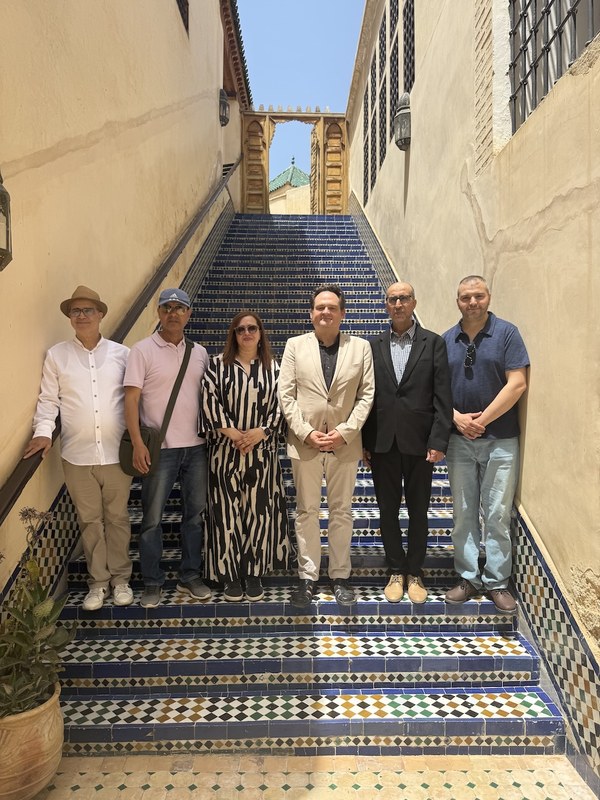
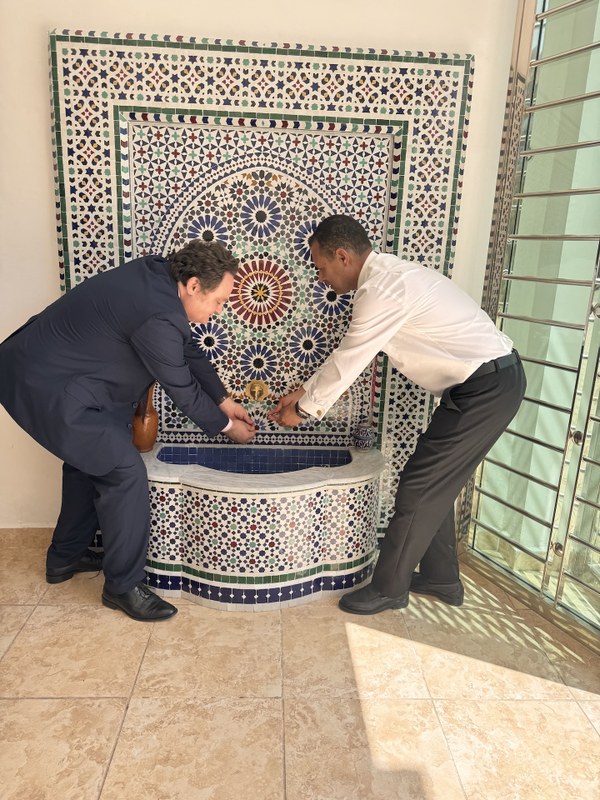
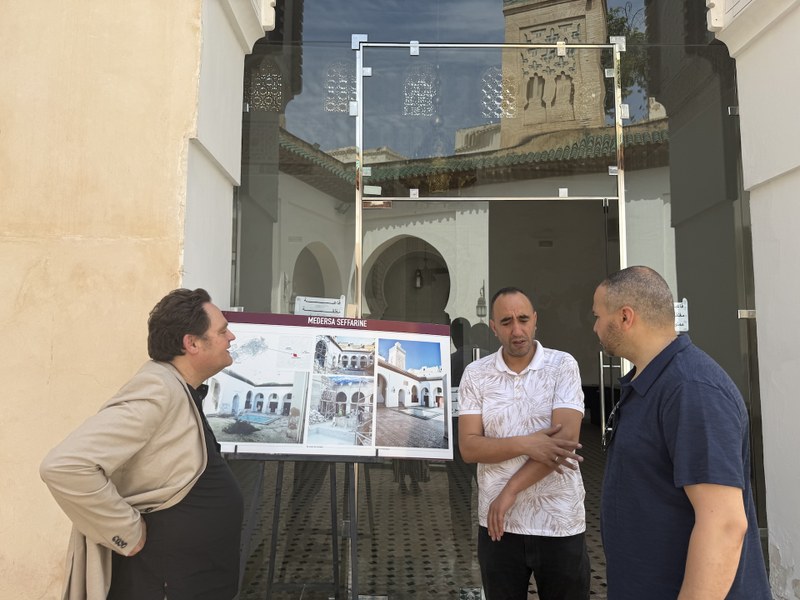
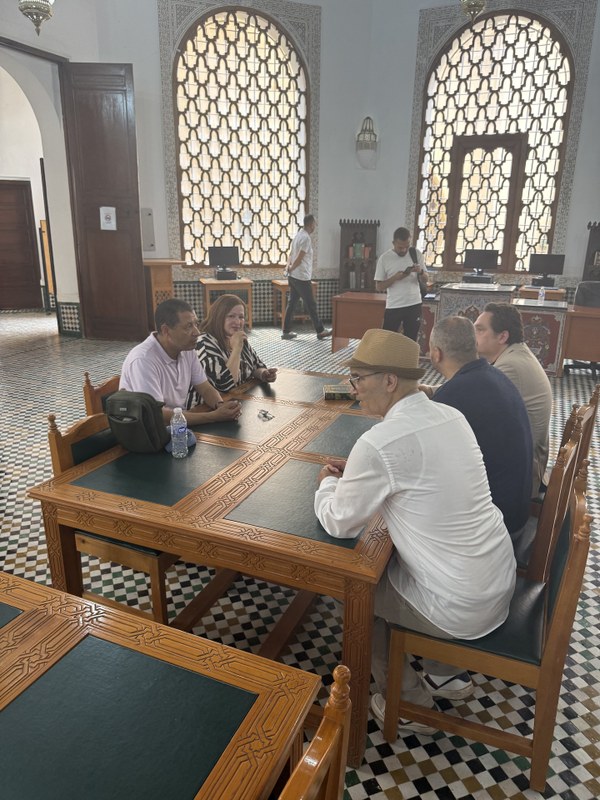
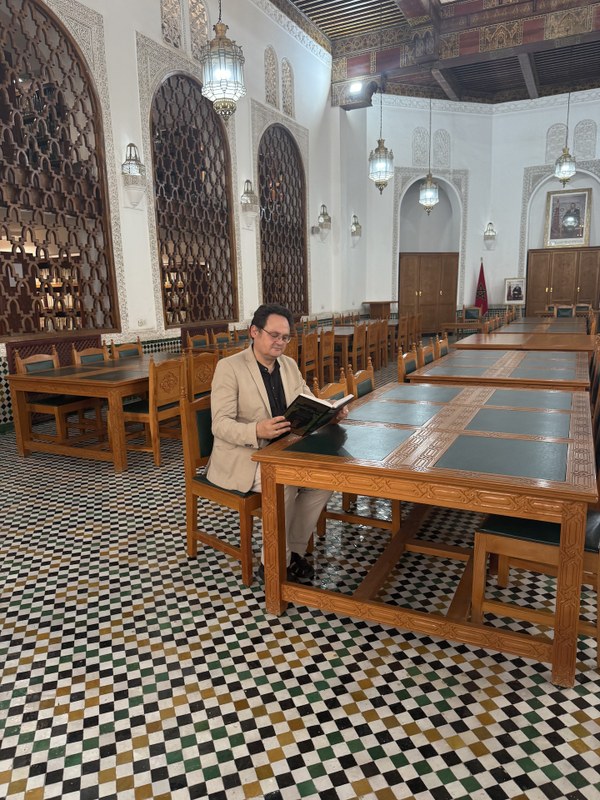
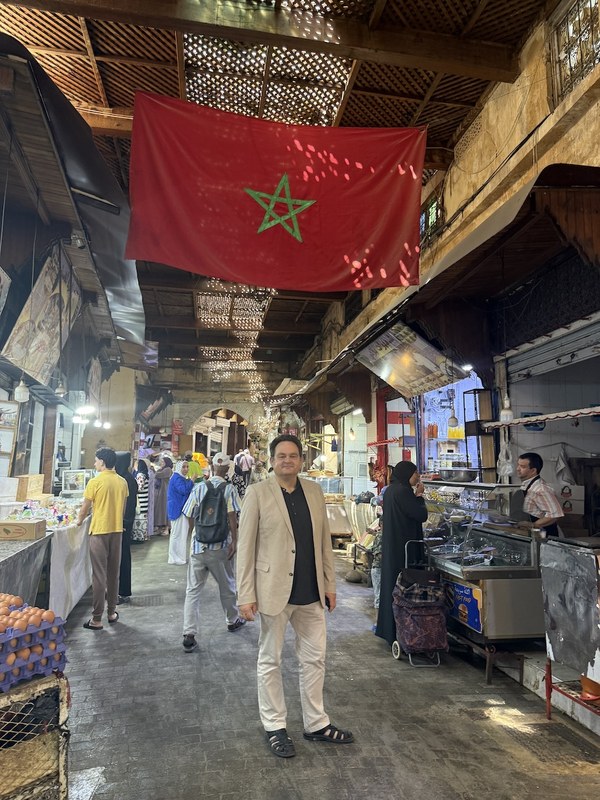
In addition to the academic activities, the program of the German delegation included visits to several important historical and cultural landmarks in the city of Fez, including the Al-Qarawiyyin Library and its archives, the historic Al-Qarawiyyin University, the Madrasa al-Misbahiyya, the Madrasa al-Saffarin, the Madrasa al-Bouanania, the historic Almoravid-era water distributor, Hammam al-Saffarin, the Al-Najjarin Museum, and other archaeological sites reflecting the city’s long history and rich cultural heritage. These visits gave the German delegation the opportunity to experience Morocco’s cultural heritage firsthand and created a meaningful symbolic framework that enriched the academic approach to cooperation between the two institutions.
.
The visit also included a working session with the Dean of the Faculty of Letters and Human Sciences, Dr. Mohamed Moubtassime, dedicated to discussing mechanisms for developing and strengthening academic and scientific cooperation between the two universities on solid institutional foundations.
The visit concluded with both sides reaffirming their strong commitment to continuing cooperation and transforming the outcomes of this initiative into concrete projects and long-term strategic partnerships linking the cities of Fez and Marburg in the fields of scholarship, culture, and development.
This visit represents a successful example of what has become known as academic diplomacy, in which knowledge and scientific research serve as instruments for bringing peoples closer together and as tools for building trust, promoting dialogue, and creating shared knowledge capable of addressing current global challenges. This partnership contributes to deepening Moroccan-German relations in the spirit of dialogue, understanding, and mutual respect, while opening promising perspectives for academic and cultural cooperation between the two countries in the coming years.
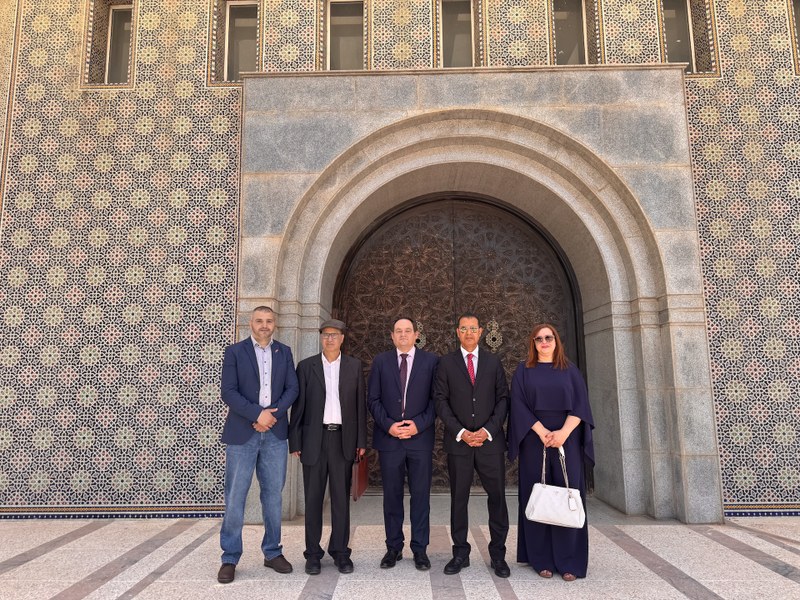
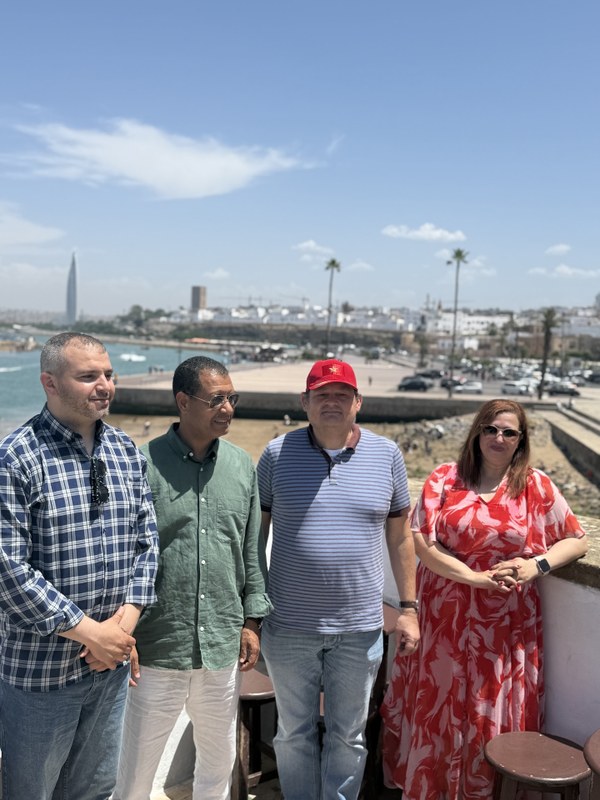
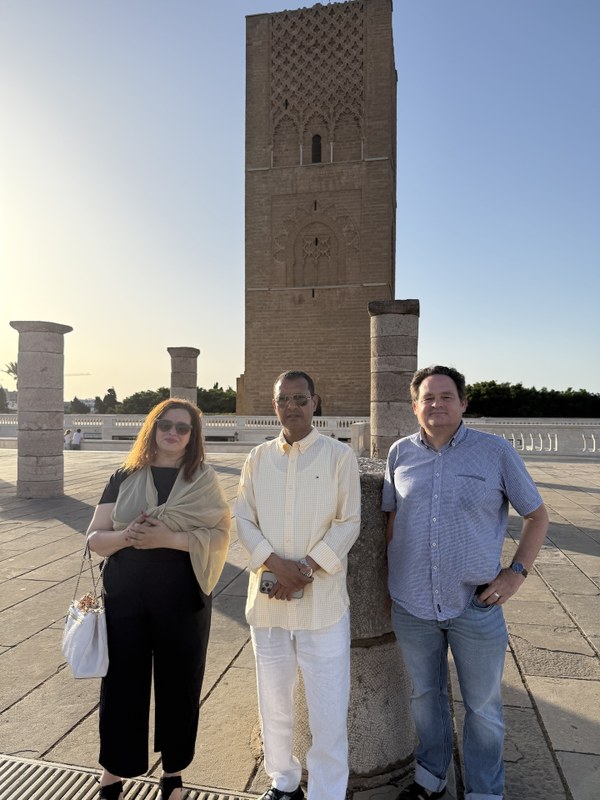
The program concluded with a visit to the capital city of Rabat and its historic landmarks, including the Hassan Mosque and the Kasbah of the Oudayas.
. .
For more reports in Arabic about the visit, please see the links below:
جسور معرفية بين المغرب وألمانيا.. اتفاقية للإشراف المشترك على الدكتوراه بجامعة فاس
Kontakt
Prof. Dr. Albrecht Fuess