Main Content
Research Topics
Fundamental Properties of new Materials
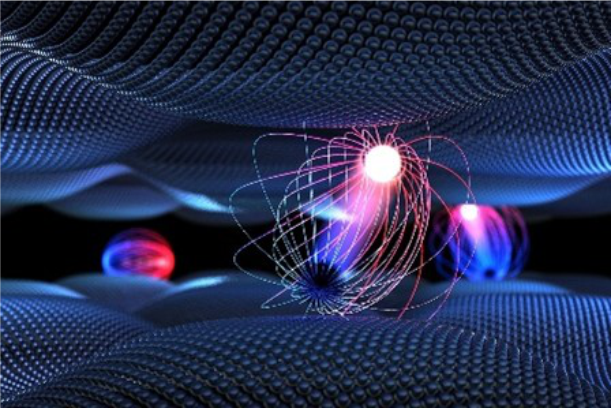
New material classes, including 2D materials, quantum materials, and their heterostructures, possess unique properties that enable a variety of new applications. Gaining a comprehensive understanding of their structural, optical, dynamic, magnetic, and transport phenomena requires interdisciplinary expertise across physics and chemistry, combining theoretical and experimental approaches. The complete cycle of knowledge generation—from theoretical prediction and synthesis to characterization and industrial application—is driven by the collaboration of research groups within mar.quest.
Development of novel synthesis routes
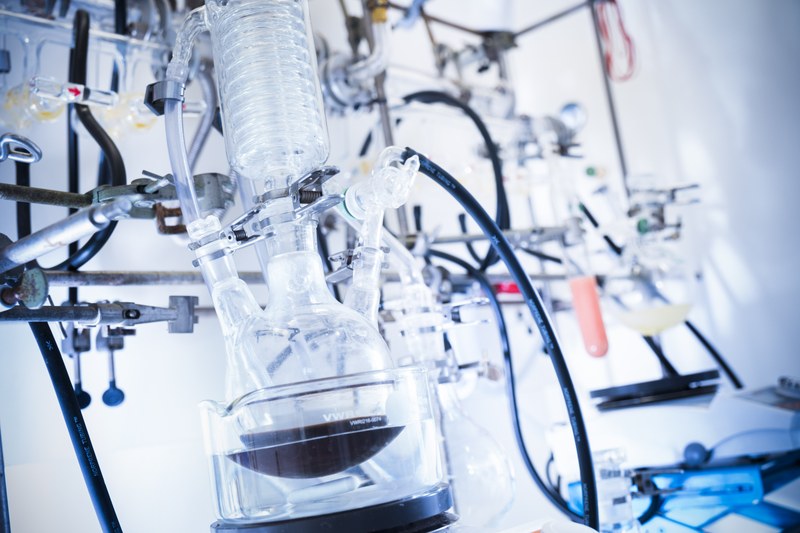
The development of new synthesis routes can lead to fundamentally new functional molecules and materials with novel properties, enhanced performance, or reduced environmental impact. Functional molecules can enable sustainable synthesis methods in chemistry, biochemistry, and pharmacy by serving as state-of-the-art reagents and catalysts. These include stimuli-responsive, switchable processes as well as photo-, mechano-, and electrochemical approaches. Due to their optical, chiral, or magnetic properties, they are furthermore suitable for applications in storage media, quantum information science, sensors, and optoelectronic systems. Specifically designed molecules serve as precursors for the targeted synthesis of novel materials, such as semiconductor layers with specific properties. A common goal of all these approaches is the strategic use of readily available, cost-effective, and low-toxicity elements.
Work Groups: Casitas, Lichtenberg, von Hänisch
Growth of Quantum Materials
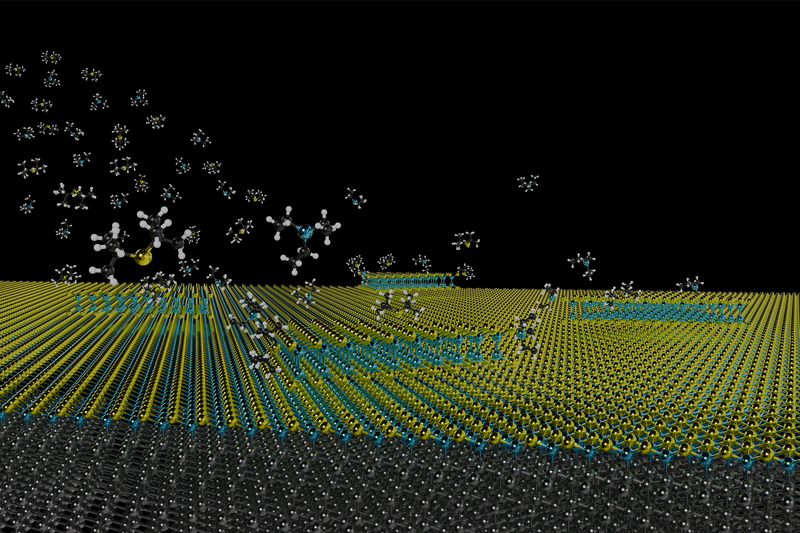
Surface-assisted and gas-phase-controlled syntheses enable the fabrication of quantum structures of various dimensions—ranging from zero- and one-dimensional structures to two-dimensional materials. These include, for example, nanographenes, graphene nanoribbons (GNRs), 2D materials, perovskites, as well as organic and inorganic semiconductor structures. Through the precise control of reaction conditions, structure, and composition, materials with tailored electronic, optical, and structural properties can be produced.
Work Groups: Goldschmidt, Gottfried, Volz, Witte
Manipulation of Single Molecules
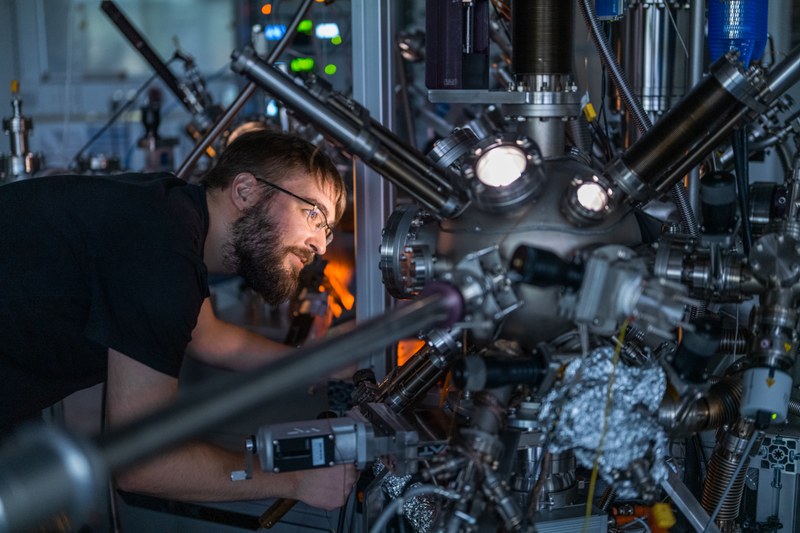
Rapid material prototyping through the manipulation of individual molecules and atoms, combined with atomic-scale characterization via scanning probe microscopy, potentially enables access to entirely new classes of materials. A comprehensive understanding of the underlying reaction mechanisms of the designed chemical precursors, as well as the surface properties, process dynamics, and structures of the resulting materials, unlocks a broad spectrum of new possibilities. Furthermore, new synthesis routes are crucial for the development of environmentally friendly processes ('Green Chemistry') and the utilization of new resources, such as bio-based raw materials or materials derived from recycling streams.
Work Group: Gottfried
Advanced Material Characterization
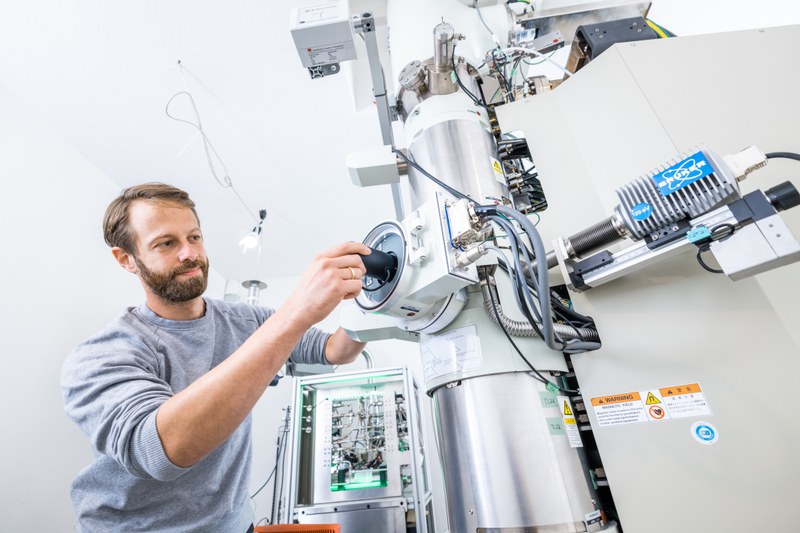
Microscopy and spectroscopy enable the investigation of the structure and properties of materials down to the atomic level, deciphering quantum interactions and electronic structures. Correlating nanoscale properties with application-relevant device characteristics creates a comprehensive understanding of new materials. This understanding forms the basis for exploiting the potential of these materials for sustainable technologies and achieving previously unattainable properties. The center utilizes and develops state-of-the-art characterization methods aimed at bridging the gap between fundamental research and technological application.
Work Groups: Gerhard, Goldschmidt, Gottfried, Koch, Leisgang, Reutzel, Volz, Witte
Theory as Enabler of New Materials

Theory plays a central role in the development of new concepts and innovative approaches in quantum materials research. It enables the prediction of novel quantum effects, the design of tailored molecular and material properties, and the development of novel synthesis and analysis pathways. mar.quest provides an environment for close collaboration between theoretical physicists and chemists with experimentally working colleagues. Quantitative and predictive theories of molecules, materials, and their fundamental interactions can then be validated through experimental implementation and contribute to significantly shortening empirical discovery processes through joint efforts.
Work Groups: Berger, Gebhard, Malic, von Domaros, Wippermann
New and Sustainable Applications
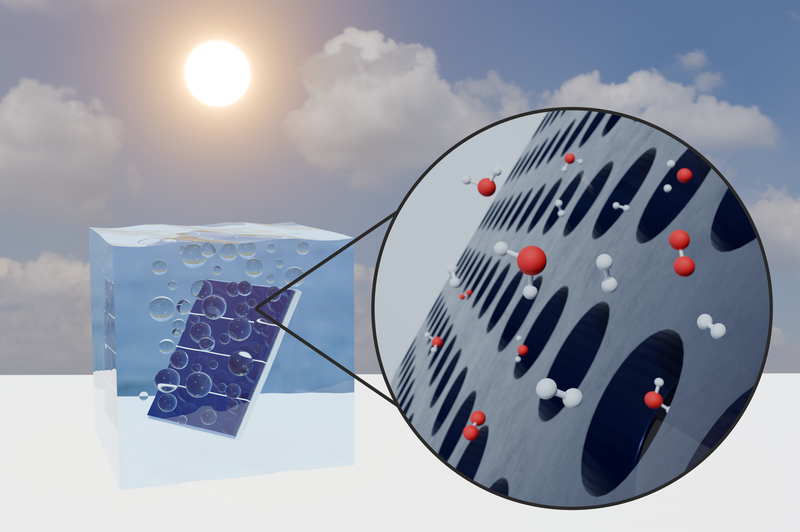
New materials and insights provide the foundation for novel applications, enhanced performance, and reduced environmental impact. Building on existing strengths, the center focuses particularly on renewable energy and energy storage applications, such as solar cells, green hydrogen, fuel cells, battery materials, and semiconductor technologies for advanced laser structures, solar cells, and transistors. The research integrates findings from all research domains—from materials understanding and synthesis to characterization and design—to develop solutions for pressing societal challenges. mar.quest also pursues unconventional approaches, such as adapting early Earth geochemical CO₂-fixation principles for sustainable CO₂ capture processes.
Work Groups: Goldschmidt, Preiner, Roling, Volz, Wagner