09.12.2025 TraCe Annual Conference 2025: Beyond the Spectacle: Interdisciplinary Approaches to Slow Violence and Political Harm
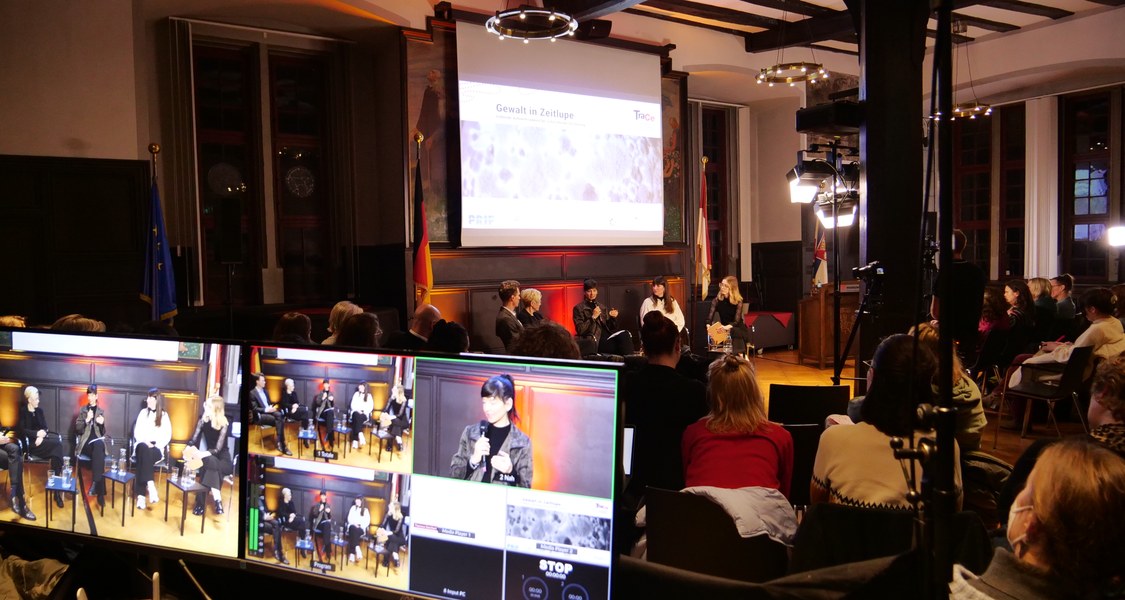
From 19–21 November 2025, the fourth TraCe Annual Conference unfolded at Marburg University, bringing together more than 130 participants under the guiding theme “Beyond the Spectacle: Interdisciplinary Approaches to Slow Violence and Political Harm.”
Over three days, scholars, practitioners, and students engaged in deep reflection on the concept of slow violence, a form of harm that accumulates gradually, often invisibly, and therefore risks being overlooked in public and political discourse (Nixon, 2011).
Through a vibrant dialogue panel, eight thematic panels, and two inspiring keynote lectures, the conference opened up wide-ranging discussions on responsibility, colonial continuities, agency, and the subtle mechanisms through which slow violence structures social and political realities. The diversity of contributions demonstrated how the lens of slow violence can productively illuminate multiple dimensions of harm across disciplines and methodologies.
Public Dialogue Panel in the Historic Town Hall
The conference kicked off on the evening of November 19 with a public dialogue panel at the Historic Town Hall: “Gewalt in Zeitlupe: Fehlende Aufmerksamkeit für schleichende Zerstörung” (“Violence in Slow Motion”).
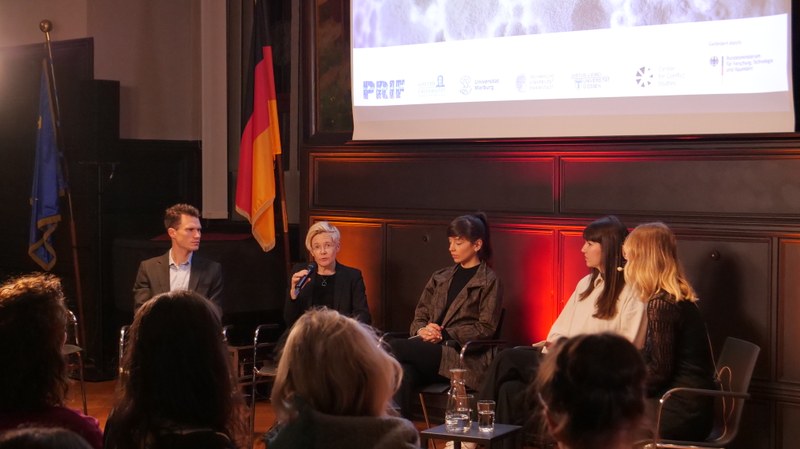
Susanne Buckley-Zistel, director of the Center for Conflict Studies, opened the event with welcoming remarks.
Bringing together perspectives from academia, journalism, art, and climate activism, the panel featured Anika Oettler, health journalist Jakob Simmank (DIE ZEIT), Theresa Deichert (Art Historian and Curator, KUNSTHALLE GIESSEN), and climate activist Carla Hinrichs, moderated by Verena Mischitz. They discussed how the concept of slow violence helps us understand overlooked forms of harm, the role of media in making “invisible” discrimination visible, how art can translate slow violence into public awareness, and how state institutions perpetuate it.
The dialogue panel is available as a recording on YouTube (German only).
Keynote by Natascha Mueller-Hirth on "Temporalities of Violence at the Urban Margins"
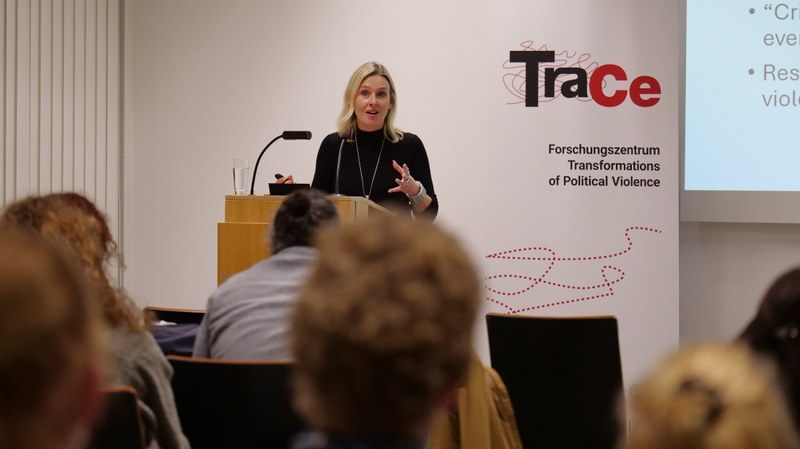
The first day of the conference closed with the keynote by Natascha Mueller-Hirth (Robert Gordon University, UK), “Temporalities of Violence at the Urban Margins.”
She explored different forms of slow violence in a number of informal settlements in Nairobi from limited access to services and a challenging job market to environmental racism and social stigmatization. Using an intersectional lens, Dr. Mueller-Hirth highlighted how violence affects social groups differently, especially older adults, women, children, and those with fewer resources.
In the final part of her talk, she showcased community-driven projects that leverage local creativity and resilience, fostering connections, environmental activism, and resistance to systemic violence.
Panel Highlights
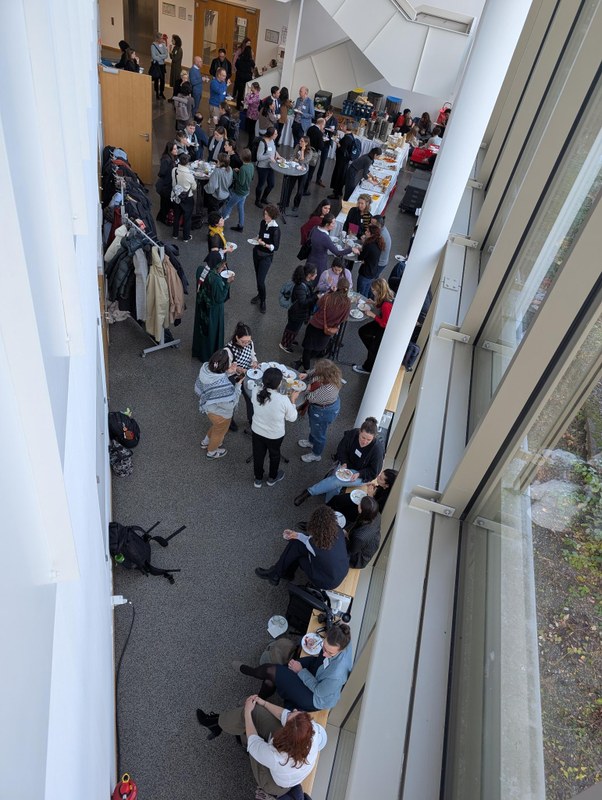
Across eight panels, contributors explored how slow violence manifests across regions, institutions, communities, and environments.
Read the full TraCe report and see the complete list of panelists here.
Panel 1 | Zones of Disinterest: Geographies of Violence
Panel 2 | Temporalities and Perceptions of Violence
Panel 3 | Urban Violence
Panel 4 | Slow Violence, Slow Methodologies?
Panel 5 | Embodied Harm and (In)visible Suffering
Panel 6 | Violent Governance and Institutional Inertia
Panel 7 | LGBTIQ+ Identities and Political Harm:
Accelerated Slow Violence
Panel 8 | Pollution and Environmental Degradation
Keynote by Eyal Weizman on "Ungrounding: Israel’s Architecture of Genocide"
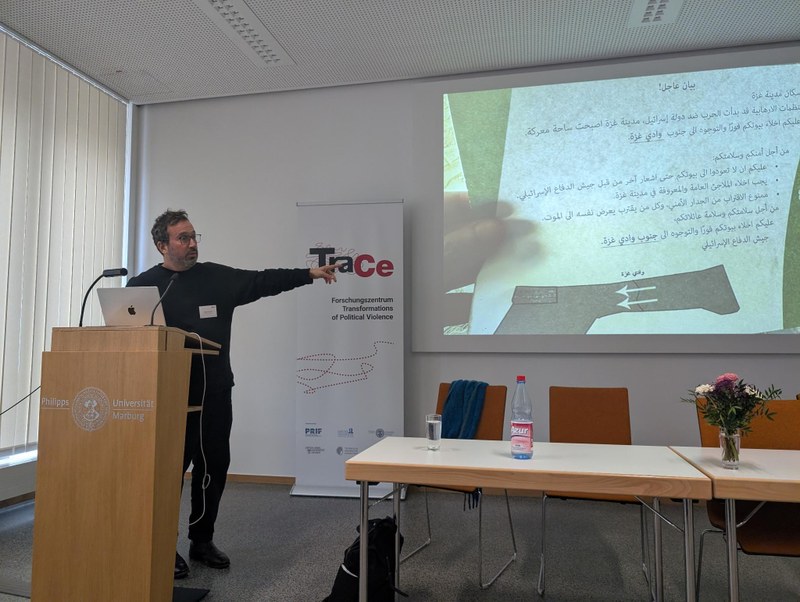
On the last day of the conference, the keynote by Eyal Weizman (Forensic Architecture, UK) “Ungrounding: Israel’s Architecture of Genocide”, was very well attended.
He opened his talk with reflections on the “long durée of a split second” before introducing forensic architecture, a method combining spatial clues with open-access digital data to investigate how police, military, and secret services deploy violence. Using this approach, Weizman illustrated the long-lasting violence in the Gaza Strip, including efforts to “unground” Palestinian agricultural settlements by reshaping the landscape through the formation of hills from rubble.
The session sparked a lively discussion on academic freedom, the definition of genocide, and the challenges of forensic architecture methods.
We extend our heartfelt thanks to all speakers, participants, and supporters whose insights and engagement made these days so enriching.
Kontakt
Dr. Kristine Andra Avram