Main Content
Human Rights Crimes, Norm Entrepreneurs, and the Implementation of the Principle of Universal Jurisdiction in Germany. A Study on Human Rights Consciousness among Syrian Refugees
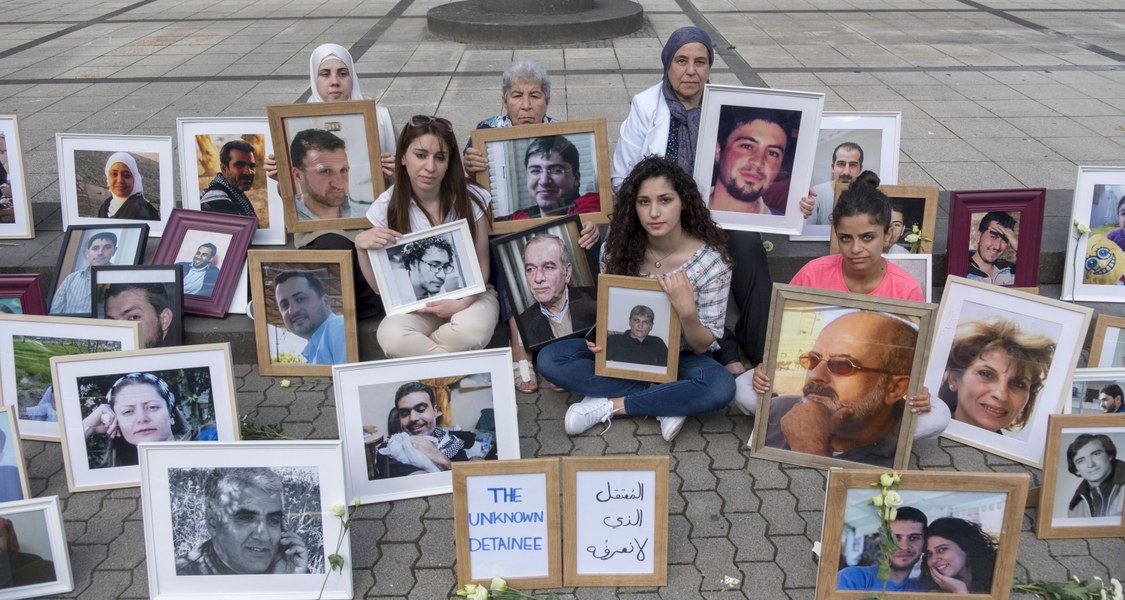
The project investigates the scope, forms, and consequences of the expansion of human rights discourses among Syrian refugees in coming to terms with human rights crimes committed during the Syrian war. The focus is on how they appropriate discourses in which the validity of human rights is set as a legal, political, or moral premise, as well as how they negotiate these discourses and thereby shape practice. The discourses to be studied are initiated by various Syrian, German and/or international actors whose discursive practices are also analyzed.
The project conducts field research around the court trials that are currently taking place in Germany to deal with crimes in Syria under criminal law. It begins with an investigation of the potentials and pitfalls that the implementation of the Principle of Universal Jurisdiction entails for dealing with the Syrian conflict. It looks in particular at the negotiation of notions of justice, dealing with the past, and human rights within the Syrian diaspora in Germany. From a postcolonial, power-conscious perspective, it also considers how already existing discourses among Syrian refugees shaped the possibilities of applying the Principle of Universal Jurisdiction and how, at the same time, experiences with the trials inspire new human rights and justice debates that are then translated into diasporic civil society practices. Relevant research strands include literature on human rights consciousness, dealing with the past of human rights crimes in the context of transitional justice, and the role of norm entrepreneurs and diaspora groups in influencing this human rights consciousness among Syrian refugees. Approaches to postcolonialism and research ethics accompany the grounded theory-based, partly participatory research process.
As part of the overall MeDiMi project, the sub-project contributes to research on the agency of diaspora groups in migration societies with regard to dealing with conflicts in their countries of origin. It also investigates how diasporic experiences reciprocally shape human rights discourses within the society of arrival. With a focus on the Syrian diaspora, the project examines one of the fastest-growing and largest groups of new immigrants in Germany.
Principal Investigator: Prof. Dr. Susanne Buckley-Zistel
Research Associates: Maria Hartmann, Dr. Mina Ibrahim, Mariana Karkoutly (associated)
Durarion: 2022-2030
Funder: Deutsche Forschungsgemeinschaft (DFG)
The project is one of 10 sub-projects of the DFG research group Human Rights Discourses in the Migration Society (MeDiMi), which is headed by the Justus Liebig University Giessen.
Publications
Hartmann, Maria/Ibrahim, Mina (2026). Decolonising Syrian Justice: The Koblenz Trials Inside and Beyond the Courtroom. Journal of Intervention and Statebuilding, 1–21. https://doi.org/10.1080/17502977.2026.2694789
Baker, Jaber/Ibrahim, Mina (2026) An Auditory Turn of Justice. Syrian Vernacular Listening Practices Before and After the Koblenz Trials, Social Justice, 79–104.
Buckley-Zistel, Susanne/Bast, Jürgen/Holderied, Laura (2026) Humanrightization of Migration Discourses. A Conceptual Framework, Journal of Human Rights Practice.
Ibrahim, Mina/Hartmann, Maria/Buckley-Zistel, Susanne (2026) Intersecting Injustices. Diasporic (Dis-)Engagement in Syrian Justice Struggles, in: Destrooper, Tine/Evrard, Elke (Hrsg.) The Cambridge Handbook of Victim Engagement in Transitional Justice, Cambridge: Cambridge University Press.
Hartmann, Maria (2025) Nachgefragt. Syrien nach der Diktatur? Interview mit Sophie Bischoff, Adopt a Revolution, Wissenschaft und Frieden, 43(1), 43–46.
Hartmann, Maria (2025) Sensorium gegen autoritäre Tendenzen? Beobachtungen zum Menschenrechtsbewusstsein in der syrischen Diaspora, Wissenschaft und Frieden, 43(4), 35–38.
Hartmann, Maria/Oghalai, Bahar (2023) Jenseits von Migration. Zur Wiedergewinnung des Diasporabegriffs, movements. Journal for Critical Migration and Border Regime Studies, 7(2), 125–137.
Karkoutly, Mariana (2023) Case Number 1 St 9/19. Syrians’ Perception of Justice vs. German Legal Procedure, in: Kaleck, Wolfgang/Kroker, Patrick (ed.) Syrische Staatsfolter vor Gericht/Syrian State Torture on Trial, Berlin: Bundeszentrale für politische Bildung.
Hartmann, Maria/Oghalai, Bahar (2023) In Zeiten dystopischer Weltzustände. Migration als demokratische Chance, Wissenschaft und Frieden, 41(4), 48–51, https://wissenschaft-und-frieden.de/artikel/in-zeiten-dystopischer-weltzustaende/.
Hartmann, Maria/Oghalai, Bahar (2023) Jenseits von Migration. Zur Wiedergewinnung des Diasporabegriffs, movements. Journal for Critical Migration and Border Regime Studies, 7(2), 125–137, http://movements-journal.org/issues/11.ukraine/08.hartmann,oghalai--jenseits-von-migration.html.
Ibrahim, Mina (2023) Scrutinizing Prisons through Art, Academia, and Activism. An interview with Mina Ibrahim about the Work and Recent History of the MENA Prison Forum, Prison Service Journal, Heft 256, 52–56, https://www.crimeandjustice.org.uk/scrutinizing-prisons-through-art-activism-and-academic-critique.
Buckley-Zistel, Susanne (2020) Gerechtigkeit für Syrien aus der Distanz? Das Weltrechtsprinzip und die strafrechtliche Aufarbeitung von Völkerrechtsverbrechen in Deutschland, Zeitschrift für Friedens- und Konfliktforschung, 9(1), 179–187, doi.org/10.1007/s42597-019-00022-z.
Social Media
Justice Visions (2025) Documentation and Archiving Practices in the Contexts of Peru, Syria and Sudan. An Interview with Mina Ibrahim and Eva Willems, Podcast Episode 7, 6 June 2025, https://justicevisions.org/podcast/documentation-and-archiving-practices-in-peru-syria-and-sudan/.
Karkoutly, Mariana (2024) Mariana Karkoutly Interviewed by BBC, Humanity in Action Deutschland, 18 December 2024, https://humanityinaction.org/news_item/mariana-karkoutly-interviewed-by-bbc-news/.
Ibrahim, Mina (2023) Scrutinizing Prisons through Art, Academia, and Activism. An interview with Mina Ibrahim about the Work and Recent History of the MENA Prison Forum, Prison Service Journal, Heft 256, 52–56, https://www.crimeandjustice.org.uk/scrutinizing-prisons-through-art-activism-and-academic-critique.
MeDiMi Impuls (2023) Shades of Justice? Syrian Diaspora, Anit-Normalization Struggle, and Lessons from Koblenz. Panel discussion organized by Maria Hartmann and Mina Ibrahim, 11 December 2023, https://www.youtube.com/watch?v=EGByR5A3aOs.