Main Content
Available theses (in the case of interest, get in touch with Anna)
Loss of seed dormancy during agricultural seed propagation in rare agricultural weeds (MSc)
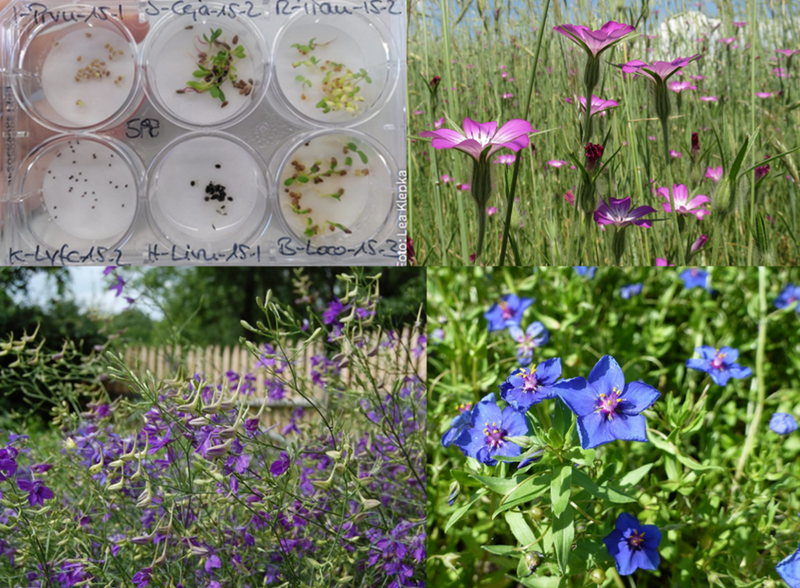
Extinct plant populations can be actively reintroduced by sowing seeds. The seed for reintroduction is commonly propagated at agricultural fields. During this process, seed dormancy may be lost. At the same time, seed dormancy is important for the survival of populations in disturbed environments. Rare arable weeds grow on arable land, an environment that is regularly disturbed, so loss of dormancy could affect the long-term survival of reintroduced populations. At the same time, rare arable weeds are nearly extinct and reintroduction efforts are common. Despite the theory that predicts loss of seed dormancy during cultivation, our experiments withs seeds cultivated for restoration indicate that wild-collected seeds of agricultural weeds germinate better in some species than the propagated seeds. This can be, however, due to maternal effects. This thesis will investigate whether seed dormancy is lost during the propagation process.
What is it good for: Improving seed production for reintroduction or rare weeds
Methods: germination experiments in a climate cabinet
Place: Marburg Lahnberge
Time schedule: autumn/winter/spring (independent of growing season)
Contact: Anna Bucharova (anna.lampei-bucharova@uni-marburg.de)
How do plants from different parts of Europe grow and flower? (BSc)
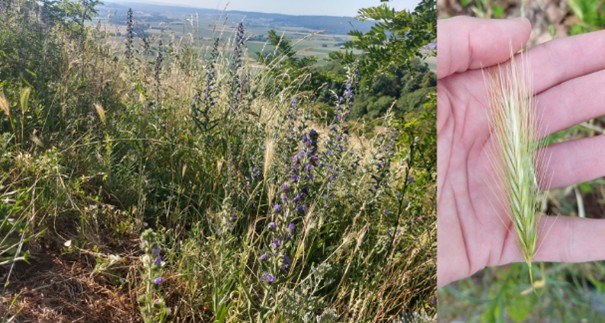
Most plant species are not uniform units, their populations are frequently genetically differentiated and this differentiation often reflects adaptation to their local environment. Consequently, plants from different populations often differ in their traits, for example specific leaf area, height, or flowering time. This thesis will investigate phenotypic differentiation in Hordeum murinum, a wild relative to cultivated barley. The experiment will involve 100 genotypes coming from all across Europe and northern Africa, and will investigate variability in H. murinum phenotypes across climatic gradients.
What is it good for: Understanding of local adaptation
Methods: common garden experiment
Place: Botanical Garden Marburg Lahnberge
Time schedule: March-June 2027
Contact: Anna Bucharova (anna.lampei-bucharova@uni-marburg.de)
The effect of fen restoration on ground dwelling invertebrates (MSc)
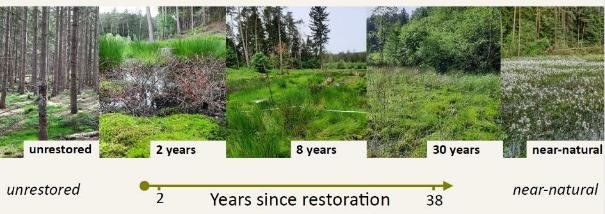
The study focuses on fen restoration in Burgwald. Fens in Burgwald were drained and afforested with spruce many decades ago, which led to massive degradation. Over the last 40 years, there have been continuous restoration efforts and over 20 degraded fens have been restored. Restoration has a positive effect on vegetation. Yet, the effect on invertebrates, especially insects, is unknown. This thesis will focus on the effect of fen restoration on ground-dwelling invertebrates, e.g. carabid beetles and spiders. The candidates will place pitfall traps on site, regularly empty them over the season and sort the insects..
What is it good for: Understanding the effect of fen restoration
Methods: pitfall traps, sorting insect in lab.
Place: Burgwald
Time schedule: May-June 2027 field work, followed by insect sorting
Contact: Anna Bucharova (anna.lampei-bucharova@uni-marburg.de)
Requirements: mobility (bike), basic knowledge of insect or willingness to learn
Cooperation: Martin Brändle (Uni Marburg)
How does the effect of roe deer browsing on vegetation depend on roe deer density and ecosystem productivity? (MSc)
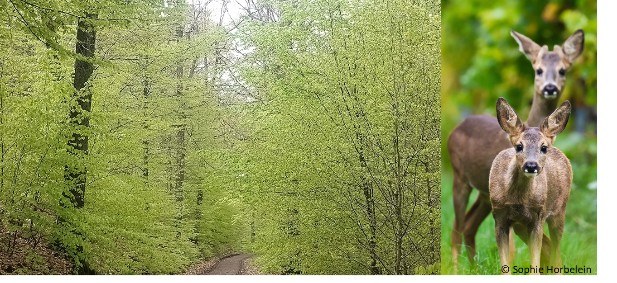
Roe deer is very common in temperate forests in Germany. The species is a selective browser (that is, selectively feeds on specific species) and by this affects tree regeneration and herbaceous vegetation. This thesis will study how the effect of roe deer browsing is modulated by forest productivity and roe deer density. Methodically, the thesis will capitalize on a large project that focuses on the effect of forest disturbance on forest ecosystem (BETAFOR), which has sites across all of Germany.
What is it good for: Understanding the effect of roe deer on forest
Methods: vegetation records
Place: all over Germany
Time schedule: Spring 2027 field work, followed by insect sorting
Contact: Anna Bucharova (anna.lampei-bucharova@uni-marburg.de)
Requirements: knowledge of plants, willingness to travel (no car required, the student will travel with the team)
Cooperation: Ludwig Lettenmaier, Jörg Müller (University Würzburg)
Do we need new methods to objectively record vegetation?(BSc/MSc)
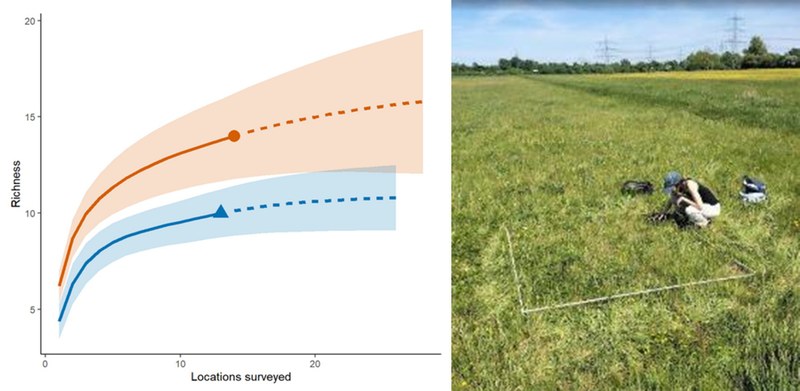
Vegetation is traditionally recorded on plots. Typically, the recording person notes all plants and their coverage in a given area (for example, 4 x 4m). However, this approach has been recently criticized as not objective, because the coverages are subjective estimates. Another option is to record presence/absence of a species within a number of subplots. However, it is not clear how this approach compares to the traditional coverages, and how many subplots are necessary to fully capture the diversity of the vegetation. This thesis will carry out vegetation sampling at a species-rich meadow with different approaches and compare them.
What is it good for: Improvement of vegetation recording methods
Methods: vegetation record
Place: A species rich meadow in vicinity of Marburg
Time schedule: May-June 2027
Requirements: basic knowledge of plants, affinity to data evaluation
Contact: Anna Bucharova (anna.lampei-bucharova@uni-marburg.de)
Cooperation: Marc Cadotte (University Toronto)
Bark beetle and moor – a chance for passive restoration? (MSc)
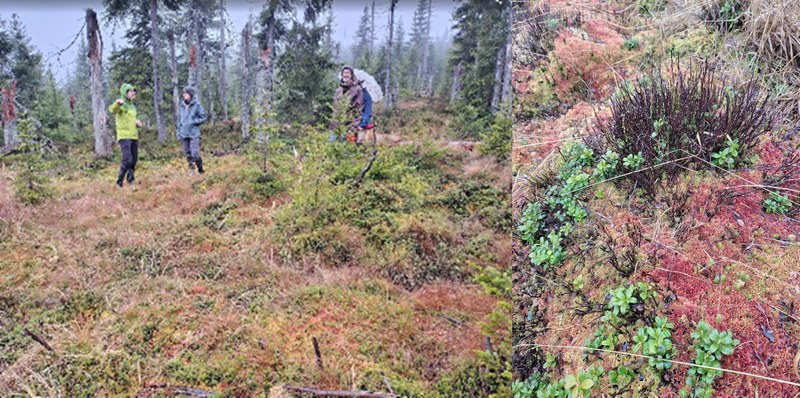
Mires are important carbon sinks, yet many mires have been drained and planted with spruce. Such degraded mires become carbon sources. Mire restoration often involves the removal of spruce and closing of the drainage, measures that are expensive. A similar effect on mires the bark beetle may possibly have, which kills trees and the accumulated dead wood can close the ditches. However, the potential of the bark beetle on mire restoration has never been studied. This thesis is part of a project on the effect of the bark beetle on mire restoration, and will study whether the soil of mires deforested as a result of bark beetle infestation starts to accumulate carbon in a similar way as intact mires or actively restored mires.
What is it good for: Understanding mire restoration
Methods: collection of soil samples in the field and elemental analysis in the lab
Place: field work Bavarian Forest, lab in Marburg
Time schedule: Spring 2027
Requirement: car would be good, but not essential
Contact: Lisa Grunwald (Grunwall@students.uni-marburg.de)
Cooperation: Robert Junker (Uni Marburg), Jörg Müller (NP Bavarian Forest)
Are plants and butterflies keeping pace with each other under climate change? (MSc)
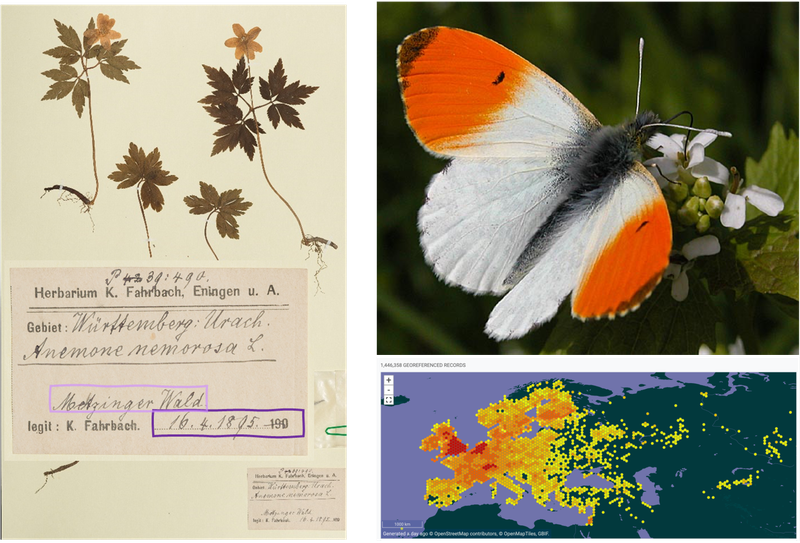
Spring flowering and insect emergence are both shifting due to climate warming — but are they shifting together? Mismatches between plants and their pollinators or herbivores could have cascading ecological consequences. This thesis investigates how phenological shifts in flowering plants compare to those of butterflies (or other insects) across different regions of Europe, using large-scale occurrence and phenological datasets. You will examine whether geographic patterns in phenological change are consistent across trophic levels, and if potential mismatches are emerging.
What is it good for: Understanding climate-driven trophic mismatches and biodiversity risks
Methods: Data collection with GBIF, analysis in R, spatial modelling
Time schedule: Flexible (e.g. start in Fall 2026)
Place: Flexible, potential option for “field work” in natural history collections
You should bring: some skills in R, curiosity about species interactions and statistics
Contact: Franziska Willems (franziska.willems@uni-marburg.de)
Do plants flower earlier now than 100 years ago — and has this changed over time? (MSc)
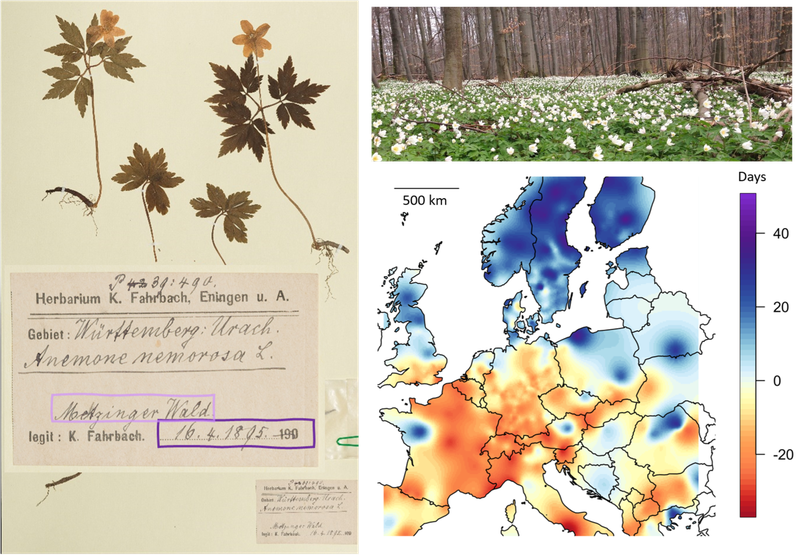
Climate warming is shifting plant flowering times across Europe — but has the rate of these shifts itself changed over the decades? This thesis uses large-scale herbarium and phenological network data to investigate whether plant phenological sensitivity to spring temperature has changed over the 20th and early 21st century. By splitting records into historical periods (e.g. pre-1940, pre-1980, post-1980), you will test whether plants are becoming more or less responsive to temperature over time. You can also explore whether these patterns vary across species groups — such as forest understory herbs versus trees — or across regions.
What is it good for: Understanding if plant adaptation is keeping pace with climate change
Methods: Data analysis in R, spatial modelling
Time schedule: Flexible (e.g. start in Fall 2026)
Place: Flexible, potential option for “field work” in natural history collections
You should bring: some skills in R, and motivation to work with spatial and historical data (and enthusiasm to learn some Baysian statistics)
Contact: Franziska Willems (franziska.willems@uni-marburg.de)
Does the time of seed collection shape how plants grow and flower? (MSc)
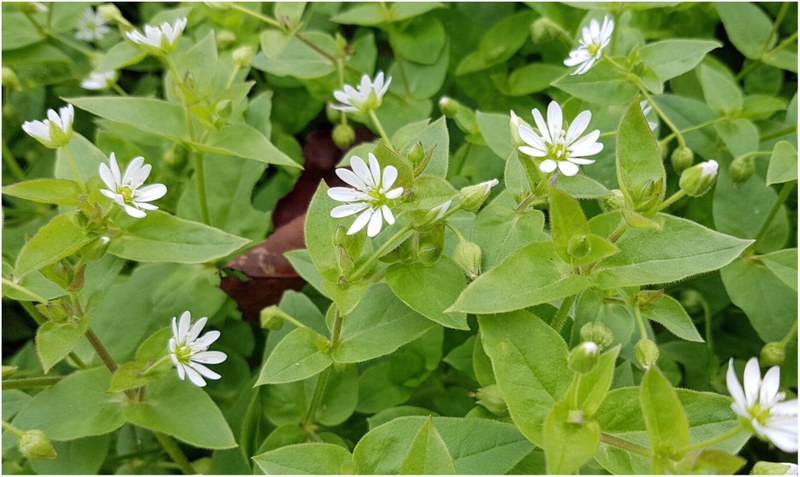
Seeds are essential for research, ecosystem restoration, and conservation — and to have enough of them, they need to be collected. But does it matter when during the season seeds are harvested? Previous greenhouse experiments have already shown that seeds collected at different times of the season produce plants with distinct traits — this thesis investigates whether differences in vernalisation response are part of the explanation. Many plants require cold exposure (vernalisation) to trigger flowering — but does this requirement vary depending on when during the year seeds were produced? This thesis uses Stellaria media as a model system to test whether genotypes originating from seeds collected at different times of the growing season differ in their response to cold exposure and their subsequent flowering behaviour. Using controlled greenhouse experiments with vernalised and non-vernalised treatments, you will explore whether seasonal timing of seed production shapes the life history of the next generation.
What is it good for: Understanding plant life history and its relevance for seed collection in conservation and restoration
Methods: Greenhouse / climate cabinet experiment, germination and growth monitoring
Time schedule: early spring/ summer
Place: Marburg Lahnberge
You should bring: Enthusiasm for hands-on plant work, reliability in experimental settings
Contact: Franziska Willems (franziska.willems@uni-marburg.de)
Differences in phenology between populations of Arnica montana in Hessen (MSc)
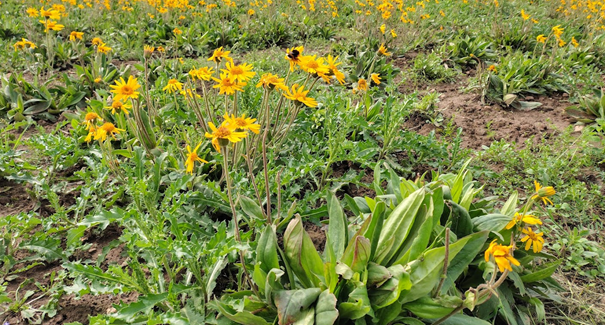
The endangered Arnica montana is a plant species typical for low productive grasslands with frequent disturbances. The species is rapidly disappearing in German lowlands, because management is often not adequate to preserve suitable habitat conditions. There have been multiple projects that aimed on reintroduction or enhancement of populations in Hessen. For reintroductions, practitioners typically insist on local seeds because of assumed local adaptation. But are individual plants of A. montana in Hessen regionally adapted, or at least phenotypically differentiated? The common garden experiment was established in 2026 and will study the plants in their second year, when Arnica starts flowering. The focus is on flowering and growth phenology, seed traits and vegetative phenotypic traits.
What is it good for: Understanding of local adaptation
Methods: common garden experiment
Place: Botanical Garden Marburg Lahnberge
Time schedule: April-July 2027
Requirements: Enthusiasm for hands-on plant work, reliability in experimental settings
Contact: Sascha Liepelt (liepelt@biologie.uni-maburg.de)
Which site attributes predict the success of Arnica reintroductions? (MSc)
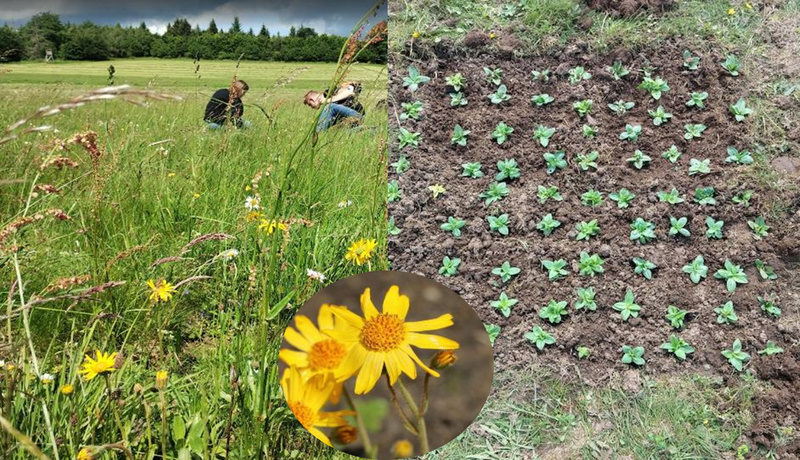
The plant Arnica montana is threatened in many parts of Germany as a result of the loss of many populations. This lead to the fragmentation of its distribution range and to size reduction of many of the remaining populations. In Hessen a substantial number of reintroduction projects were carried out in the last two decades to re-establish populations. The success of these reintroductions was highly variable for which the reasons are largely unknown. To give better advice to practitioners in the future, this thesis will try to identify key site characteristics predicting success or failure.
What is it good for: understanding the effectiveness of reintroduction of rare species
Methods: Vegetation record, environmental properties
Place: Hessen and NRW
Time schedule: May – June 2027
Requirements: Excellent communication skills, mobility (car), basic knowledge of plants
Contact: Sascha Liepelt (sascha.liepelt@biologie.uni-marburg.de)
Does local hunting pressure reduce browsing intensity by red deer? (BSc)
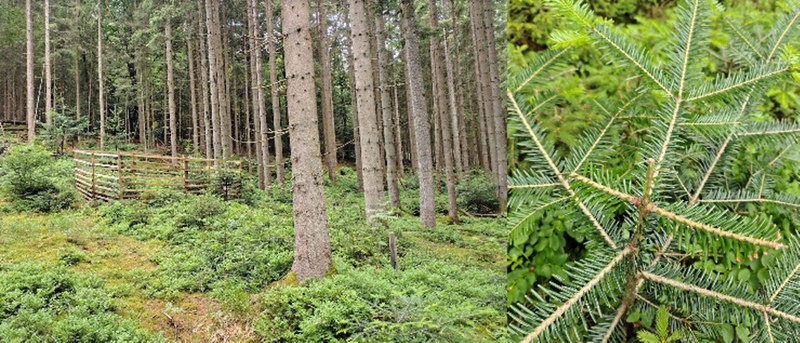
Large ungulates, particularly roe and red deer, are feeding on regenerating trees in forests. High densities of these animals can thus hamper forest regeneration. Recreational hunting can modify the use of space by deer and possibly also browsing damage. To test this, this thesis will capitalize on an experiment established in the Bavarian Forest National Park, where deer enclosures were installed within the National Park (no hunting) and in the buffer zone (intensive hunting to prevent spill-over of red deer to surrounding landscape). The focus will be browsing damage on tree saplings.
What is it good for: Understanding the effect of hunting on deer density and browsing damage
Methods: field survey
Place: NP Bavaria Forest
Time schedule: 2 weeks March-April 2026
Contact: Anna Bucharova (anna.lampei-bucharova@uni-marburg.de)
Cooperation: Ludwig Lettenmaier (NP Bavarian Forest, University Würzburg)