Main Content
Keynote speakers
Research profiles of our keynote speakers
Sophie Karrenberg
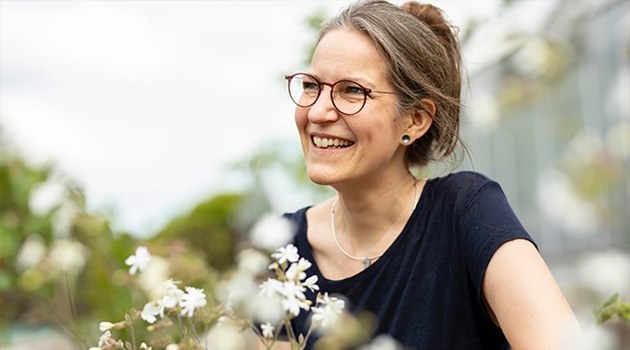
Sophie Karrenberg investigates mechanisms leading to lineage divergence and speciation using closely related species that can still form natural hybrids in nature. She and her team study ecological processes such as adaptation to different habitats and their genetic underpinnings, as well as the evolution of genetic incompatibilities. She is particularly interested in the evolution of plant sex chromosomes that may be associated with speciation. The main study organisms are species of the genera Salix and Silene where she uses both field and greenhouse experiments and genomic approaches.
Maria von Korff Schmising

The major research interest of Prof. Dr. Maria von Korff Schmising focuses on unravelling the genetic underpinnings of plant adaptation to environmental challenges. Together with her team members she is exploiting natural genetic variation within the important crop plant barley (Hordeum vulgare), its wild progenitor Hordeum v. ssp. spontaneum and related wild Hordeum species to dissect the quantitative genetic basis of development in response to different environmental cues (abiotic stresses). In this context, she also investigates the genetic differences underlying annual and perennial growth habits in grasses, with the aim of informing the breeding of perennial crops as a sustainable alternative to high-yielding annual systems.
Desanka Lazic
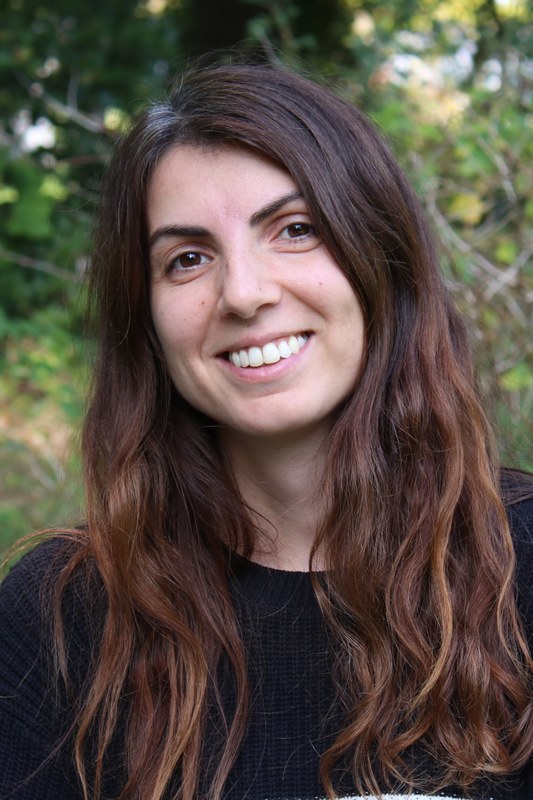
The research of Desanka Lazić focuses on understanding how forest trees adapt, evolve, and cope with a changing climate. During her PhD, she investigated the genomic signatures of ecological speciation, adaptation, and parallel evolution in oaks (genus Quercus), focusing on how divergent selection can maintain species integrity despite ongoing gene flow.
In her recent work on European beech, she has used whole-genome sequencing data from hundreds of individuals across the species’ range to perform genotype–environment association analyses and explore the genomic basis of environmental adaptation, as well as patterns of potential future maladaptation. They identified a locus potentially involved in winter-temperature adaptation through modulation of spring phenology. Beyond pinpointing specific adaptive variants, however, their findings highlight the complexity of adaptation in long-lived, widely distributed species: adaptive potential is often polygenic rather than driven by a few strong-effect loci, and much of the response may rely on phenotypic plasticity. To better resolve this complexity and address genotype–environment interactions, she is currently developing a pangenome of Fagus sylvatica using PacBio HiFi long-read sequencing of 70 individuals.
Ultimately, she aims to integrate pangenomic, ecological, and environmental data to better understand how forest trees adapt to environmental change — with implications for biodiversity conservation and sustainable forest management under global change.Florian Schiestl
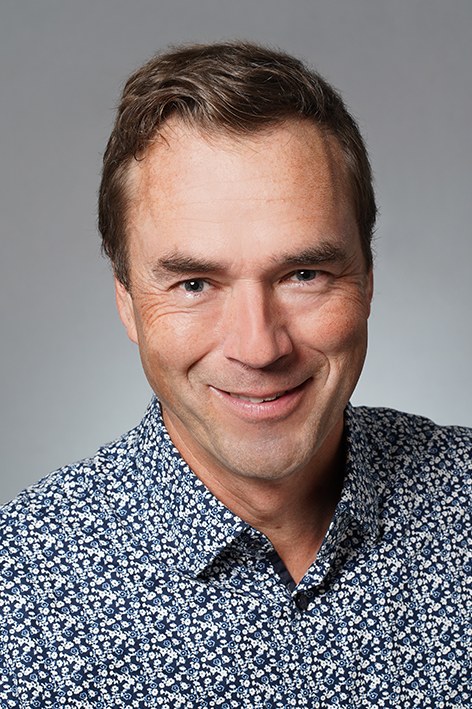
Prof. Dr. Florian Schiestl works on plant adaptation to environmental factors, with a focus on biotic interactions such as pollinators and herbivores. As a methodolocial approach, he and his team use experimental evolution with plants in semi-natural environments in the greenhouse. They also study natural population of plants and interacting insects. The current model systems are Brassica rapa and Raphanus raphanistrum, and the pollinator/herbivore Bombus terrestris and Pieris rapae. Besides this more conceptual approach with model systems, Prof. Dr. Schiestl also has a long-term interest in orchids, were he studies pollination biology as well as seed germination with mycorrhizal associations.
Robert R. Junker
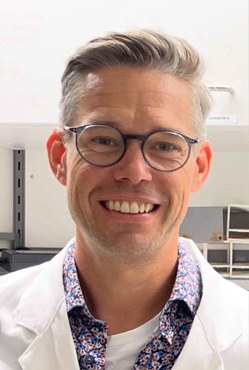
Prof. Dr. Robert R. Junker is an ecologist focusing on species and ecosystem responses to global change components. In observational and experimental studies in the field as well as in the lab he is examining how climate change, land-use change and pollution impact the diversity and composition of plant, animal and microbe communities and ecosystem functions. Particularly, he is interested in how microbes increase the tolerance of plants to environmental stresses and how chemodiversity and response diversity stabilize ecosystems. Given that microorganisms are fundamental to life on earth, he is working on concepts integrating microorganisms into conservation theory and practice.