Hauptinhalt
Why study Sustainable Development in Marburg?
Academic excellence meets interdisciplinary strength
The M.Sc. Sustainable Development builds on academic areas for which Marburg University is widely recognized, particularly in sustainable economics, the economic geographies of innovation and transformation, and physical geography, including a strong emphasis on climate change research. By integrating these perspectives, the programme offers a distinct interdisciplinary profile that enables students to analyse sustainability challenges from both socio-economic and environmental viewpoints.
Teaching is research-oriented and embedded in a supportive academic environment characterised by close interaction between students and lecturers. The university’s excellent library and study facilities further contribute to an atmosphere that encourages independent thinking, analytical depth, and collaborative learning.
Flexible semester structure and course scheduling
Studying in Marburg is designed to be transparent, predictable, and flexible, which is particularly beneficial for incoming and international students. The academic year is divided into two clearly defined semesters. The summer semester typically runs from mid-April to mid-July, while the winter semester extends from mid-October to mid-February. This structure facilitates long-term planning and allows students to coordinate their academic activities with travel, internships, or language courses.
All classes and formats provide opportunities for concentrated, hands-on learning experiences without placing excessive demands on the weekly timetable. All semester dates, timelines, and course schedules are published online well in advance, enabling students to organise their studies efficiently and with confidence.
Where to find your courses
All current course offerings are available through MARVIN, the university’s online course catalog. The platform provides detailed information on course content, schedules, and organisational details, allowing students to plan their semester in a structured and reliable way.
Life in Marburg
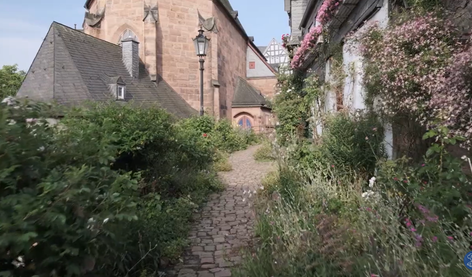
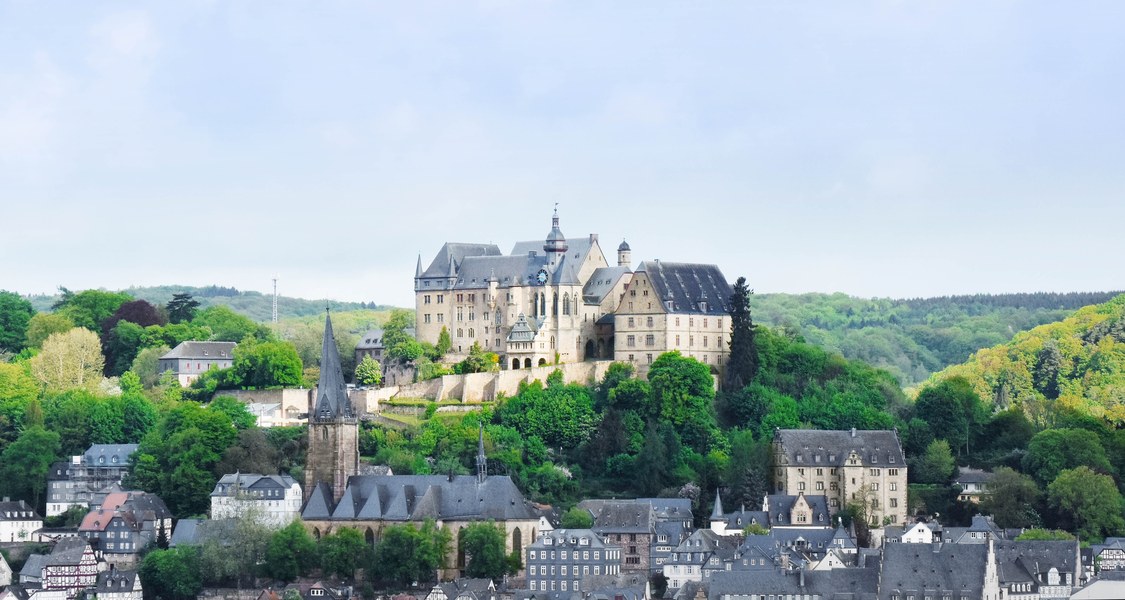
Marburg itself is a wonderful university town. With its historic old town, lively student scene, central campus location, and open international atmosphere, it’s a place students from around the world fall in love with. You’ll find a perfect blend of academic life, cultural experiences, and a welcoming community in this charming city — all within walking distance of your classes.
The Department of Geography and the Department of Economics are ideally located in the very center of Marburg:
- Just one minute’s walk from the historic old town and right next to the medieval Elisabethkirche.
- Surrounded by cafés, pubs, and restaurants, and right next to the new University Library and the Old Botanical Garden.
- The main train station (Hauptbahnhof) is only 10 minutes on foot, and public transport (public transport bus stops) are right outside the door.
- The picturesque Lahn River flows directly beside the institute buildings, and a weekly market takes place in front of the faculty every Wednesday and Saturday.
- During the Christmas season (usually from late November until December 23), the area right in front of the Departmenet of Geography around the Elisabethkirche turns into a charming and cozy Christmas market, offering traditional German Christmas pastries, mulled wine (Glühwein), international food specialties, and a wide range of handcrafted gifts and festive decorations.
- For nature lovers, forests, fields, and the surrounding hills are just a 5-minute bike ride away, perfect for relaxing or exploring after classes.
The combination of central city life and immediate access to nature makes the Department of Geography’s location in Marburg both idyllic and cozy, ideal for study, research, and leisure.
Getting started in Marburg: essential information for international students
For essential information about studying and living in Marburg, the Welcome & Orientation pages for incoming students provide a range of support services to help you get started, including an international student orientation programme to assist with administrative formalities and social integration, intercultural training, mentoring and buddy programmes, and links to support and contact points at the university.
The Studying in Marburg page offers comprehensive guidance on academic life before you start, such as explanations of degree structures, online orientation tools, and an overview of study options and resources at the university, as well as practical information about housing and other aspects of student life.
Additionally, Marburg University’s “We Take You Places” podcast is a dedicated series for international students that shares practical advice on topics like finding accommodation, registering and arriving in Germany, managing expenses, health care, orientation, and more to help you navigate student life and study opportunities in Marburg.
Don’t forget to check out these videos to get a feel for student life and study opportunities here:
▶ Campus city center (Video) (with a glimpse at the Department of Geography and its vibrant surroundings, beginning from 0:38)
▶ Things to love about Marburg (Video)
▶ Studying and living in Marburg (Video)
▶ Studying Geography in Marburg (Video)
Practical information for your stay in Marburg
The following overview provides practical information about studying and living in Marburg. There is no need to worry — once you arrive, almost everything falls into place easily. The university offers excellent support services and guidance for all practical matters, such as choosing courses, registering for classes and exams, and finding housing. You will also quickly meet fellow students and make personal connections, so your stay in Marburg can be smooth, enjoyable, and stress-free.
Tuition & semester fee
At Philipps-Universität Marburg, there are no tuition fees for students. Only a one-time semester fee of about €400 per semester is required.
This fee covers:
-
Public transport (semester ticket, see below) for unlimited travel within the regional network
-
Administrative services of the university
-
Student social services, including support from the Studierendenwerk
-
Contributions to student organizations and cultural activities
This means that students have access to transport, services, and campus life right from the beginning, making Marburg an affordable and student-friendly city.
For full details, see: Information about contributions and fees
-
Living costs in Marburg
The typical monthly living expenses for a student in Marburg are around €550–€1,000. This usually covers:
-
Rent (shared apartments: €250–€450, student dormitories: €200–€350)
-
Food and groceries: €150–€250
-
Public transport and semester ticket: included in semester fees (see below)
-
Health insurance: €100–€120
-
Miscellaneous expenses (leisure, study materials, personal items): €100–€150
This estimate can vary depending on lifestyle and housing choice.
-
Housing in Marburg
Finding a place to live in Marburg is generally straightforward if you plan ahead. Most students live in student dormitories (Studierendenwerk) or shared flats (WG) / private apartments.
-
Student dorms: affordable, furnished, and a great way to meet other students. Apply early via the Studierendenwerk for the best options.
-
WG / private flats: popular among students who want a bit more independence. Check online portals (e.g., WG‑gesucht) or local student networks.
Tips: Start your search a few months before arrival, explore different areas of the city, and use multiple sources to find the right place.
Once you have a place, remember to register your address (“Anmeldung”) at the city office — a simple administrative step.
For detailed guidance and helpful tips, see:
-
Public transport and semester ticket
Marburg offers a semester ticket included in the semester fee, which provides unlimited travel on buses and trains within the regional public transport network of Hesse. The ticket is considered very convenient and cost-effective, allowing students to travel across Marburg and Hesse without extra costs.
Sports, culture & leisure activities
Marburg offers lots of opportunities for sport, culture and leisure, so life outside of studies is fun and engaging. The University Sports Centre (Zentrum für Hochschulsport) organises a wide range of courses — from martial arts and dance to team sports, hiking, Zumba, and ski or paragliding excursions — and many students enjoy signing up at the start of the semester.
Beyond university classes, you can also take part in local sports clubs (e.g. climbing, swimming, ...) and enjoy cultural offerings like music ensembles, theatre performances, art exhibitions and more.
These activities are great ways to stay active, explore your interests, and meet new people outside the classroom.
For more details see the university’s sports, culture and leisure activity page.
Student jobs & working in Marburg
If you’d like to earn some extra money or gain work experience during your studies, there are many options for student jobs in Marburg. You can find work on campus (e.g., student assistant roles) or off campus (in cafés, shops, events, etc.) depending on your interests and skills.
Working part‑time while studying can help you build language skills, expand your professional network and get to know the German work culture.
Important: Students from outside the EU/EEA/Switzerland are generally allowed to work up to a certain number of days per year (e. g., 120 full days or 240 half days); jobs at the university (e. g., as a studentische Hilfskraft) often have more flexibility.
For full guidance and tips on finding work, see the student jobs page.
Course registration
Course registration is generally done through MARVIN, the university’s online system. If you encounter any issues with MARVIN, registration can also be handled directly with the respective lecturers. It’s important to register early, especially for popular courses.
Coursework and examinations
In many modules at the Marburg University, students are generally required to complete coursework ("Studienleistungen") and an examination ("Prüfungsleistung"). When both are successfully passed, students receive the module grade, which is mainly based on the examination, since coursework must always be passed but is always ungraded.
Coursework ("Studienleistungen")
-
Ungraded but mandatory to pass
-
Usually completed during the semester
-
Typically includes small exercises, short written assignments, presentations, or short reports
-
Must be passed to receive credit for the module, but does not contribute to the final grade
Examinations ("Prüfungsleistungen")
-
Form the basis of the module grade
-
Can take different formats: for example written exams, essays, project work, or oral exams (including group exams)
-
Each module allows three attempts to pass
-
Usually scheduled at the end of the semester: mid–late February (winter semester) or mid–late July (summer semester)
-
More practical information for your stay in Marburg
For further practical information about everyday student life in Marburg — such as internet access on campus, student ID, UCard details, cafeterias, doctors & pharmacies, phone and postal services, emergency numbers, libraries, and public holidays — please also check the University’s practical Information page. This gives you lots of useful details to make your everyday life in Marburg even easier and more enjoyable.
Come study with us
The M.Sc. Sustainable Development is jointly offered by the Department of Geography and the School of Business and Economics at Marburg University. This collaboration reflects the programme’s interdisciplinary character and provides students with an academic environment that combines analytical, spatial, and socio-economic perspectives on sustainability.
Studying in Marburg is not only about academic training. It is also an opportunity to develop intellectually, engage with global challenges, and connect with an international community of students and researchers. We warmly welcome students from around the world and support them in making the most of both their academic journey and their experience of university life.
We look forward to welcoming you to Marburg.